US – Japan strategic investment expands to $70B+ in nuclear and gas projects as energy security and AI power demand reshape policy
US and Japan expand energy investment to $70B+, focusing on nuclear SMRs and gas to meet rising AI-driven power demand and boost energy security.

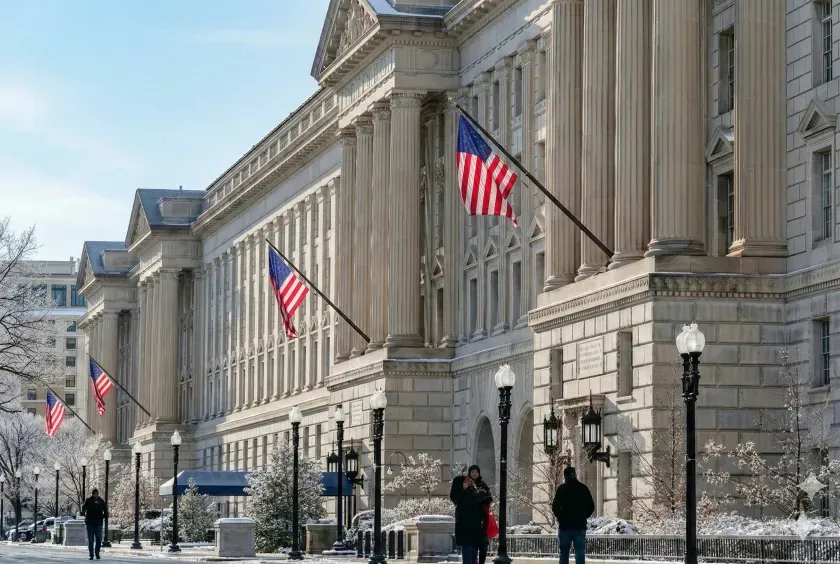
Washington | EcoPulse24
The United States and Japan announced a major expansion of their strategic investment framework, adding a second wave of projects focused on nuclear and natural gas infrastructure, signaling a long-term shift toward energy security and electricity capacity to support rising industrial and data center demand.
US – Japan announce second wave of energy investments led by nuclear SMRs
The two governments confirmed a new batch of projects under their strategic investment partnership, including the construction of Small Modular Reactors (SMRs) in Tennessee and Alabama led by GE Vernova Hitachi, with an estimated value of up to $40 billion. These next-generation nuclear systems are designed to provide stable, scalable baseload power and are positioned as a key pillar in future electricity systems.
Natural gas infrastructure expansion targets rising electricity demand
Alongside nuclear investment, the US and Japan announced major natural gas power projects, including facilities in Pennsylvania (up to $17 billion) and Texas (up to $16 billion). These projects are intended to meet rapidly growing electricity demand, particularly from energy-intensive sectors such as data centers, while reinforcing supply chain resilience between the two economies.
First batch confirms broader energy and industrial investment strategy
The announcement builds on an earlier set of projects revealed in February, which included a $600 million industrial synthetic diamond manufacturing facility, a $2.1 billion crude oil export infrastructure project, and a $33.3 billion natural gas generation project. Together, these investments reflect a multi-layered approach combining advanced manufacturing, energy exports, and power generation.
Energy security and supply chains emerge as central policy priorities
Both governments emphasized that the projects are designed to strengthen economic security and critical supply chains, particularly in strategic sectors such as energy and infrastructure. The initiatives align with a broader policy framework aimed at reducing vulnerability to global disruptions while ensuring stable access to energy resources.
SMR deployment positions US and Japan in global nuclear competition
The planned deployment of advanced SMRs represents a strategic push to establish leadership in next-generation nuclear technology. By accelerating commercial rollout, the US and Japan aim to compete globally in clean, reliable energy solutions while stabilizing electricity prices and supporting long-term industrial growth.
Energy infrastructure linked directly to AI and data center expansion
A key component of the projects is the integration of power generation with data center infrastructure. The offtake agreements include supplying electricity to co-located data centers, highlighting the growing connection between energy policy and digital infrastructure as artificial intelligence drives exponential increases in power demand.
Regulatory acceleration and future pipeline signal long-term commitment
The US government committed to expediting regulatory processes for these projects, while both countries confirmed ongoing work on additional initiatives, including large-scale nuclear reactors and expanded oil export capacity. These future projects will be coordinated under the existing bilateral investment framework established in 2025.
EcoPulse24 Analysis
The US – Japan strategic investment framework signals a structural shift in global energy policy, where electricity supply, not just decarbonization, becomes the primary constraint on economic growth. The scale of investment in SMRs and natural gas reveals a dual-track strategy: nuclear for long-term baseload stability and gas for near-term flexibility. The integration with data centers underscores a new macro reality in which AI-driven electricity demand is reshaping capital allocation across energy systems. This positions energy infrastructure at the center of economic security, linking geopolitics, technology competition, and industrial policy into a unified Energy – AI supercycle.
Explore Related Coverage
Sources & References
Editorial Note
Disclaimer
© 2025 EcoPulse24. All rights reserved.