Warsh and 4.2%: The Fed's New Chief Faces His First Real Test in a World Shaped by Energy and War
Inflation returns to center stage as oil markets shift from economic variable to the force driving monetary policy

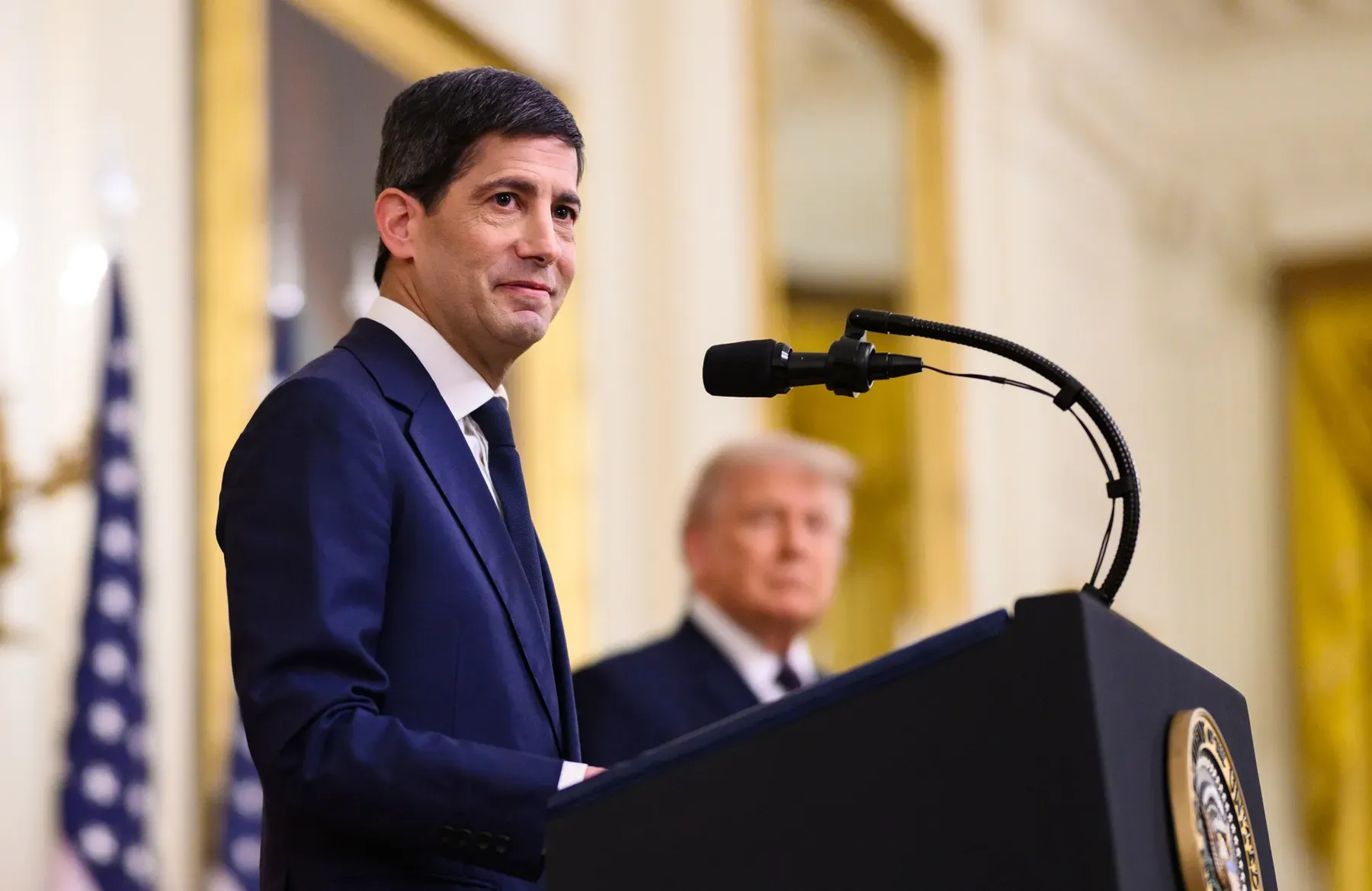
Washington - Special Analysis | EcoPulse24 | June 10, 2026
Kevin Warsh had barely settled into his chair at the Federal Reserve when the first serious economic test of his tenure arrived. Just one month ago, inflation stood at 3.8%. Today it has climbed to 4.2% - the sharpest annual acceleration in more than three years.
Data released this morning by the Bureau of Labor Statistics showed the Consumer Price Index rising to 4.2% year-on-year in May, the highest reading since 2023, with a monthly gain of 0.5% and core inflation edging up to 2.9%.¹
The numbers matched market expectations, sparing investors an immediate shock. But the significance of this reading lies not in surprise - it lies in the nature of the economic environment in which it arrived.
US inflation is not accelerating because of a consumer boom or a surge in domestic demand. It is accelerating at a moment when war, energy, and geopolitics are intersecting with monetary policy in ways markets have not seen in years.
4.2% Is Not Just an Inflation Reading
Throughout 2025, the Federal Reserve's battle was concentrated on containing inflation driven by labor market strength, rising wages, and consumer demand. Today, a growing share of price pressure is arriving from outside the US economy itself.
Fuel and energy costs have become the dominant driver of headline inflation, while core inflation has remained comparatively stable at 2.9% - a signal that the current price surge reflects a cost shock tied to energy supply, not a broad-based demand explosion.
That distinction matters enormously for how the Fed responds.
Energy Returns to the Heart of the Economic Equation
Since the Strait of Hormuz crisis erupted on February 28, 2026, energy markets have reasserted themselves over the global economic picture with a force not seen in years. The strait, through which approximately 20% of the world's seaborne oil trade passes, is no longer merely a shipping lane - it has become an economic variable that directly moves inflation, interest rate expectations, bond yields, and equity markets simultaneously.²
Goldman Sachs economists projected that Brent crude prices would average $105 per barrel in March and $115 in April under a six-week disruption scenario, with an adverse ten-week scenario pushing prices toward $140 per barrel.³ Research from the Federal Reserve Bank of Dallas estimated that a full closure of the Strait driving WTI toward $100 per barrel would push annualized US headline inflation 1.3 percentage points above the no-conflict baseline, with effects persisting through mid-2026.⁴
Supply disruption fears have pushed oil prices back toward elevated levels, while shipping, marine insurance, and freight costs have risen sharply - costs that pass through gradually but inevitably into final consumer prices.
The Dilemma That Interest Rates Cannot Fully Solve
The deeper problem facing the Federal Reserve is that its traditional tools may be insufficient to address the type of inflation it currently confronts.
When inflation is demand-driven, higher interest rates can slow the economy and ease price pressure. But when inflation originates from rising oil prices or global supply disruptions, raising rates does not increase oil production, does not reopen maritime corridors, and does not reduce shipping costs.
In other words, Warsh faces a partially supply-driven inflation shock - yet he holds tools designed primarily for demand-side problems. This is what makes his task considerably more complex than a simple decision on whether to raise or hold rates.
The Federal Reserve held rates at 3.50% – 3.75% at its most recent meeting, cutting its expected 2026 rate reductions from four to just one as the conflict reshaped the inflation outlook.⁵
Markets Were Not Waiting for the Number - They Were Waiting for the Message
Ahead of today's release, markets had already priced in a 4.2% reading. The real focus was never on the figure itself but on what it signals for the forward path of monetary policy. Al Habtoor Research Centre noted that the probability of an unchanged Fed decision at the June meeting had already risen to 47% from 42.7% within days of the latest military escalation.⁶
The immediate consequence is clear: the case for rate cuts has become significantly harder to make. The further inflation remains from the 2% target, and the longer energy prices stay elevated, the greater the pressure on the Fed to maintain a restrictive monetary stance for an extended period.
Bond Markets: Calm on the Surface, Vigilant Beneath
Despite today's inflation reading, US Treasury yields did not spike sharply in immediate reaction. The 10-year yield held near 4.52 – 4.54% while the 2-year settled around 4.17% - its highest level since February 2025 - suggesting markets are not pricing a new inflation breakout, but rather a prolonged period of restrictive monetary conditions.⁷
Following the CPI release, traders modestly pared back expectations for further Fed rate hikes this year, though a 25-basis-point increase in December remains fully priced in by markets.⁷
For corporations, elevated yields mean more expensive financing. For consumers, it means costlier mortgages and consumer credit. For governments, it means a heavier debt servicing burden that compounds over time.
The Dollar Reasserts Its Global Pull
Since the Strait of Hormuz crisis erupted in late February, the US Dollar Index has risen from approximately 97.8 to near 99.8, coinciding with inflation re-accelerating to 4.2%.⁸
That combination - high inflation plus elevated rates - has returned the dollar to its traditional role as the global capital anchor. For central banks in dollar-pegged economies, this creates a binding constraint: cutting rates risks currency pressure, while holding rates risks slowing domestic growth.
Gold Loses Some of Its Appeal
Under conventional conditions, gold would benefit from rising inflation and heightened geopolitical risk. But recent price action tells a different story.
Gold fell to approximately $4,115 – 4,150 per ounce on June 10, 2026, down more than 3% from the previous day and approximately 13% lower over the past month, reflecting a rotation of liquidity toward the dollar and US Treasuries rather than traditional defensive assets.⁹
According to precious metals data tracked by Masadir Economics | www.masadir.net, gold remains approximately 22% higher year-on-year despite the recent pullback - underscoring that the broader structural bid for the metal remains intact even as tactical positioning shifts toward dollar assets.
Bitcoin Bears the Cost of Retreating Risk Appetite
The effect has been most visible in high-risk assets. Bitcoin was trading near $61,531 as of this morning, down more than 24% from approximately $81,736 a month ago, and down roughly 17% over the past week alone.¹⁰
Bitcoin briefly broke below $60,000 for the first time since 2024 during recent sessions, driven by a record ETF outflow streak, renewed US-Iran military tensions, and capital rotating into AI stocks and IPOs.¹⁰
This trajectory signals that investors have begun repricing risk in a tighter financial environment, where liquidity is more expensive and the risk-free return on US Treasuries has become meaningfully more attractive.
Technology and AI Under the Microscope
One of the most significant downstream effects of sustained high inflation is its impact on growth and technology equities. Over the past two years, artificial intelligence and cloud infrastructure companies led a historic rally in US markets. But a prolonged period of elevated rates reduces the appeal of valuations that depend heavily on discounted future earnings.
In the current environment, inflation data and AI sector results - from companies such as Oracle, Nvidia, and Broadcom - have become part of the same investment narrative for institutional allocators.
The Gulf Stands on the Other Side of the Equation
The same force pressuring the Federal Reserve may be providing a degree of support to Gulf economies. The elevated oil prices fueling US inflation simultaneously strengthen government revenues and fiscal liquidity across much of the region - giving Gulf governments greater room to spend, invest, and finance strategic projects, even within a global environment defined by high rates and market volatility.
But the benefit is not unconditional. Elevated US interest rates transmit directly into financing costs across dollar-pegged economies, meaning the region faces a careful balance: capturing the upside of higher oil revenues while absorbing the effects of a tighter global monetary stance on borrowing, real estate, and project financing.
EcoPulse24 Analysis
The most consequential mistake one could make when reading today's data is to treat 4.2% as a routine monthly inflation print.
This number represents a convergence point - where domestic US economic dynamics, a global energy shock rooted in the Strait of Hormuz crisis, and active military conflict meet simultaneously on the same indicator.
The genuine challenge facing Kevin Warsh is not interpreting May's data. It is determining whether the current energy shock is transitory or the opening of a new inflationary cycle. If oil markets stabilize and geopolitical risk recedes, the inflationary overshoot may remain contained and the Fed can gradually return to a more flexible posture. If supply disruptions persist and energy prices continue rising, the Fed may find itself navigating a scenario where high inflation and slowing growth coexist - the combination markets fear above all others.
The question markets are asking today is not whether inflation reached 4.2%. The real question is whether geopolitics has returned as the primary driver of global monetary policy - after years in which central banks themselves were the most powerful force in the room.
Explore Related Coverage
Sources & References
Bureau of Labor Statistics (BLS) - CPI Report, May 2026 | bls.gov
Wikipedia - 2026 Strait of Hormuz Crisis
Goldman Sachs - Iran War Inflation Analysis, March 2026
Federal Reserve Bank of Dallas - Working Paper 2609, April 2026 | dallasfed.org
MEXC / Fed Policy Tracker - April 2026
Al Habtoor Research Centre - The Hormuz Inflection, March 2026 | habtoorresearch.com
Trading Economics - US 10-Year Treasury Yield, June 10, 2026 | tradingeconomics.com
DXY Dollar Index - Live Data, June 10, 2026
Trading Economics - Gold Spot Price, June 10, 2026 | tradingeconomics.com
Fortune / CoinDesk / BlockchainReporter - Bitcoin Price, June 10, 2026
Precious Metals & Market Data - Masadir Economics | www.masadir.net
Editorial Note
Disclaimer
© 2025 EcoPulse24. All rights reserved.