World Bank Expects UAE Economy to Grow by 5% in 2026 and 5.1% in 2027 Driven by Non-Oil Sectors
World Bank projects UAE economy to grow 5% in 2026 and 5.1% in 2027, driven by non-oil sectors and economic diversification.

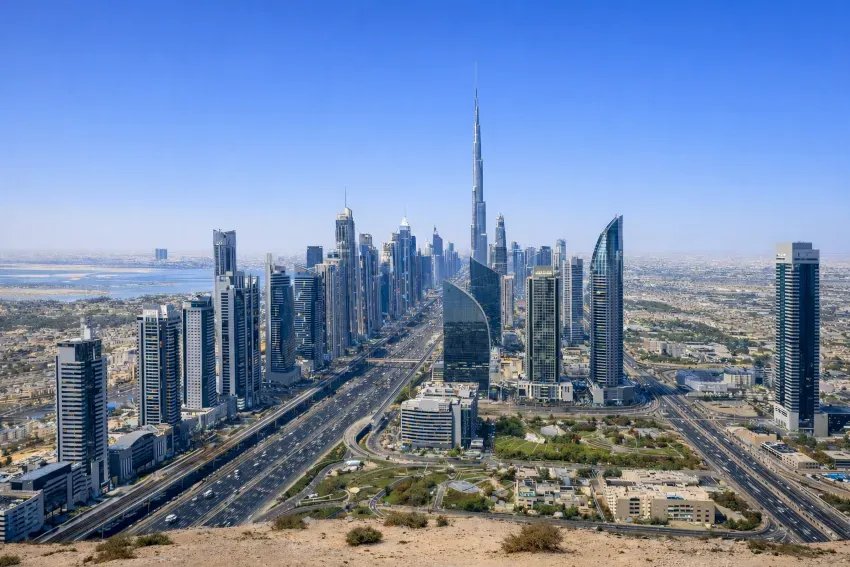
Washington | EcoPulse24
The World Bank projects that the UAE economy will achieve robust growth over the next two years, with a growth rate of 5% in 2026 rising to 5.1% in 2027, according to the newly released Global Economic Prospects report.
The report indicates that Gulf Cooperation Council (GCC) countries are also set for gradual economic improvement, with expected growth of 4.4% in 2026 and 4.6% in 2027, amid ongoing economic diversification and increased investment in non-oil sectors.
More broadly, the World Bank forecasts that growth in the Middle East, North Africa, Afghanistan, and Pakistan region will rise to 3.6% in 2026 and improve further to 3.9% in 2027, supported by easing inflation and better fiscal conditions in several economies.
Globally, the report notes that the world economy has shown greater resilience than previously expected, despite ongoing trade tensions and policy uncertainties. According to the World Bank, global growth is expected to stabilize at 2.6% in 2026 and increase slightly to 2.7% in 2027, an upward revision from last June's estimates, mainly due to stronger-than-expected performance in the United States.
Despite this relative improvement, the report warns that sustained slow growth could make the current decade the weakest for global growth since the 1960s, exacerbating the gap in living standards between developed and developing economies. By the end of 2025, per capita income in most advanced economies will have surpassed pre-pandemic levels, while about a quarter of developing economies will remain below 2019 levels.
The World Bank also expects global inflation to decline to 2.6% in 2026, reflecting weaker labor markets and lower energy prices, with growth improving in 2027 as policy uncertainty eases and global trade flows adjust.
Analysis
The World Bank's outlook for the UAE underscores the strength of non-oil sector growth and the ongoing effectiveness of economic diversification and long-term investment strategies. As the global economy faces structural challenges and prolonged growth pressures, the UAE's outperformance of average GCC and regional growth highlights its resilience and capacity to absorb external shocks. Sustaining this momentum, however, will depend on continued investment and structural reforms amid a lower-growth, more volatile global environment.
Explore Related Coverage
Sources & References
Editorial Note
Disclaimer
Please review the Terms & Conditions.
© 2025 EcoPulse24. All rights reserved.