Yen Surge Pressures Japanese Stocks Amid Fears of Coordinated Tokyo-Washington Intervention
Yen surge sparks stock declines in Japan amid intervention fears; export-heavy firms hit as markets eye Tokyo-Washington currency action.

Tokyo | EcoPulse24
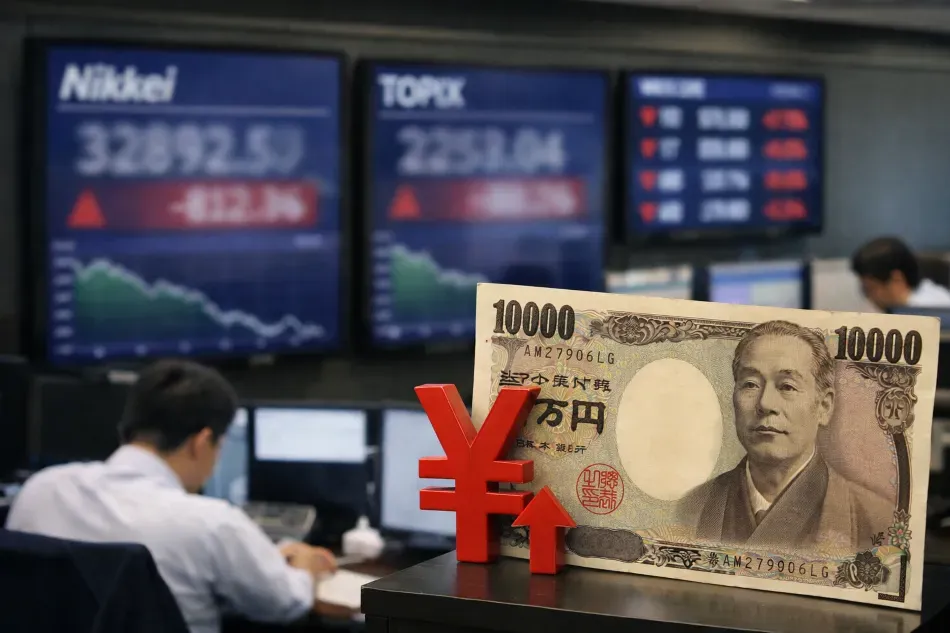
Japanese markets experienced a turbulent session as the yen continued to strengthen, reaching its highest level in over a month. This reignited discussions of government intervention and had an immediate negative impact on stocks, particularly for companies heavily exposed to exports.
The yen advanced toward 154 per dollar, gaining more than 2% over two sessions, amid growing market expectations of a coordinated intervention by the Japanese government and the United States to support the currency. This followed explicit warnings from Japanese Prime Minister Sanae Takaichi about "speculative and abnormal" market movements.
Additional momentum for the yen came after reports that the Federal Reserve Bank of New York had contacted market participants regarding the dollar/yen levels - a move traditionally seen as a preliminary signal for possible intervention, especially if volatility persists.
The yen's rise negatively affected the stock market: the Nikkei 225 index dropped 1.4%, falling below 53,100 points, while the broader Topix index declined about 1.8% to 3,565 points, extending last week's losses.
Export-oriented stocks led the declines, with earnings forecasts under pressure due to the stronger currency. Toyota Motor shares fell 3.9%, Sony Group dropped 2.2%, and Fast Retailing declined 1.8%. Losses also spread to the financial and tech sectors, with Sumitomo Mitsui down 2.4% and SoftBank falling 4.2%.
EcoPulse24 Analysis
Recent developments reflect a notable shift in Japanese authorities' stance toward currency market volatility. The 155 – 160 yen per dollar range now appears to be a politically and economically sensitive threshold, especially amid upcoming domestic milestones and mounting pressure from import costs and imported inflation.
Hints at possible coordination with Washington, if confirmed, could amplify the global impact of any intervention, affecting not just the yen but also capital flows and riskier currency markets. Conversely, if the yen remains strong without direct intervention, Japanese equities - especially export-dependent firms - may face prolonged pressure.
In summary, Japanese markets have entered a phase of delicate balance between currency stability and sustained equity growth, with the yen's trajectory in the coming days likely to be the main driver of overall market direction.
Explore Related Coverage
Sources & References
Editorial Note
Disclaimer
© 2025 EcoPulse24. All rights reserved.