China’s fuel demand slowdown deepens as high oil prices accelerate EV transition and refinery pressure
China’s gasoline consumption decline 5.5% this year, marking the second-largest contraction on record after the collapse triggered by Covid lockdown

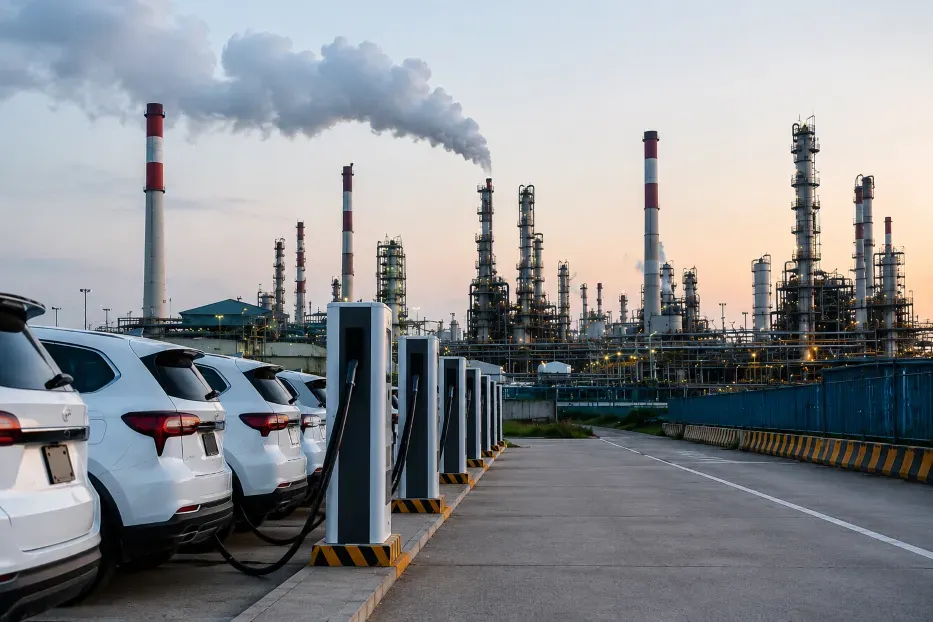
Beijing | EcoPulse24
China gasoline demand faces one of its sharpest declines as oil rally reinforces electric vehicle shift
China’s gasoline demand is expected to contract sharply in 2026 as higher oil prices linked to the Iran conflict accelerate the country’s long-term transition toward electric vehicles and alternative fuels, adding new pressure on refining activity and crude imports across the world’s largest oil-importing economy.
According to GL Consulting, China’s gasoline consumption could decline 5.5% this year, marking the second-largest contraction on record after the collapse triggered by Covid lockdowns in 2022. The consultancy lowered its outlook from a previous forecast of 5.2%, citing the impact of rising fuel prices following disruptions across Gulf energy trade routes.
The demand slowdown reflects a structural shift underway inside China’s transportation and energy system, where rapid electrification and expanding LNG adoption are increasingly weakening traditional gasoline consumption growth that historically supported global crude demand.
The International Energy Agency separately warned that Chinese gasoline demand growth is slowing “to a crawl” during the current quarter, estimating demand is running roughly 60,000 barrels per day below the same period last year. Rising pump prices have intensified consumer caution, particularly as geopolitical tensions in the Persian Gulf continue disrupting energy trade expectations and lifting global oil benchmarks.
Chinese retail gasoline prices climbed to around 9.56 yuan per liter during April, approaching record levels despite intervention measures by China’s National Development and Reform Commission aimed at limiting fuel price increases. Analysts say the combination of elevated energy costs and widespread access to electric mobility alternatives in major Chinese cities is accelerating behavioral changes among consumers.
At the same time, rising inventories and weaker domestic fuel demand are forcing refiners to scale back operating rates, with expectations for Chinese crude imports to fall nearly 10% this year - potentially the largest decline on record. Diesel demand is also projected to shrink by around 4.5%, while refinery throughput may decline approximately 4%, according to GL Consulting.
China Fuel Demand Outlook - 2026 Estimates
| Indicator | Forecast |
|---|---|
| Gasoline Demand | -5.5% |
| Diesel Demand | -4.5% |
| Crude Imports | Nearly -10% |
| Refinery Throughput | About -4% |
| Retail Gasoline Price | 9.56 yuan/liter |
EcoPulse24 Analysis
The importance of this story extends far beyond short-term fuel demand weakness. China is no longer behaving like a traditional growth engine for global oil consumption, and that transition may become one of the defining structural forces reshaping energy markets over the next decade.
For years, global oil demand models assumed Chinese transportation growth would continue absorbing rising crude supply. That assumption is now being challenged simultaneously by electrification, LNG adoption, urban transportation alternatives and weaker industrial momentum.
The Iran-linked oil price shock appears to be accelerating this transition rather than slowing it. Higher fuel prices are not necessarily reviving upstream profitability through stronger end-user demand; instead, they are pushing consumers and policymakers faster toward alternatives that reduce gasoline dependency altogether.
This creates a potentially dangerous dynamic for long-term oil demand forecasts. If elevated geopolitical risk continues sustaining higher energy prices, the result may not be structurally bullish for crude demand over time - particularly in large importing economies already investing heavily in electrification infrastructure.
The refinery implications are equally important. China spent years expanding refining capacity based on assumptions of durable domestic and export demand growth. A prolonged slowdown in gasoline and diesel consumption could deepen overcapacity risks across Asia’s refining sector, pressuring margins and altering regional crude trade flows.
From a macro perspective, the story also reinforces a broader transformation underway in global energy economics: oil demand growth is becoming increasingly sensitive not only to economic cycles, but also to technology adoption and energy substitution policies.
For Gulf exporters and energy producers, this trend introduces a strategic challenge. While geopolitical disruptions can temporarily support oil prices, structurally higher prices may simultaneously accelerate the very energy transition dynamics that weaken long-term consumption growth in major importing economies like China.
Sources & References
Editorial Note
Disclaimer
© 2025 EcoPulse24. All rights reserved.