European gas prices surge as Middle East tensions escalate and supply fears intensify
European gas prices surged 12% as Middle East tensions and a US naval blockade raised fears of disrupted global energy supply.

Brussels | EcoPulse24
European natural gas prices jumped sharply on Monday as escalating tensions in the Middle East reignited concerns over global energy supply, following the breakdown of ceasefire talks between the United States and Iran.
Benchmark Dutch TTF gas futures rose around 12% to approximately €49 per megawatt-hour for May delivery, after briefly spiking nearly 18% overnight to touch €51, reflecting heightened volatility across energy markets.
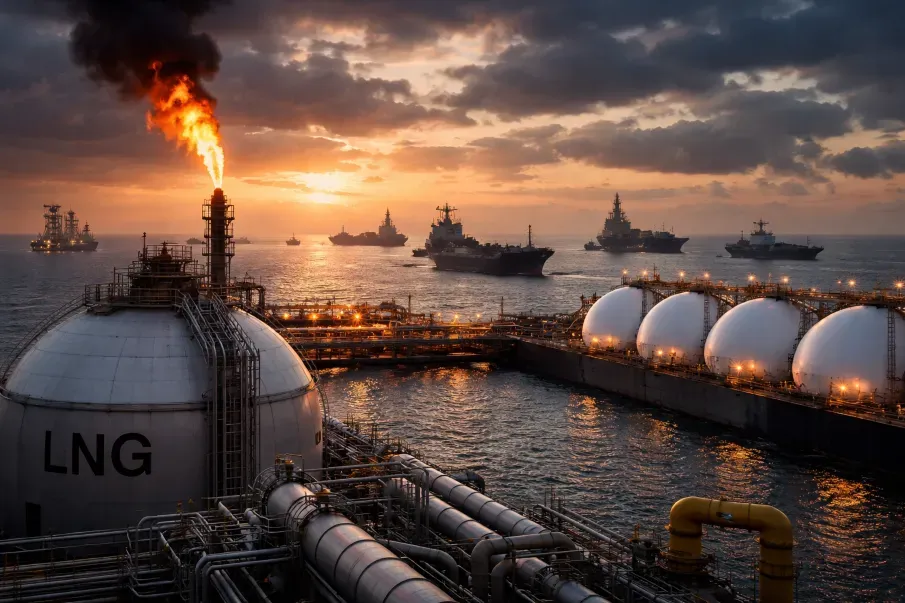
The rally was triggered by the United States’ decision to impose a naval blockade targeting vessels linked to Iranian ports, a move that has significantly raised uncertainty around the stability of energy flows through key global routes.
US officials confirmed that the measures took immediate effect, with enforcement beginning during European trading hours. The blockade targets ships connected to Iranian ports, while allowing transit through the Strait of Hormuz for vessels heading to other destinations.
At the same time, oil markets reinforced the upward pressure on energy prices, with Brent crude rising more than 7% to exceed $102 per barrel, and US West Texas Intermediate climbing over 8% toward $105.
The Strait of Hormuz remains a critical chokepoint for global energy markets, with roughly one-fifth of the world’s oil supply passing through the waterway. Any disruption or perceived risk to its stability tends to trigger immediate reactions across both oil and gas markets.
Analysts warn that the surge in gas prices reflects broader concerns about potential disruptions to global energy flows, particularly as Europe remains highly sensitive to supply shocks despite recent diversification efforts.
Higher energy costs could place renewed pressure on European economies, especially those heavily dependent on imports, while also raising the risk of inflationary spillovers across industries and households.
EcoPulse24 Analysis
The sharp move in European gas is not isolated - it is part of a synchronized energy repricing driven by geopolitical risk.
Gas markets are reacting not only to immediate supply concerns, but to the broader implication that energy flows could become more constrained if tensions persist or escalate further.
For Europe, the sensitivity is structural. Despite efforts to reduce dependency on specific suppliers, the region remains exposed to global price dynamics, meaning that disruptions anywhere along key routes - particularly the Strait of Hormuz - translate quickly into higher costs.
The linkage between oil and gas is also reasserting itself. As oil prices rise, alternative fuels and energy inputs become more expensive, reinforcing upward pressure across the entire energy complex.
This environment signals a shift back toward energy-driven inflation risks, where geopolitical developments - not just supply-demand fundamentals - play a dominant role in price formation.
Sources & References
Editorial Note
Disclaimer
© 2025 EcoPulse24. All rights reserved.