Turkey Gold Reserves Drop to 702.5 Tons as Central Bank Data Show Sharp Weekly Liquidity Shift
Turkey's central bank sold over 100 tons of gold in weeks to defend the lira amid energy shocks, reversing years of gold accumulation.

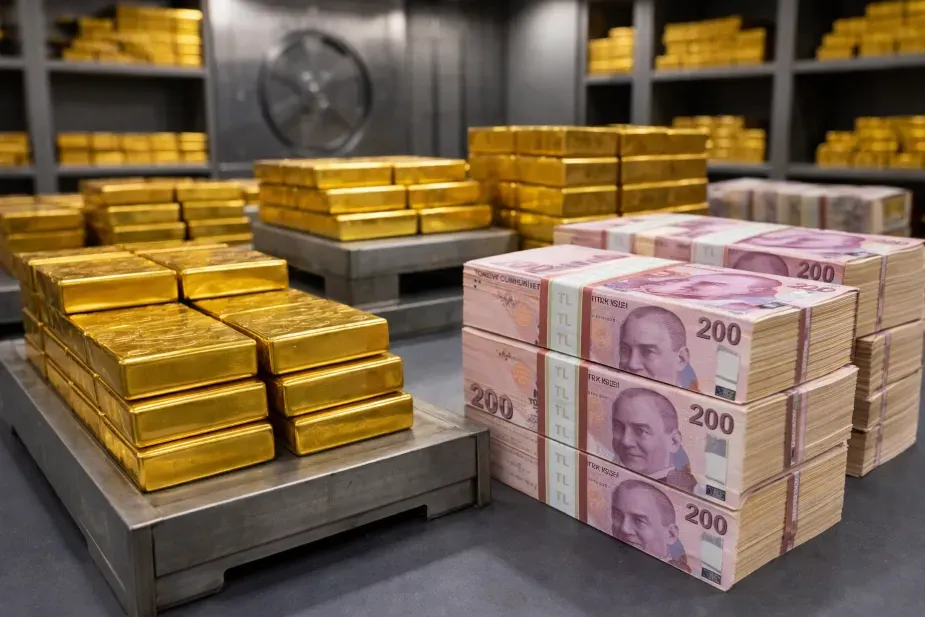
Ankara | EcoPulse24
Turkey gold reserves TCMB ounces tons reserves drop March 2026
Turkey’s gold reserves declined to the equivalent of 702.5 metric tons as of March 27, according to detailed central bank data, marking a sharp weekly contraction alongside a broader drop in official reserve assets.
The Central Bank of the Republic of Turkey (TCMB) reported gold holdings at 22.585 million fine troy ounces, which converts to approximately 702.5 tons, based on standard conversion metrics . The same report shows gold reserves valued at $100.049 billion, down from $116.166 billion a week earlier, a decline of $16.117 billion or 13.9% on a weekly basis .
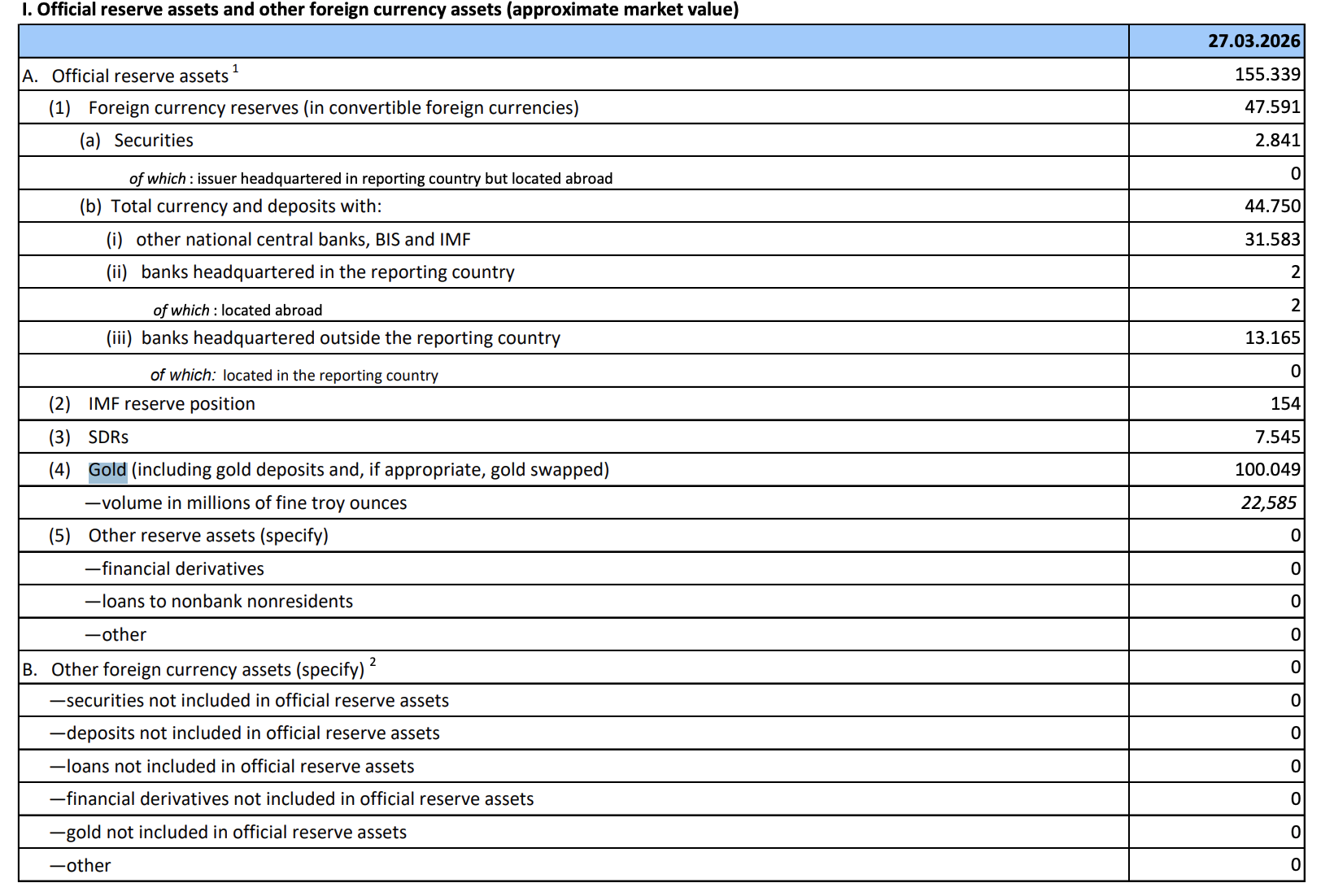
The table shows a sharp decline in Turkey’s gold reserves, both in value and physical volume, within a single reporting week.
Gold holdings are reported at 22.585 million ounces, equivalent to roughly 702.5 tons, based on official central bank data.
The figures also confirm that gold includes deposits and swap-related positions, reflecting broader liquidity dynamics rather than a single transaction type.
Total official reserve assets fell 12.5% week over week to $155.3 billion, reflecting a broad-based reduction across reserve components. Foreign currency reserves dropped 11.2% to $47.6 billion, while IMF reserve positions and SDRs stood at $7.7 billion .
The physical decline in gold holdings, derived from the change in fine troy ounces reported by the central bank, corresponds to an approximate weekly reduction of around 69 tons when compared with the previous reporting period. This figure is calculated using the official ounce data rather than estimated from market prices.
The TCMB reporting framework specifies that gold reserves include gold deposits and gold involved in swap transactions, indicating that changes in reported volumes may reflect a combination of transactions rather than outright sales alone .
On the liability side, the central bank reported that public-sector foreign currency liabilities increased 1.5% to $125.9 billion. Predetermined foreign currency liabilities rose 6.1% to $61.8 billion, while contingent liabilities declined 2.5% to $64.1 billion. Foreign exchange liabilities linked to swap transactions stood at $16.4 billion .
These figures highlight a simultaneous decline in reserve assets and persistence of sizable foreign currency obligations, pointing to tightening external liquidity conditions within the official balance sheet.
The following table summarizes the key official reserve and gold data:
Turkey Official Reserve and Gold Position - March 27, 2026
| Indicator | Value |
|---|---|
| Gold reserves (USD) | $100.049 billion |
| Gold reserves (ounces) | 22.585 million oz |
| Gold reserves (tons) | ~702.5 tons |
| Weekly gold change (USD) | -$16.117 billion |
| Total reserves | $155.3 billion |
| FX reserves | $47.6 billion |
| FX liabilities | $125.9 billion |
| Swap-related liabilities | $16.4 billion |
Based on official TCMB data and internal calculations
EcoPulse24 Analysis
The latest TCMB data provide a clear, fact-based view of reserve dynamics, showing that the decline in gold is not an isolated movement but part of a broader contraction in Turkey’s external liquidity position. The simultaneous drop in gold and foreign currency reserves indicates that pressure is affecting multiple layers of the reserve structure.
The use of fine troy ounces in the detailed dataset allows for precise measurement of physical gold holdings, offering a more accurate picture than valuation-based analysis alone. The conversion to approximately 702.5 tons confirms that the decline is not merely a price-driven fluctuation, but reflects a tangible reduction in reported gold volumes.
However, the structure of the data introduces an important distinction. Gold reserves are reported inclusive of deposits and swap-related positions, meaning that changes in volume may arise from liquidity operations, collateral movements, or balance sheet adjustments, rather than outright disposal of physical gold.
The persistence of large foreign currency liabilities alongside falling reserve assets underscores a tightening liquidity environment. With liabilities exceeding $125 billion and swap exposures remaining significant, the reserve balance sheet reflects ongoing demand for foreign currency funding.
Within the broader global context, where central banks have largely been net buyers of gold, Turkey’s sharp reduction in reported gold holdings stands out as a deviation from the prevailing trend. This divergence highlights the role of gold not only as a strategic reserve asset, but also as a flexible instrument within central bank liquidity management frameworks.
The data ultimately point to a shift in reserve utilization dynamics, where gold and foreign exchange reserves are actively interacting with liability structures under conditions of external pressure. Rather than signaling a single transaction type, the report captures a balance sheet adjustment phase, shaped by liquidity needs and the interaction between assets and obligations.
Sources & References
Editorial Note
Disclaimer
© 2025 EcoPulse24. All rights reserved.