Abu Dhabi Ports Maintain Operations Amid Hormuz Disruptions, Showcasing Supply Chain Resilience and Regional Trade Shifts
Abu Dhabi Ports remain fully operational despite Hormuz disruptions, highlighting UAE logistics resilience and adaptability to trade shifts.

Abu Dhabi | EcoPulse24
Abu Dhabi Ports Group has announced the ongoing continuity of all its operational activities across diverse business sectors, even as the region faces geopolitical developments impacting maritime navigation in the Gulf. The group clarified that its operations within the UAE and across its international network are running normally, with precautionary measures activated to ensure business continuity and safeguard supply chains linked to both regional and global trade.
The group has implemented crisis management and business continuity plans in coordination with UAE authorities, aiming to ensure the safety of employees, partners, and stakeholders, as well as uninterrupted delivery of logistics and marine services to customers. This approach spans all sectors under the group, including port operations, marine services, and related logistics activities.
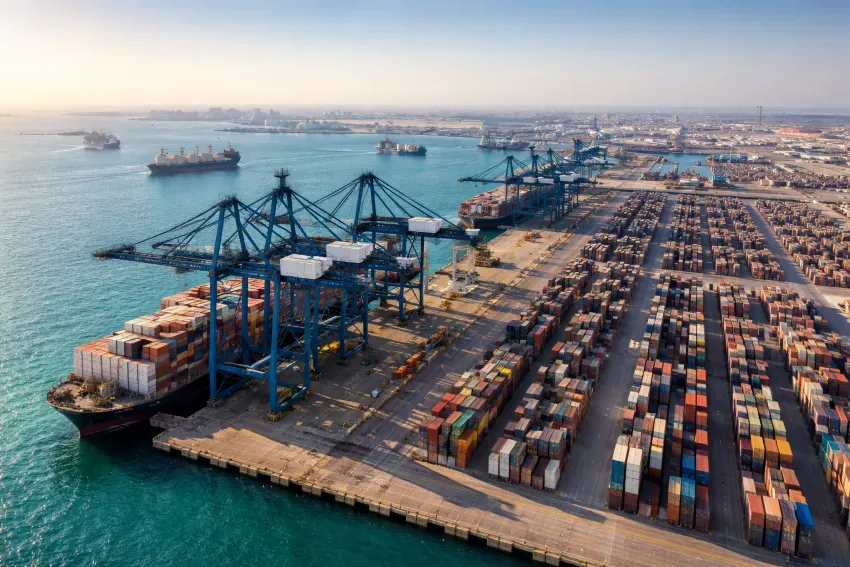
Ports and terminals managed by the group’s port sector within the UAE continue to operate at full capacity, including infrastructure and support services for handling and logistics. This includes Khalifa Port, a key regional logistics hub and a central node in Gulf maritime trade.
The group noted that reduced maritime traffic through the Strait of Hormuz may affect the number of vessels arriving at Khalifa Port in the near term. However, the port’s full operational capacity will remain available, with no direct operational impact on services. This reflects the port’s logistics infrastructure's ability to adapt to changes in maritime trade flows and adjust operations according to regional developments.
Conversely, the group anticipates a potential increase in handling volumes across its diverse global network as international trade routes shift. Changes in shipping patterns often prompt companies to redistribute their logistics routes, which could boost activity at other ports and terminals operated by the group outside the region.
Regarding the group’s maritime and shipping sector, data show that most of its fleet of 122 vessels operates outside the Strait of Hormuz. The fleet includes container ships, general cargo vessels, multipurpose ships, and roll-on/roll-off carriers. Vessels within the strait continue to provide shipping services within the Arabian Gulf.
Operational estimates suggest that the potential impact of regional developments on the group’s shipping activity will remain limited. The same is expected for the group’s economic cities, free zones, and logistics sectors, given the geographical diversity and global spread of its operational assets.
The group’s executive management emphasized that international trade has consistently demonstrated substantial adaptability to geopolitical challenges. Abu Dhabi Ports relies on a proactive risk management and operational discipline approach to ensure the continuity of global supply chains.
The group continues to monitor geopolitical developments and their potential effects on maritime shipping and international trade, with ongoing assessments of any impacts on trade flows or shipping routes, reaffirming its role as a global operator of maritime and logistics infrastructure with a broad international portfolio.
EcoPulse24 Analysis:
The continued operations of Abu Dhabi Ports Group amid regional tensions underscore the resilience of the UAE’s logistics infrastructure and its ability to absorb geopolitical shocks without disrupting trade flows. The group’s global presence also provides greater flexibility to redirect logistics activities according to shifts in maritime trade routes, enhancing the UAE’s position as a stable regional hub for supply chains during periods of geopolitical uncertainty.
Explore Related Coverage
Sources & References
Editorial Note
Disclaimer
© 2025 EcoPulse24. All rights reserved.