ADNOC Lowers Murban Crude OSP to $63.06 per Barrel for February 2026
ADNOC cut Murban crude's Feb 2026 OSP to $63.06/bbl, down $2.47, reflecting weak oil demand and increased competition in Asia.

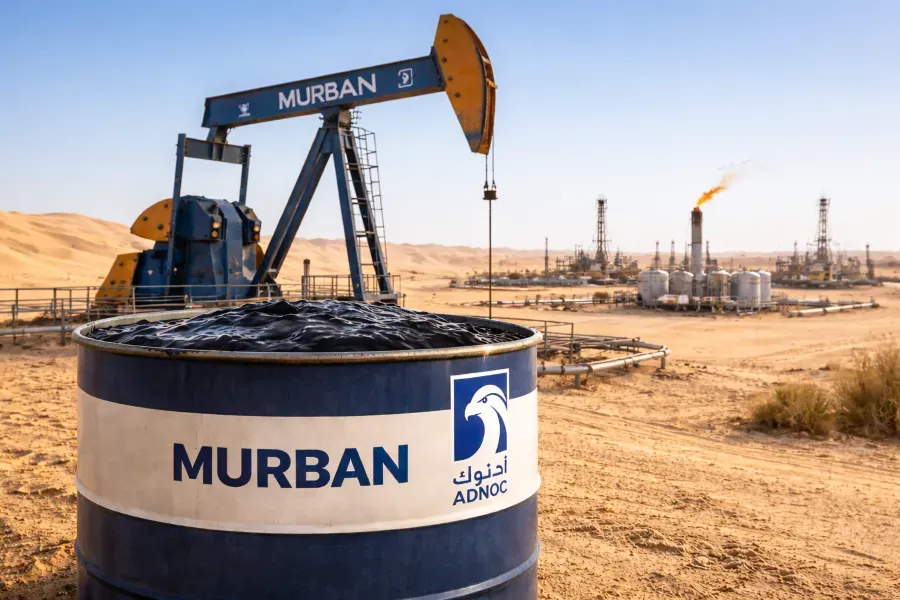
Abu Dhabi | EcoPulse24
The Abu Dhabi National Oil Company (ADNOC) announced on Friday that it has set the official selling price (OSP) for its benchmark Murban crude at $63.06 per barrel for February 2026, down from $65.53 per barrel in January 2026 - a decrease of $2.47 or 3.8%.
This adjustment comes amid continued pressure on global oil markets, with Brent crude trading around $62 per barrel and ongoing concerns regarding the balance of supply and demand.
Economic Analysis
Reasons for the Price Cut
Weak Global Oil Prices: Markets continue to face downward pressure, with Brent crude falling to $62-63 per barrel.
Regional Competition: Increased competition among Gulf producers to maintain market share in Asia.
Demand Uncertainty: Ongoing questions about the strength of global oil demand in Q1 2026.
Economic Impact
On Asian Buyers
The price reduction will improve refining margins for refineries in China, India, and Japan, enhance the competitiveness of Murban compared to other grades, and support demand for UAE crude.
On the Global Market
The move signals continued weak market sentiment and adds pressure on OPEC+ producers to revisit output policies, possibly leading to adjustments at the upcoming OPEC+ meeting in June 2026.
Outlook
Short Term (Jan – Mar 2026)
Price volatility is expected to persist within the $60 – 65 per barrel range, with downside risks in the absence of positive catalysts and close monitoring of Chinese demand and geopolitical tensions.
Medium Term (Q2 2026)
OPEC+ intervention is possible if prices drop below $60, with gradual recovery expected as Asian economic activity rebounds, potentially stabilizing around $65 – 70 per barrel by mid-year.
Key Factors
OPEC+ decisions at the June 2026 meeting, economic growth rates in China and India, developments in US shale production, and Middle East geopolitical tensions will be decisive.
5 Frequently Asked Questions (FAQ)
1. What is Murban crude?
Murban is the UAE’s flagship crude and among the world’s highest-quality light oils:
- Discovery: 1958 at the Murban Bab oilfield in Abu Dhabi
- API Gravity: 40 (light crude)
- Sulfur Content: 0.778% (sweet, low sulfur)
- Refining Ease: Yields a high proportion of valuable petroleum products
Murban futures contracts were launched on the ICE Futures Abu Dhabi in March 2021, making it a key pricing benchmark for Gulf crudes destined for Asia.
2. What is ADNOC?
Abu Dhabi National Oil Company (ADNOC) is the UAE’s state-owned oil and gas company:
- Founded: 1971
- Ownership: 100% owned by the Abu Dhabi government
- Production: Around 4 million barrels per day of crude
- Murban Capacity: 2 million barrels per day
Exports:
- 75% of Murban exports ship from Fujairah (east coast)
- 25% from Ruwais refinery (west coast)
Main markets: Japan, China, South Korea, Thailand, India
3. What is the Official Selling Price (OSP)?
The OSP is the monthly price set by national oil companies for their crude:
Determination Mechanism:
- Announced at the start of each month for the following month
- Based on the average of Murban futures prices
- Considers global benchmarks (Brent, WTI)
- Reflects regional supply-demand dynamics
Uses:
- Pricing reference for long-term contracts
- Indicator of oil market trends
- Tool for managing government revenues
4. Why do investors track Murban prices?
Asian Market Indicator: Reflects supply-demand dynamics in the world’s largest oil-consuming region, directly linked to demand from China and India.
Hedging Tool: Futures contracts offer price risk protection, with physical delivery at Fujairah.
Portfolio Diversification: Adds Gulf crude exposure, with different correlations from Brent and WTI.
Liquidity: Strong trading volumes since 2021 launch, with partnerships with nine global energy majors.
5. How does the Murban price cut affect the UAE economy?
Direct Impact (Very Limited):
- 3-4% monthly revenue decline from Murban
- Fiscal breakeven around $50 provides a strong safety margin
- Current prices ($63) still deliver a comfortable surplus
Strategic Protection:
- Economic Diversification: Non-oil sector accounted for 77.5% of GDP (H1 2025)
- Sovereign Funds: $2.9 trillion in assets provide a substantial financial buffer
- Financial Stability: Robust, diversified financial system absorbs shocks
Investing for the Future:
- Continued investment in green hydrogen and renewables
- Building a sustainable knowledge economy
- Expansion in tourism, technology, and financial services
Source: Reuters | ICE Futures Abu Dhabi
Publication Date: January 9, 2026
Explore Related Coverage
Sources & References
Editorial Note
Disclaimer
© 2025 EcoPulse24. All rights reserved.