Arab Energy Fund Plans Rare $1.4 Billion Panda Bond Issuance in China
The Arab Energy Fund will issue up to $1.4B in Panda bonds in China, marking the largest such move by a Middle Eastern entity.

Beijing | EcoPulse24
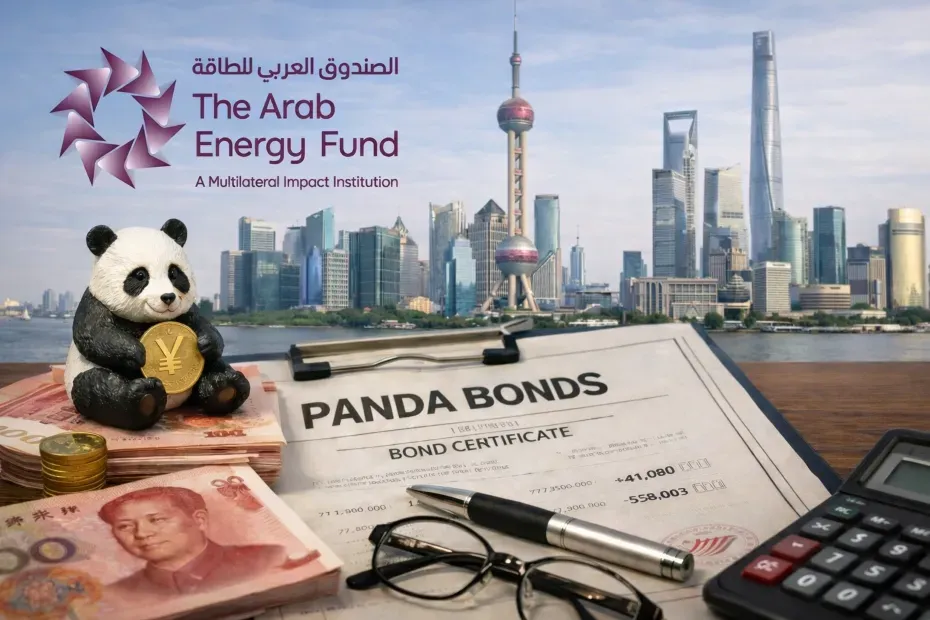
The Arab Energy Fund (TAEF) has secured regulatory approval in China to issue up to 10 billion yuan (about $1.4 billion) in yuan-denominated Panda bonds. This initiative could represent the largest Panda bond program ever issued by a Middle Eastern entity.
According to a statement released Wednesday, the fund plans to conduct the issuances over two years, potentially in several tranches based on market conditions, with the first issuance expected later this year. This will be the fund’s first-ever Panda bond issuance.
Panda bonds are yuan-denominated debt instruments issued by non-Chinese borrowers in China’s domestic market - a market still rarely accessed by Gulf entities. To date, only two such issuances have come from the region, both by the Emirate of Sharjah in 2018 and 2025.
TAEF enjoys sovereign support primarily from Saudi Arabia and the UAE, giving the upcoming issuance strong credit backing and making it attractive to Chinese investors. If the full amount is issued, it would be the largest such transaction among Gulf Cooperation Council countries.
Lower-Cost Funding and Expanded Presence in Asia
TAEF’s management explained that the move toward the Chinese market is part of a funding strategy aimed at diversifying capital sources and expanding its presence in relatively untapped markets. Market data indicates the average yield (coupon) on government and corporate Panda bonds has dropped to around 2.1% in 2025, significantly below the cost of dollar-denominated bonds, offering a clear funding advantage.
Focus on Long-Term Investment
While the fund has not specified the exact use of proceeds, it previously indicated a focus on private equity and project finance, particularly in decentralized technologies and off-grid energy. It also aims to increase its total equity and debt investments by 60% within three years, reaching $12 billion.
Broader Economic Context
This strategy comes amid strengthening trade ties between China and the Gulf, with China becoming the region’s largest trading partner in 2024, with total trade reaching $257 billion and forecasts suggesting this could rise to $375 billion by 2028. Gulf entities, led by Saudi Arabia, are increasingly seeking diversified funding sources in Asian markets as local investment activity slows.
China International Capital Corporation (CICC) and Bank of China are set to act as joint lead managers for any potential issuance, according to Chinese market disclosures.
EcoPulse24 Analysis:
The Arab Energy Fund’s move into the Panda bond market signals a strategic shift in Gulf financing, moving beyond reliance on the dollar or Western markets. Lower yuan borrowing costs and deep Chinese liquidity offer the fund greater financial flexibility, while the planned issuance will further strengthen Gulf-China financial ties as global trade and investment patterns rapidly evolve.
Explore Related Coverage
Sources & References
Editorial Note
Disclaimer
© 2025 EcoPulse24. All rights reserved.