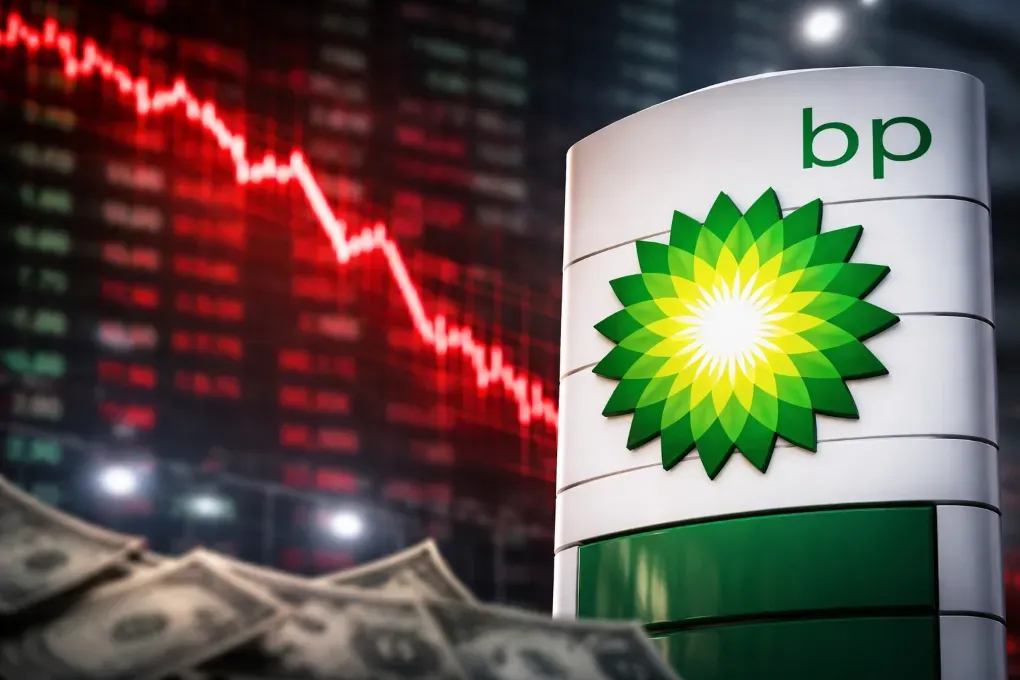
BP Halts Share Buybacks and Deepens Cost Cuts Amid Investor Pressure, Shares Drop 4%
BP halts share buybacks, deepens cost cuts, and cuts spending to strengthen finances, causing shares to drop 4% amid investor pressure.

London | February 2026
BP has announced it will halt its share buyback program, deepen cost reductions, and cut capital spending in a move designed to strengthen its balance sheet and accelerate restructuring. The decision comes as investor pressure mounts for tangible improvements in performance after years of weak returns.
BP shares fell around 4% at the London open, signaling market disappointment with the buyback suspension, previously a key support for the stock.
The move is part of a series of changes over the past year, beginning with activist investor Elliott Investment Management acquiring a stake and pushing for strategic shifts, followed by the dismissal of the previous CEO after his turnaround plan failed to convince investors. Some shareholders have also called for clarity on how a renewed focus on oil and gas will create sustainable value.
According to the company, suspending buybacks will allow free cash flow to be directed toward debt reduction and financial strengthening, amid volatile energy prices, rising financing costs, and increasing capital expenditure demands.
BP is counting on new CEO Meg O’Neill, set to take office in April, to lead a strategic reorientation focused on boosting capital returns and reprioritizing investment between traditional energy and energy transition initiatives.
Market Context
BP’s share decline comes as the company, along with Shell, continues to lag behind sector peers since the start of the year, amid varying strategies among major energy firms between boosting payouts and buybacks and retaining liquidity for balance sheet support.
By contrast, other European companies have shown greater ability to reward shareholders. For example, Barclays announced a plan to return at least £15 billion to shareholders by 2028, while other major banks maintain a balance between payouts and investment.
Analysis
BP’s decision reflects a clear defensive shift in its financial strategy, prioritizing balance sheet protection over short-term stock support. While this may improve liquidity and solvency metrics, it risks alienating investors seeking direct returns, especially as BP’s stock continues to trail competitors.
The next phase will test whether the new management can prove that spending cuts and the buyback halt are not temporary fixes but part of a longer-term value rebuild, which will shape BP’s share performance through 2026.
Explore Related Coverage
Sources & References
Editorial Note
Disclaimer
© 2025 EcoPulse24. All rights reserved.