BYD Operates Eight Car-Carrying Ships to Control Supply Chain Amid Hormuz Closure and Geopolitical Turmoil
BYD's Private Shipping Fleet Navigates Hormuz Crisis to Deliver EVs Across Middle East, Europe and Africa

EcoPulse24 | DUBAI
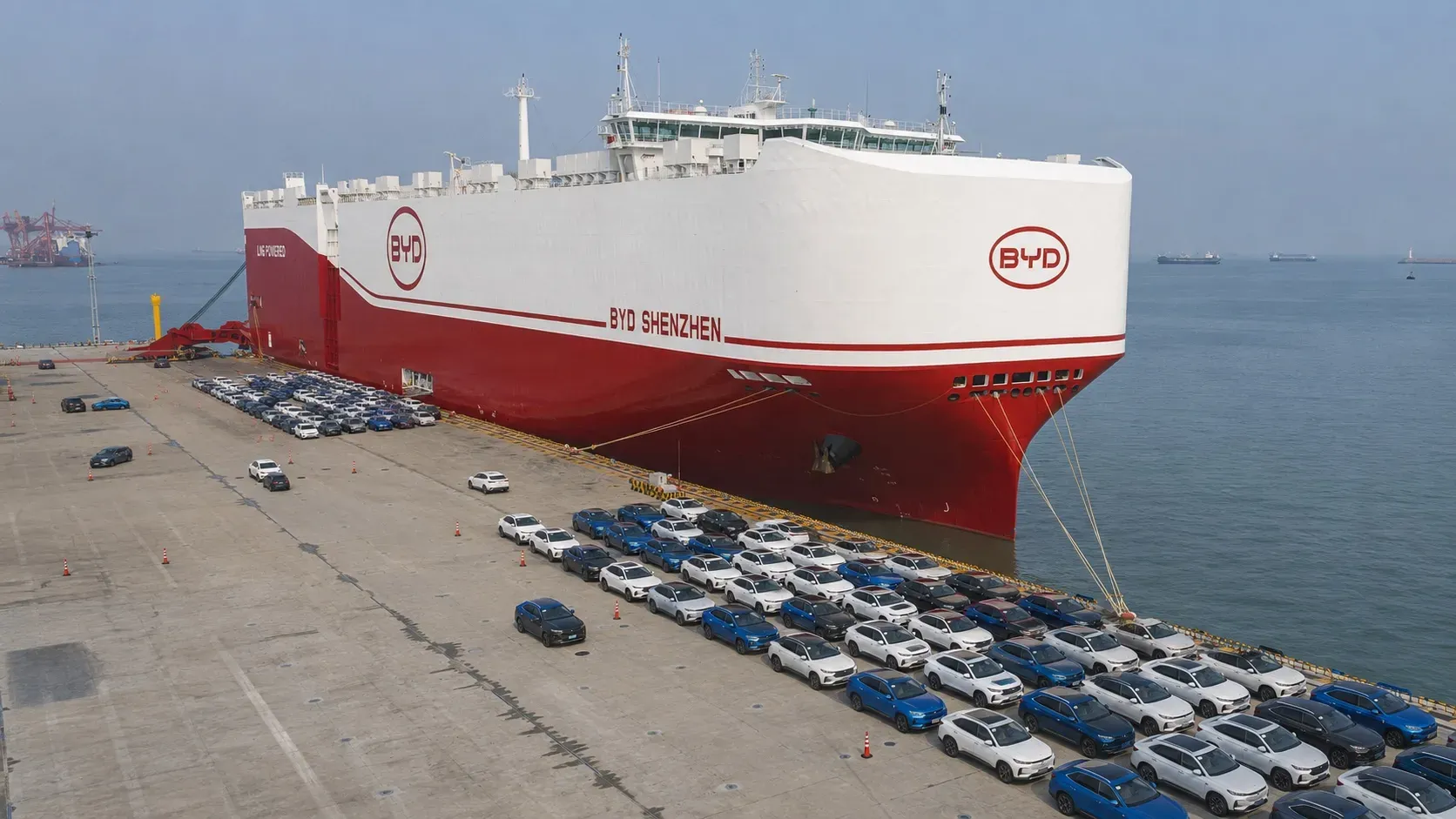
Chinese electric vehicle manufacturer BYD operates a fleet of eight car-carrying ships that allow the company to deliver vehicles to Africa, Europe, Latin America, and the Middle East - markets that do not carry tariff barriers as prohibitive as those in the United States - according to Bloomberg News reporting published on May 20, 2026.
Born of Necessity
BYD's in-house shipping fleet was established in 2022 during the disruptions of the Covid pandemic, when the company determined it could not rely on chartered vessels. The fleet now transports approximately 300,000 cars worth billions of dollars annually, according to BYD. The company states its ships have succeeded in "converting systemic geopolitical risk into a precisely calibrated operational certainty."
Hormuz Advantage
The strategic value of BYD's owned fleet has become particularly clear around the Arabian Peninsula, where BYD vessels continue operating through contested waters that other commercial cargo carriers have assessed as carrying too much risk, following the closure of the Strait of Hormuz amid the Iran conflict. The closure has roiled trade routes and sent shipping rates soaring across global markets. BYD's in-house fleet gives it more control over its supply chain and helps it navigate challenges including geopolitical volatility and adverse weather conditions, according to Bloomberg's reporting.
Export Growth Offsetting Domestic Slowdown
BYD's overseas sales soared in April 2026 as surging gasoline prices in the wake of the Iran conflict spurred renewed global interest in electric vehicles, helping offset softer domestic demand in China. The company is betting on export growth to pull it out of a yearlong earnings slump.
Separately, Bloomberg reported that BYD is in talks with Stellantis (NYSE: STLA) and other manufacturers about potentially taking over European production plants, as EU automakers struggle with uneven EV demand and intensifying competition from Chinese rivals.
EU-US Trade and the China Pressure
European Union manufacturers have been facing dual pressure - from uneven EV demand leaving many factories underused, and from intensifying competition from BYD and other Chinese rivals. China's trade surplus with the EU continues growing at approximately 30% annually, according to a report published Wednesday by the Centre for European Reform titled "China Shock 2.0: The Cost of Germany's Complacency." The report states that the EU's product-specific trade defenses and buy-European industrial policy have been "too slow and too narrow."
EU officials on Wednesday completed the text of a US trade deal announced last July, clearing a major hurdle to ratifying the pact before US President Donald Trump's threatened July 4 deadline to increase tariffs on European automobiles to 25% from the current 15%.
EcoPulse24 Analysis
BYD's shipping fleet strategy carries direct implications for Gulf trade and energy markets. The company's willingness to navigate Arabian Peninsula waters while conventional cargo carriers withdraw is not merely a logistics decision - it is a geopolitical signal that Chinese manufacturers are prepared to absorb risk that Western competitors will not, in order to maintain market access to the Middle East and Africa. For Gulf automotive markets, BYD's combination of owned logistics, rising gasoline prices, and competitive pricing positions it as a structural beneficiary of the Hormuz crisis rather than a victim of it. The EU-US trade deal timeline and Trump's July 4 tariff deadline add a further layer of urgency to BYD's non-US export focus, reinforcing the Middle East and Africa as growth markets of increasing strategic priority for the company.
Explore Related Coverage
Sources & References
Editorial Note
Disclaimer
© 2025 EcoPulse24. All rights reserved.