How the Hormuz Crisis Became the Biggest Energy Disruption in History
The 2026 Hormuz crisis caused record global energy disruption, slashing oil/gas flows and driving up prices, especially impacting Asia and food costs.

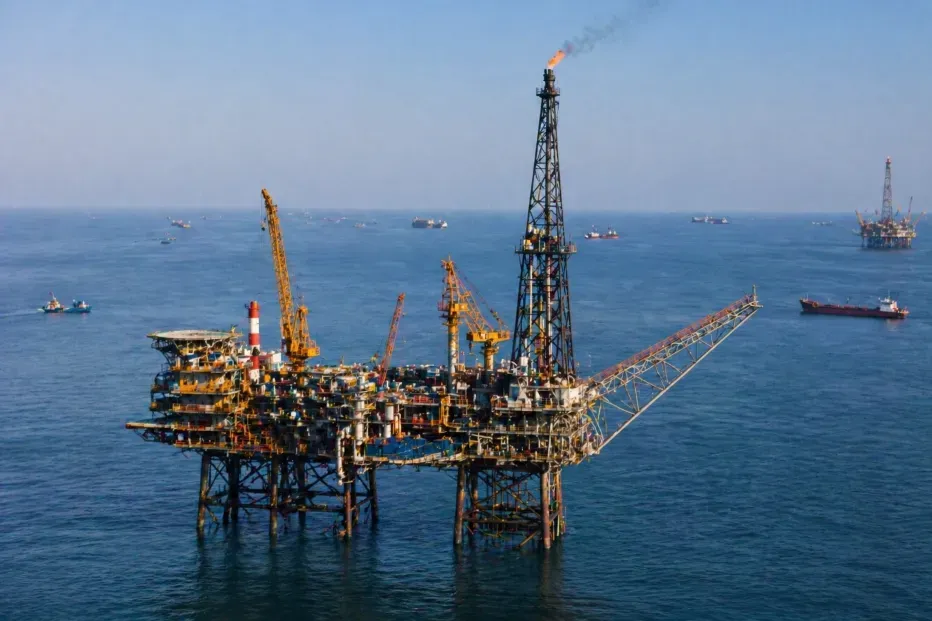
The Strait of Hormuz has always been the world's most consequential chokepoint. But what is unfolding in 2026 has surpassed every historical precedent. Daniel Yergin, Vice Chairman of S&P Global and one of the world's foremost energy analysts, described the current situation as "the biggest energy disruption we've ever seen" - a characterization that carries particular weight given his four decades of tracking global energy markets.
Beyond Oil - A Multi-Commodity Shock
The immediate instinct is to frame this as an oil story. It is far more than that.
The disruption extends well beyond crude oil, affecting global supplies of natural gas, fertilizers, helium, aluminum, and petrochemicals. Asia bears the heaviest burden, as 80% of the oil and 90% of the LNG that previously transited the strait was destined for Asian markets.
The United Nations World Food Programme has warned of sustained food price inflation as fuel and fertilizer markets face prolonged disruption. More than 30% of global urea trade, along with 20% of ammonia and phosphate shipments, moves through the strait.
This is the architecture of a compounding crisis - energy feeds manufacturing, manufacturing feeds food production, and food prices feed inflation. The Strait of Hormuz is not merely an oil pipeline. It is a critical artery of the global supply chain.
📊 Hormuz Crisis - Key Facts
| Indicator | Pre-Crisis Levels | Current (April 2026) |
|---|---|---|
| Oil flows through Hormuz | ~20M bbl/day | ~3.8M bbl/day |
| LNG loss | Baseline | -300M m³/day |
| Brent Crude | Pre-crisis levels | $105.33 |
| WTI Crude | Pre-crisis levels | $94.40 |
| Global urea trade via Hormuz | 30%+ of global supply | Severely disrupted |
| Ammonia & Phosphate via Hormuz | 20% of global supply | Severely disrupted |
| Asia oil dependency via strait | 80% of flows | Critically impacted |
| Asia LNG dependency via strait | 90% of flows | Critically impacted |
| IEA Classification | N/A | Largest oil market disruption in history |
The Numbers Behind the Disruption
Crude oil flows through the strait declined from approximately 20 million barrels per day before the crisis to just over 3.8 million barrels per day by April, while the International Energy Agency described the situation in its April report as "the largest disruption in the history of the global oil market."
On the natural gas side, LNG exports through the strait have fallen by more than 300 million cubic meters per day since early March 2026, representing a loss of over 2 billion cubic meters of global gas supply every week.
Brent crude is currently trading above $105.33 per barrel, while WTI sits near $94.40 - elevated levels that reflect genuine supply anxiety rather than speculative positioning.
The Divergence Between Markets and Reality
One of the most analytically significant observations Yergin raised is the gap between financial market performance and real-world conditions. Equity markets have shown relative resilience, yet this surface stability masks profound stress in the physical economy.
Across Asia, the reality on the ground includes actual oil shortages, rationing systems, factory closures, and restaurants unable to operate due to energy scarcity.
This divergence is not unusual in early-stage commodity shocks. Financial markets price expectations; physical markets price reality. The two tend to converge - and history suggests it is physical reality that ultimately sets the direction.
The Two-Blockade Dynamic
Yergin framed the crisis as a confrontation between two competing forms of economic pressure: sustained economic and diplomatic pressure measures on one side, and the capacity to restrict energy flows on the other.
Time is the critical variable. As energy inventories are drawn down across importing nations - particularly in Asia - the economic cost of prolonged disruption compounds weekly. The resumption of normal flows through the strait has been identified by the IEA as the single most important variable in relieving pressure on global energy supply and the broader economy.
Gulf Markets: Resilience in Context
It is worth noting that Gulf financial markets have demonstrated measured stability throughout this period. The Saudi Tadawul (TASI) closed Sunday at 11,121 points, Kuwait's Premier Market gained 1.29%, and Qatar's Exchange held steady - reflecting the underlying economic strength and diversification efforts that Gulf economies have pursued over the past decade.
Gulf sovereign wealth funds, robust foreign exchange reserves, and ongoing Vision-aligned economic programs provide meaningful buffers that distinguish the region's fiscal position from that of pure oil importers facing the full brunt of elevated prices.
The Long-Term Structural Shift
Regardless of how the current situation resolves, Yergin anticipates two durable consequences.
The first is a fundamental reassessment of energy security strategy among importing nations. Supply chain diversification, strategic reserve expansion, and alternative routing will become policy priorities across Asia and Europe for years to come.
The second is an acceleration of the energy transition. With 20% of global car production in 2026 expected to be electric vehicles, Yergin noted this share is likely to increase as a direct consequence of the current energy shock - as governments and consumers recalibrate their dependence on fossil fuel supply chains.
JPMorgan Global Research forecasts gold - the traditional barometer of geopolitical stress - to average above $5,055 per ounce by Q4 2026, with central bank and investor demand projected to remain strong throughout the year. The metal's trajectory is a proxy for how institutional investors are reading the durability of current global uncertainty.
EcoPulse24 Analysis
The Hormuz crisis of 2026 is a structural event, not a transient shock. The distinction matters enormously for how investors, policymakers, and businesses should position themselves.
Three observations stand out.
First, the commodity interdependence exposed by this crisis - oil feeding fertilizers feeding food prices - is a reminder that energy security and food security are not separate policy domains. They are the same domain viewed from different angles.
Second, the resilience demonstrated by Gulf financial markets reflects genuine economic depth. The region's sovereign balance sheets, infrastructure investment pipelines, and economic diversification programs provide a foundation that insulates Gulf economies from the worst outcomes facing pure energy importers.
Third, the acceleration of the energy transition that Yergin anticipates is likely to be uneven. Nations with the capital and industrial capacity to pivot quickly will do so. Those without will face a more prolonged period of energy vulnerability - and that divergence will reshape trade patterns, investment flows, and geopolitical alignments for the decade ahead.
The strait remains the world's most watched waterway. What happens next will be measured not just in barrels per day, but in the long-term architecture of global energy strategy.
Oil prices as of April 26, 2026: Brent $105.33 | WTI $94.40
Explore Related Coverage
Sources & References
Editorial Note
Disclaimer
© 2025 EcoPulse24. All rights reserved.