Central Bank Super-Week: Fed, ECB, BoJ and Six Others Set Rates as War Reshapes Outlook
Nine central banks including the Fed, ECB and BoJ announce rate decisions this week amid oil-driven inflation and Iran war uncertainty.

EcoPulse24 | Washington D.C.
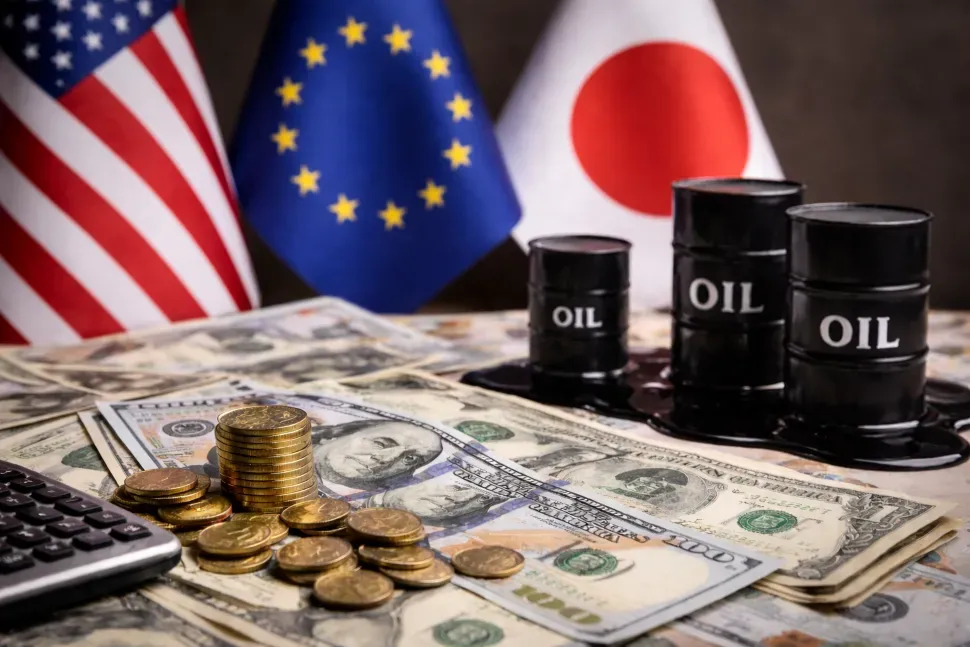
The week of March 16 – 21, 2026 will see nine of the world's most influential central banks simultaneously announce interest rate decisions, creating a "super-week" of monetary policy that could define the macro environment for the remainder of the year - all against the disruptive backdrop of the Iran – GCC military conflict and Brent crude trading near $99 per barrel, according to Trading Economics.
The Federal Reserve Headlines the Week
The US Federal Reserve will hold what is likely to be one of the most closely watched policy meetings of Fed Chair Jerome Powell's tenure. The Fed enters the week facing a stagflationary dilemma: oil-driven inflation is pushing headline CPI expectations higher, while the labour market - already showing signs of cooling in the January JOLTS data - risks further deterioration as businesses pull back on hiring amid geopolitical uncertainty. The Fed is broadly expected to hold rates steady at its current target range, but the statement language and the updated dot plot projections will be dissected for any signals about whether the two rate cuts expected in H2 2026 remain on the table.
For GCC economies - whose currencies are pegged to the US dollar - the Fed's decision carries direct transmission effects. Saudi Arabia's SAMA and the UAE Central Bank typically shadow Fed decisions within days. Any pivot in Fed language toward a more hawkish or dovish tone will therefore reverberate through Gulf lending rates, mortgage markets, and corporate credit conditions.
ECB, BoJ, BoE: Three Different Dilemmas
The European Central Bank faces a particularly difficult trade-off: eurozone growth was already fragile before the Iran war, and energy prices at current levels risk tipping key economies - particularly Germany - into recession. The ECB's Governing Council must weigh whether to cut rates to support growth or hold to anchor inflation expectations as oil costs filter through to European producer and consumer prices.
The Bank of Japan enters the week with the yen at a 20-month low of 159.69 against the dollar, complicating any further policy normalisation. A weaker yen amplifies Japan's imported energy costs - a particular vulnerability given Japan's near-total reliance on imported hydrocarbons - putting the BoJ in an uncomfortable position between domestic growth support and currency defence.
The Bank of England, the Swiss National Bank, the Reserve Bank of Australia, and the Bank of Canada round out the week's decision calendar, with each navigating its own version of the energy-inflation versus growth trade-off.
What This Means for MENA Markets
The collective outcome of this super-week will determine the global cost of capital for the months ahead, with direct implications for GCC sovereign bond yields, real estate financing costs in Dubai and Abu Dhabi, and equity valuations across Gulf bourses. A broadly dovish tilt from the major central banks would provide relief to rate-sensitive sectors; a hawkish surprise would amplify the existing pressure on GCC equities already contending with geopolitical risk premiums.
EcoPulse24 Analysis
EcoPulse24 Analysis: This is arguably the most consequential central bank super-week in a decade. The convergence of nine policy decisions during an active regional war creates a rare moment where monetary and geopolitical risk intersect simultaneously. For Gulf investors, the Fed decision is the one that matters most: any signal of delayed rate cuts would extend the high-rate environment that has boosted UAE and Saudi bank margins, but would also sustain pressure on regional equity multiples. Watch for the Fed's dot plot more than its headline decision - the trajectory, not just the level, will set the tone for H1 2026 across MENA markets.
Explore Related Coverage
Sources & References
Editorial Note
Disclaimer
© 2025 EcoPulse24. All rights reserved.