Fed Expected to Hold Rates Wednesday as Iran War Stokes Inflation Fears
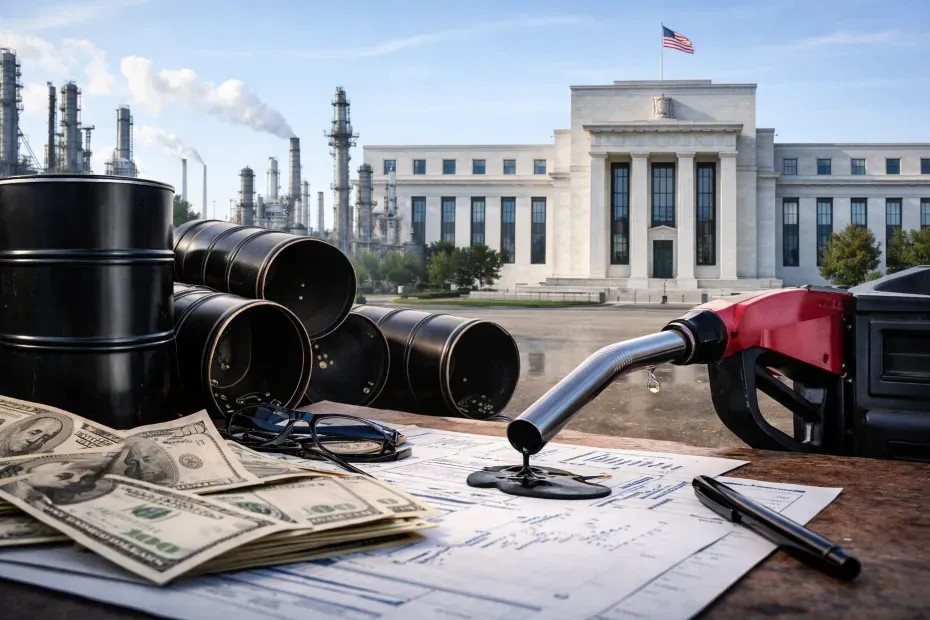
The Federal Reserve is set to hold rates Wednesday as the Iran war pushes energy prices above USD 103, clouding the US inflation and rate-cut outlook.

EcoPulse24 | New York
The US Federal Reserve is widely expected to hold interest rates steady at its two-day policy meeting concluding on Wednesday, March 18, 2026, as policymakers confront a uniquely difficult environment: the Iran war has pushed energy prices sharply higher, stoking fresh inflation pressures just as a rate-cutting cycle had begun to look feasible earlier this year.
Energy Prices Complicate the Inflation Outlook
Brent crude oil was trading above USD 103 per barrel on Tuesday, up nearly 3% on the session, after Iran launched a direct missile and drone strike on UAE territory, hitting the Fujairah Petroleum Industries Zone and forcing UAE air defenses into action against ballistic missiles and loitering munitions. WTI crude climbed toward USD 96. This latest escalation, now in the conflict's third week, has kept global energy prices elevated at levels that feed directly into consumer price indexes. The US 10-year Treasury yield edged back to 4.24% on Tuesday after a sharp decline in the prior session, reflecting renewed inflation caution among bond investors.
The Fed's Balancing Act
Market participants expect Fed Chair Jerome Powell to strike a cautious, data-dependent tone at Wednesday's press conference, acknowledging both the elevated energy-driven inflation risk and the potential drag on growth from sustained geopolitical uncertainty. The Federal Reserve is unlikely to provide any forward guidance on the rate path given the rapidly evolving Middle East situation. Analysts widely agree that a prolonged Iran conflict, if it keeps energy prices above USD 100 per barrel for an extended period, could delay any rate-cutting cycle that had been anticipated for mid-2026. Headline inflation data in the coming months will be closely scrutinised for signs of energy price pass-through into core consumer prices.
Global Central Banks Under Pressure
The Fed is not alone in grappling with this dilemma. The Reserve Bank of Australia raised its cash rate by 25 basis points to 4.1% on Tuesday in a split 5-4 vote, marking back-to-back hikes as the energy shock adds to Australian inflation pressures. The Bank of Japan is expected to hold its policy rate unchanged this week despite verbal interventions aimed at supporting the weakening yen, which has fallen toward 159.5 per US dollar. Finance Minister Satsuki Katayama warned that authorities are fully prepared to act at any time given the impact of exchange rate moves and rising oil prices on daily life. The European Central Bank and Bank of England are similarly expected to maintain current settings, with all major central banks forced to balance energy-driven inflation against softer growth outlooks.
Geopolitical Backdrop and US Policy
US Treasury Secretary Scott Bessent confirmed that the United States is allowing Iran to continue exporting crude oil through the Strait of Hormuz, while President Donald Trump has sought broader international support to secure commercial shipping in the waterway. Trump also asked China to delay its planned summit with President Xi Jinping by approximately one month to focus on managing the Iran conflict. Despite these diplomatic efforts, the conflict escalated today with Iran targeting UAE energy infrastructure directly, adding new urgency to calls for an internationally coordinated response. US emergency petroleum reserves are being prepared for release as an additional buffer against supply disruptions.
EcoPulse24 Analysis
EcoPulse24 Analysis: Wednesday's Fed decision will be among the most closely watched in years, given the unprecedented combination of a live regional conflict affecting global energy supply and a US inflation rate that remains above target. Powell's language on whether the energy shock is viewed as transitory or persistent will carry significant market implications. For GCC investors, a prolonged Fed hold supports the region's dollar-peg stability but limits the scope for local monetary easing. Oil-exporting GCC economies stand to benefit from higher Brent prices, but the security premium now embedded in equity and credit markets risks offsetting those gains. The direct attack on UAE infrastructure today is a reminder that the financial risks of this conflict extend well beyond oil price volatility.
Explore Related Coverage
Sources & References
Editorial Note
Disclaimer
© 2025 EcoPulse24. All rights reserved.