China Makes Surprise Yuan Policy Shift Amid Iran War Escalation and Rising Oil Prices, Highlighting Economic Concerns
China's central bank strengthened the yuan to offset rising oil prices amid Middle East tensions, aiming to stabilize markets and curb inflation.

Beijing | EcoPulse24
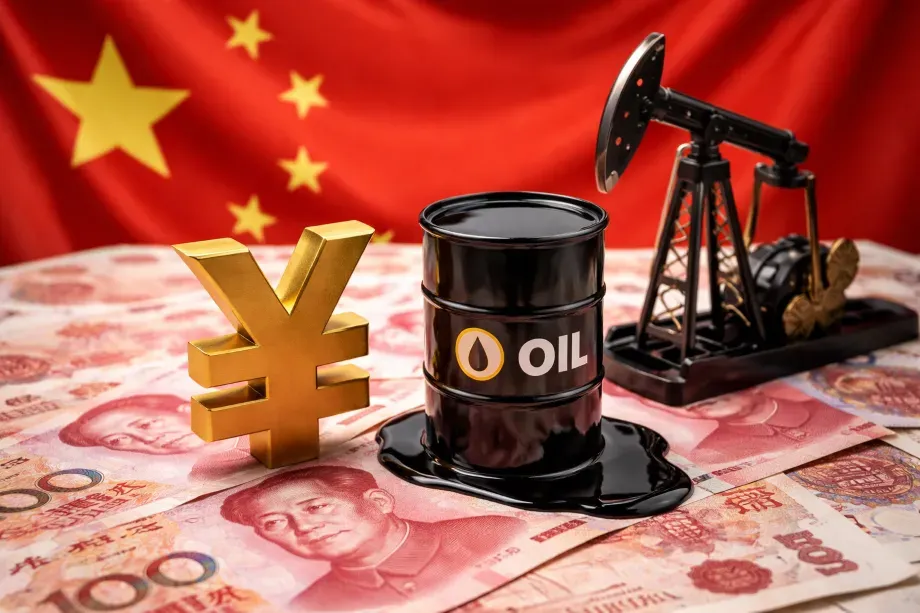
China's central bank made a surprise move to support the local currency amid escalating geopolitical tensions in the Middle East and surging global oil prices, signaling growing concern in Beijing over the war's impact on China's energy-dependent economy.
The People's Bank of China set the daily reference rate for the yuan at 6.9124 per US dollar, a stronger level than last week's close before military escalation. This rate determines the yuan's daily trading band, allowing it to fluctuate within a 2% range above or below the reference set by the central bank.
Despite continued dollar strength globally, this step reflects the monetary authorities' desire to calm market volatility and prevent a sharp decline in the yuan as global risks rise.
The yuan advanced 0.2% on Tuesday - its biggest daily gain since last August - while the offshore yuan fell about 0.9% against the dollar over three consecutive sessions this week, after a recent rally that pushed the currency to a 35-month high last week.
This sudden shift in currency policy underscores mounting pressures on China's economy from rising energy costs and disruptions to trade routes linked to the Middle East conflict.
As the world's largest oil importer, China is highly sensitive to disruptions in global energy markets. Estimates suggest about half of China's crude oil imports pass through the Strait of Hormuz, a vital global energy corridor.
China also imports around 80% of Iran's oil exports, accounting for roughly 13% of its total crude imports. Any disruption in regional oil flows could directly impact China's domestic energy costs.
Analysts believe a stronger yuan can help offset rising oil prices by making dollar-priced imports cheaper and easing inflationary pressures tied to energy.
Currency stability also gives Chinese authorities more room to maintain growth-supportive monetary policy amid a relative economic slowdown. This approach aims to prevent capital outflows and maintain local financial market stability in a global environment marked by high interest rates and a strong dollar.
The currency market moves coincided with volatility in Chinese equities, with the CSI 300 index falling about 2% this week after two consecutive weeks of gains. Analysts say currency support may help ease simultaneous pressures on both stocks and the yuan.
This action is also part of a wider Asian trend to counter dollar strength. Central banks in Indonesia and India have intervened in forex markets in recent days, while policymakers in Japan and South Korea have voiced concerns over exchange rate movements.
These developments coincide with the annual session of China's National People's Congress, a key political and economic event often used by authorities to reassure markets about policy direction.
Some analysts believe the meeting may offer an opportunity to boost investor confidence in China's economy amid global uncertainty from Middle East conflicts and energy market volatility.
EcoPulse24 Analysis:
Recent yuan moves highlight the sensitivity of China's economy to global energy markets, given its heavy reliance on Gulf oil imports. The central bank's intervention to support the currency reflects efforts to balance financial market stability with growth-oriented monetary policy. Amid current geopolitical tensions, exchange rate management has become a key tool for Beijing to contain the fallout from rising oil prices and global market volatility.
Explore Related Coverage
Sources & References
Editorial Note
Disclaimer
© 2025 EcoPulse24. All rights reserved.