Strait of Hormuz in the Eye of the Storm: Geopolitical Shock Puts Global Energy Markets and Economy to the Test
Tensions in the Strait of Hormuz raise oil, gold prices and risk premiums, testing global markets and energy security, especially for Asia.

Dubai | EcoPulse24
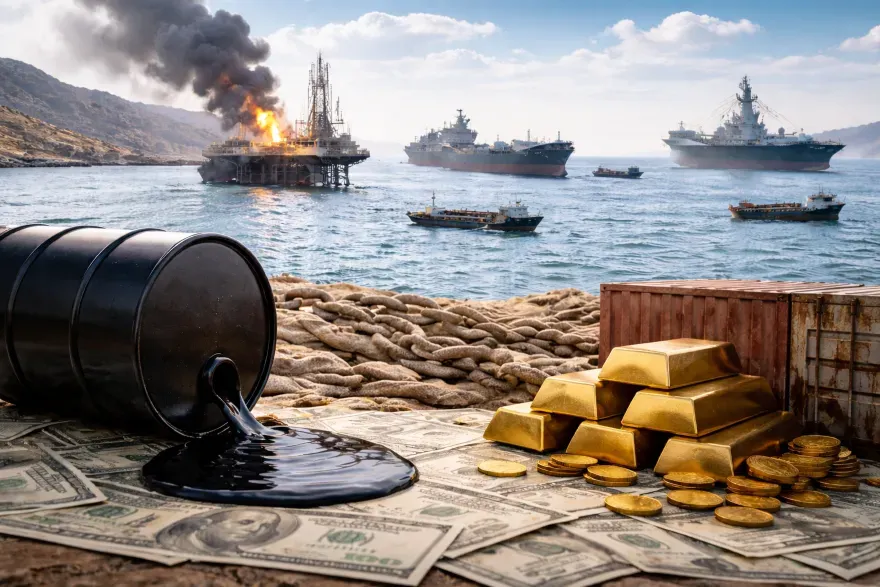
Military developments in the Gulf are no longer isolated political events but have become central to broad repricing across energy and financial markets. The Strait of Hormuz, once a sensitive strategic passage, is now a decisive factor in global economic stability. Escalating tensions between the US and Israel versus Iran have placed one of the world’s vital trade arteries under unprecedented pressure, leading markets to price in a geopolitical risk premium beyond traditional supply and demand.
Oil prices quickly reflected this shift. West Texas Intermediate traded at $72.06 per barrel, up 7.52%, while Brent neared $78 after a strong rally. The move is less about immediate supply disruption and more about the threat of passage disruption, as about one-fifth of global oil trade and significant LNG volumes transit the strait. Even the threat of closure adds an instant risk premium.
Gold surged past $5,400 before settling near $5,395.84 per ounce, indicating defensive repositioning in global portfolios. Silver followed suit, though less sharply, reflecting classic hedging during acute tensions. Markets do not wait for an official closure to react; a heightened risk of disruption is enough to trigger repricing.
Supply chains are especially vulnerable. Dozens of oil tankers have opted to wait inside the Gulf rather than risk passage, and marine insurers have raised war risk premiums or canceled coverage for some routes. This creates a dual logistical challenge: importers face shipping delays and rising costs, while producers risk storage overflows if exports stall.
A short-term disruption would keep prices elevated within a manageable risk premium. However, a prolonged disruption could trigger real shortages, especially in LNG, as Qatar - one of the world’s top suppliers - exports almost exclusively via the strait. In such a case, the issue becomes a test of the global energy system’s ability to rebalance quickly.
Asian economies are most exposed due to their heavy reliance on Gulf energy. Singapore has hinted at revising its growth and inflation outlooks if energy prices stay high. Japan, South Korea, and India face similar challenges, as sustained energy cost increases feed directly into production, transport, and ultimately consumer prices. Imported inflation could return as a headwind in economies previously on a path toward stabilization.
Europe faces a more complex picture. Major industrial economies are already seeing slowdowns, and higher oil prices squeeze margins and dampen consumer confidence. In the US, despite being a major producer, higher prices feed through to domestic fuel costs and inflation expectations, potentially influencing monetary policy and interest rate decisions.
Financial markets clearly show contagion. Currencies and equities in emerging economies have come under pressure, while bonds have experienced volatility amid reassessments of inflation and credit risk. Rising energy prices heighten sensitivity to real yields and prompt renewed scrutiny of creditworthiness, leading investors to reduce exposure to cyclical assets and increase allocations to commodities and safe havens.
For central banks, the crisis presents a delicate balancing act. Higher oil prices could reignite inflation just as the global battle for price stability remains unresolved. Any energy-driven inflation surge may delay easing or prompt a more cautious tone from some central banks. In energy-importing economies, monetary policy becomes hostage to international developments beyond local control.
A deeper structural issue is the renewed focus on energy security. Reliance on narrow maritime chokepoints exposes the global system to concentrated shocks. The current crisis may accelerate diversification projects - alternative pipelines, expanded strategic storage, and increased investment in renewables and nuclear energy to reduce geopolitical exposure.
Producers outside the Gulf may see an opportunity to gain market share if the crisis persists. Higher prices can make higher-cost projects economically viable, potentially shifting supply balances over the medium term. However, such shifts take time, while markets react daily to news and security developments.
In shipping, the crisis extends beyond oil. Higher insurance premiums, vessel rerouting, and the risk of tensions spreading to other routes like the Red Sea add extra layers of risk to global trade. Supply chains, only recently recovering from previous disruptions, could face new tests if tensions persist.
Ultimately, developments in the Strait of Hormuz are not a passing event but a test of the global economy’s resilience to concentrated shocks at strategic chokepoints. Markets price in probabilities, not just facts, and each day of uncertainty promotes defensive strategies and sustained volatility.
EcoPulse24 Analysis:
The current crisis reveals the fragility of the balance between geopolitics and the global economy. Energy is the primary transmission channel, but the impact extends to currencies, bonds, and monetary policy. Ongoing tensions maintain risk premiums and foster a defensive investment climate, while any real de-escalation could swiftly reset price curves. For now, risk management dominates, making market stability more dependent on field developments than on traditional economic indicators.
Explore Related Coverage
Sources & References
Editorial Note
Disclaimer
© 2025 EcoPulse24. All rights reserved.