China's Fighter Jet Giant Posts Record Profits After Combat Debut in India-Pakistan Clash
China's AVIC Chengdu posts record profits after J-10 jets' combat debut, boosting global arms sales and shifting defense market dynamics.

Wednesday, April 29, 2026
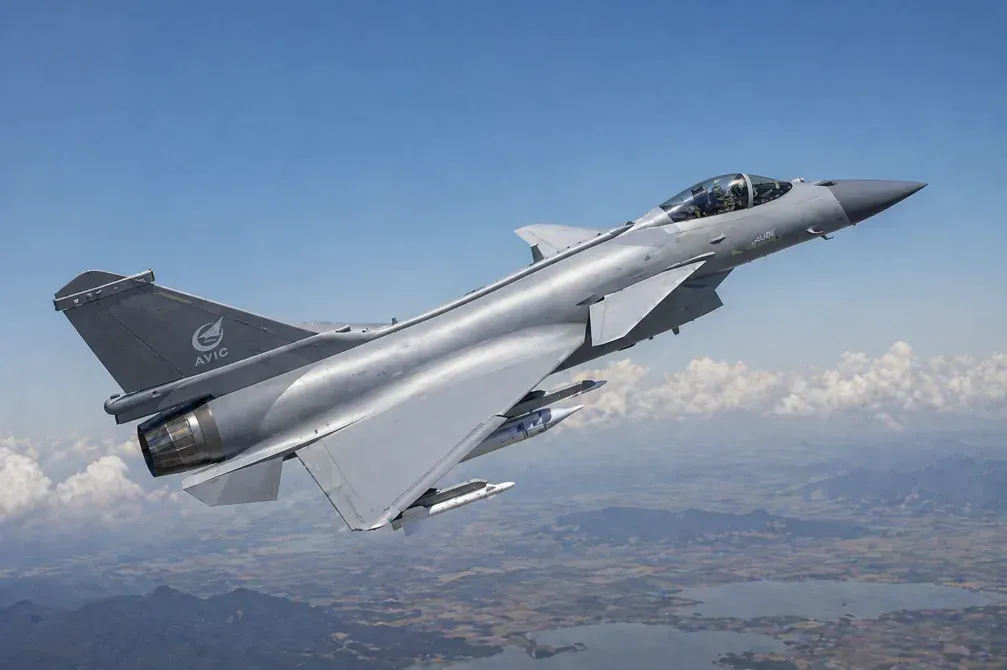
AVIC Chengdu Aircraft Co., maker of the J-10 fighter jets that entered combat for the first time during last year's India-Pakistan conflict, has posted record annual profits and near-doubled first-quarter sales - a financial result that reflects the company's transformation from a domestic defense supplier into a globally recognized arms exporter.
📊 Financial Results
| Metric | Value | Change |
|---|---|---|
| 2025 Revenue | ¥75.4 billion ($11 billion) | ↑ 15.8% - Record |
| 2025 Net Profit | ¥3.4 billion | ↑ 6.5% - Record |
| Q1 2026 Sales | - | ↑ ~80% YoY |
| Shenzhen Share Price | - | ↑ ~2% Wednesday |
Combat Proven - The Moment That Changed Everything
In May 2025, Pakistan's military claimed that its J-10C fighters had shot down multiple Indian aircraft, including French-made Rafale jets - one of the most capable Western fighter platforms in active service. India acknowledged losing aircraft without specifying a number. The exchange marked one of the first times advanced Chinese weapons systems were tested in actual high-intensity combat against Western-supplied equipment.
The implications for the global arms market were immediate. For decades, Chinese defense exports competed primarily on price. After May 2025, they began competing on demonstrated performance. That is a qualitatively different proposition.
International Demand Accelerates
Since the India-Pakistan conflict, AVIC Chengdu's international profile has risen sharply. Indonesia signaled interest in acquiring J-10s. Iraq, Bangladesh, and Indonesia have expressed interest in the jointly-produced JF-17 Thunder. The company confirmed in an investor Q&A last week that expanding international arms sales is a strategic priority.
In February, AVIC Chengdu signed a deal with the city of Chengdu to expand aerospace production capacity. Sister company AVIC Shenyang - maker of the fifth-generation J-35 - reported 2025 sales of ¥44.7 billion and is expanding its manufacturing facilities, with a new factory expected to begin mass production this year.
Both companies are sanctioned by the United States - a designation that has done little to slow their growth or their international appeal among countries seeking alternatives to Western defense suppliers.
EcoPulse24 Analysis
This story is about more than one defense company's quarterly results. It is about a structural shift in the global arms market that has significant implications for the Middle East and Gulf region.
Three dimensions stand out.
First, the combat test changes the calculus. Defense procurement decisions are risk-weighted. A weapons system with a documented combat record against Western equipment carries a fundamentally different risk profile than one without. AVIC Chengdu now has that record - and the order pipeline reflects it.
Second, Iraq's reported interest is directly relevant to this region. An Arab Gulf-adjacent nation considering Chinese fighter jets represents a meaningful shift in the regional security architecture - one that carries implications for US military relationships, basing agreements, and the broader balance of influence in the Middle East.
Third, China is building a complete defense ecosystem simultaneously. J-10 for export, J-20 as its domestic fifth-generation platform, J-35 as its carrier-based stealth fighter - all advancing in parallel. This is not a single program. It is a comprehensive strategy to offer an alternative to the US-led defense supply chain across the developing world.
In a world where the Hormuz crisis has demonstrated the strategic consequences of energy dependence, the countries that are watching are drawing broader lessons about dependence of all kinds - including defense dependence. AVIC Chengdu is a beneficiary of that recalculation.
Explore Related Coverage
Sources & References
Editorial Note
Disclaimer
© 2025 EcoPulse24. All rights reserved.