Gemini's Integration with Google Search Raises Monopoly Co
The integration of Gemini with Google Search may enhance monopoly power and threaten competition in AI, according to Bloomberg's warnings.

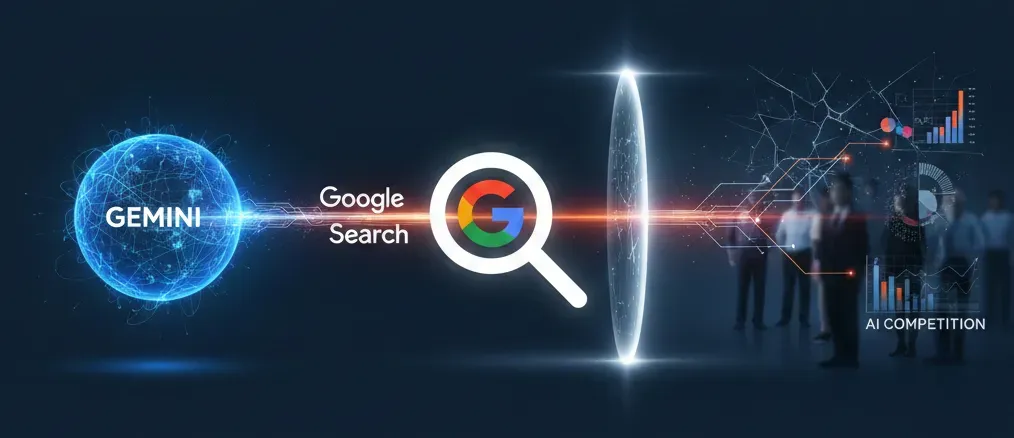
Google's dominance in AI, through the integration of the Gemini model with its leading search engine, represents an unjustified advantage both legally and economically, especially amid antitrust lawsuits accusing the company of consolidating its control over the search market, as noted by Bloomberg in an opinion piece published today.
The article, written by Bloomberg analysts, indicates that Google benefits from a unique search advantage that provides Gemini with immediate access to fresh web data, making its answers more accurate and up-to-date compared to OpenAI's ChatGPT, which relies on static training data and lacks direct internet access. However, the authors argue that this advantage stems from Google's market dominance, exceeding 90%, which is at the center of a potential antitrust case by the U.S. Department of Justice.
The article emphasizes that "the integration of Gemini with Google Search creates a closed loop that reinforces control, where access to data is used as a competitive weapon," noting that OpenAI struggles to compete without similar partnerships, despite its innovation edge.
The authors warn that allowing this advantage to persist could hinder competition in the emerging AI market, projected to be worth around $200 billion by 2025. The piece concludes with an appeal for regulatory intervention, warning that "if this advantage is not broken, Google will turn AI into an extension of its existing monopoly," pointing out that the upcoming legal case in 2026 will be crucial in determining the future of these technologies.
Sources & References
Bloomberg
Editorial Note
Edited & Reviewed by the Ecopulse Editorial Board Dec 14, 2025, 08:34 UTC
Disclaimer
The content provided by EcoPulse24 is for informational and educational purposes only and does not constitute financial, investment, legal, tax, or any other type of professional advice. All opinions expressed are those of the EcoPulse24 editorial team and do not represent the views of any third-party data providers or institutions. Investments involve risk, including the possible loss of principal. Past performance is no guarantee of future results. Readers should conduct their own due diligence and consult qualified professional advisors before making any investment decisions. EcoPulse24 and its affiliates, editors, and contributors shall not be held liable for any errors, omissions, or any losses, injuries, or damages arising from the use of this information.
Please review the Terms & Conditions.
© 2025 EcoPulse24. All rights reserved.
Please review the Terms & Conditions.
© 2025 EcoPulse24. All rights reserved.