Dollar Near One-Year High as Hawkish Fed Fuels Rate Hike Bets
The dollar hovered near a one-year high as hawkish Fed signals and elevated Treasury yields increased expectations of another US rate hike.

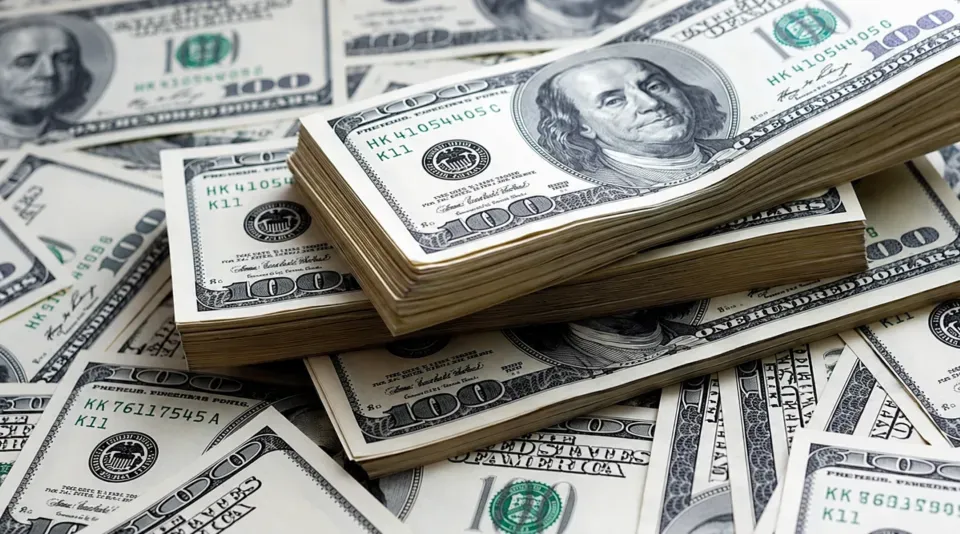
New York | EcoPulse24
The US dollar hovered near its highest level in almost a year on Friday as investors increased bets that the Federal Reserve may raise interest rates again, following a hawkish shift in the central bank's outlook under new Chair Kevin Warsh.
The US Dollar Index (DXY) traded around 100.8, having climbed to nearly 101, its highest level since May 2025, and was on track for a weekly gain of approximately 1.1%.
Meanwhile, the yield on the benchmark 10-year US Treasury note eased slightly to 4.44%, partially reversing the previous session's increase, as investors reassessed the implications of the Fed's latest policy decision and the direction of inflation.
Fed Signals More Support for Higher Rates
The Federal Reserve left its benchmark interest rate unchanged this week, as widely expected, but delivered a more hawkish message than markets had anticipated.
Updated projections showed that around half of Federal Open Market Committee (FOMC) members now expect at least one rate increase in 2026, while policymakers also raised their inflation forecasts to account for the economic effects of the Middle East conflict and higher energy costs.
Warsh declined to provide guidance on the timing of the next policy move but reaffirmed the central bank's commitment to restoring price stability, noting that inflation has remained above the Fed's 2% target for several years.
Markets Price in Another Hike
Financial markets responded by increasing expectations of further monetary tightening.
Interest-rate futures currently imply roughly a 50% probability of a 25-basis-point rate increase in September, while some market measures fully price in another hike by October.
The policy-sensitive 2-year Treasury yield edged higher to around 4.20%, reflecting investors' reassessment of the short-term interest-rate path.
Although the 10-year Treasury yield eased modestly on Thursday, it remains elevated and continues to signal expectations that borrowing costs could stay higher for longer.
Geopolitics Add Another Layer of Support
The dollar also found support from lingering geopolitical uncertainty.
Markets initially welcomed the implementation of the preliminary US-Iran peace agreement and the reopening of the Strait of Hormuz, developments that helped reduce fears of prolonged disruptions to global energy supplies.
However, investor caution resurfaced after reports emerged that scheduled US-Iran talks in Geneva had been cancelled. Separate reports also pointed to thinner shipping traffic through the Strait of Hormuz, contributing to renewed firmness in oil prices.
The combination of geopolitical uncertainty and expectations of tighter monetary policy reinforced demand for the US currency.
EcoPulse24 Analysis
The latest move in the dollar reflects a notable shift in market psychology.
For much of this year, investors anticipated that easing inflation and slowing economic growth would eventually lead the Federal Reserve toward rate cuts. Instead, the Fed's latest projections suggest policymakers are becoming increasingly concerned that inflation could remain elevated for longer.
The result has been a broad repricing across asset classes.
A stronger dollar and elevated Treasury yields are consistent with expectations that US interest rates may remain restrictive well into next year. At the same time, the renewed demand for dollar assets underscores the currency's role as both a yield play and a defensive asset during periods of geopolitical uncertainty.
Perhaps the most significant development is that markets are beginning to adapt to what may become the defining characteristic of the early Warsh era at the Federal Reserve: a central bank that appears willing to tolerate slower growth if necessary to restore price stability.
Whether this hawkish stance persists will depend largely on the next round of inflation data and whether recent improvements in Middle East tensions translate into a sustained decline in energy prices. Until then, the combination of elevated yields, persistent inflation concerns and geopolitical uncertainty is likely to keep the dollar well supported.
Sources & References
Editorial Note
Disclaimer
© 2025 EcoPulse24. All rights reserved.