Oman Crude Slides to $72.20, Extending 57% Retreat from Hormuz Crisis Peak
Official Oman crude for August delivery settled at $72.20 a barrel on Friday, down $1.00 from Thursday's $73.20, extending a correction

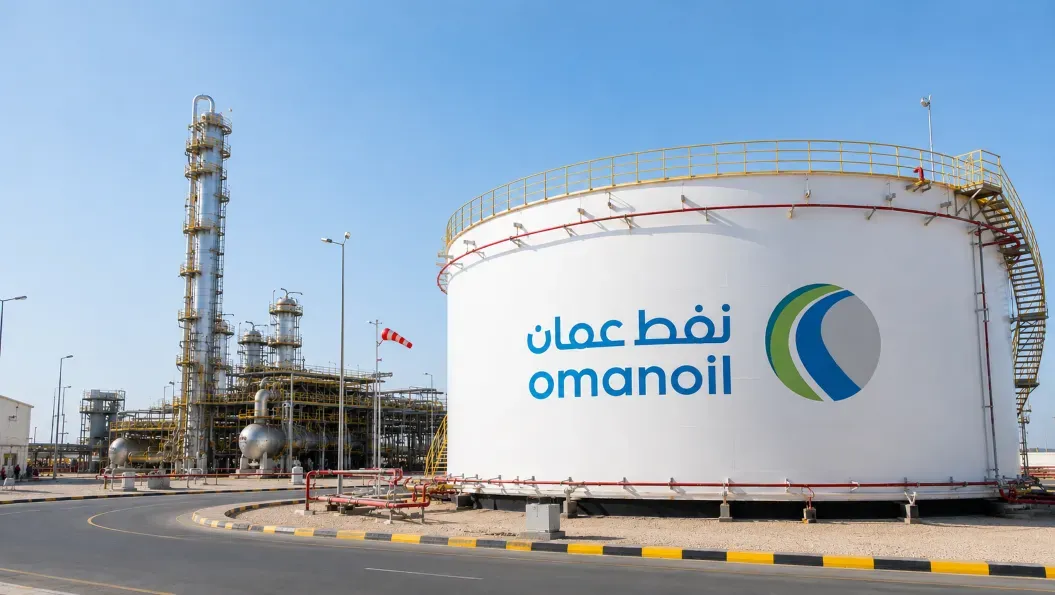
Official Oman crude for August delivery settled at $72.20 a barrel on Friday, down $1.00 from Thursday's $73.20, extending a correction that has now erased roughly 57% of the value gained at the height of the Strait of Hormuz crisis in March. The benchmark's monthly average for June stands at $104.73 a barrel, down $19.32 from May - a decline that confirms the unwind is accelerating even as daily price action has begun to flatten.
The current trajectory traces back to late February 2026, when joint US-Israeli strikes on Iran triggered a sequence of military escalation that drew the Strait of Hormuz - the conduit for roughly one-fifth of the world's seaborne oil - directly into the conflict. From a monthly average near $62 in February, Oman crude surged past $166 a barrel by March 19, a level that surpassed even the 2008 commodity spike, before reversing into one of the sharpest sustained corrections the grade has seen in years.
That reversal has not been linear. Prices spiked intermittently through April - climbing back above $118 on April 6 and briefly retesting the $100 mark on April 13 amid fears of a US naval blockade on Iran-bound shipping - each time geopolitical risk resurfaced before fading again as negotiations or de-escalation signals took hold. By early May, with traders pricing in greater confidence in a cooling of tensions, the benchmark had dropped below $95.
June has seen the most pronounced leg of the decline: from $88.01 on June 11, Oman crude fell to $80.99 the next day, then continued sliding to the low $70s by mid-month, where it has since traded in a narrow $72 – $74 band - the tightest range observed since the crisis began.
Price Timeline Since the Hormuz Crisis Began
| Date | Price (USD/bbl) | Note |
|---|---|---|
| Feb 2026 | ~62.09 (monthly avg) | Pre-crisis baseline |
| Mar 6 | 124.68 | May delivery |
| Mar 16 | 150+ | All-time high |
| Mar 19 | 166+ | Crisis peak |
| Mar 20 | 157.94 | Correction begins |
| Apr 6 | 118.72 | June delivery |
| Apr 21 | 92.01 | |
| Apr 27 | 102.37 | |
| May 6 | 94.89 | |
| Jun 2 | 91.76 | August delivery |
| Jun 12 | 80.99 | |
| Jun 17 | 73.52 | |
| Jun 18 | 73.20 | |
| Jun 19 | 72.20 | Current |
EcoPulse24 Analysis
This price arc is a textbook case of a geopolitical risk premium inflating and then deflating largely independent of physical fundamentals. The move from roughly $62 to over $166 in under three weeks was never primarily a supply-demand story - it was the market pricing in the tail risk of a sustained Hormuz closure, a scenario that, had it fully materialized, would have removed a fifth of global seaborne crude from circulation overnight.
The subsequent decline should be read the same way: not as a collapse driven by a sudden supply glut, but as the orderly unwind of that same risk premium as the worst-case scenario failed to fully materialize. Shipping through the strait was disrupted and re-routed at times, but never categorically severed - and markets have progressively repriced for that reality.
What stands out is the acceleration of the decline in June specifically. The $19.32 drop in the monthly average is steeper than the more gradual deflation seen in April and May, suggesting the market may have moved past pure "defensive repricing" of geopolitical risk and into a phase where underlying fundamentals - global supply, demand growth, and inventory levels - are reasserting themselves as the dominant price driver.
For Oman's fiscal position, the windfall captured during the March – May peak likely provides a meaningful cushion against the current pullback; H1 2026 oil revenues are tracking well above original budget assumptions for the year. But a prolonged stay in the $70 – 75 range would gradually return fiscal planning pressures closer to pre-crisis baselines if sustained through the second half of the year.
The open question for markets now is whether $72 – 75 represents a genuine "post-crisis" equilibrium, or simply a pause before the next flare-up in the Iran-US standoff reactivates the same risk premium that drove March's spike. The tightening of the daily trading range over the past week (72 – 74) points to cautious calm rather than settled conviction - a market watching the same fault line that moved it in the first place, waiting to see if it holds.
Sources & References
Editorial Note
Disclaimer
© 2025 EcoPulse24. All rights reserved.