Russia Cuts Rates Less Than Expected Despite Cooling Inflation
Russia cut interest rates by less than expected as a stronger ruble slowed inflation, while policymakers warned that price risks remain elevated.

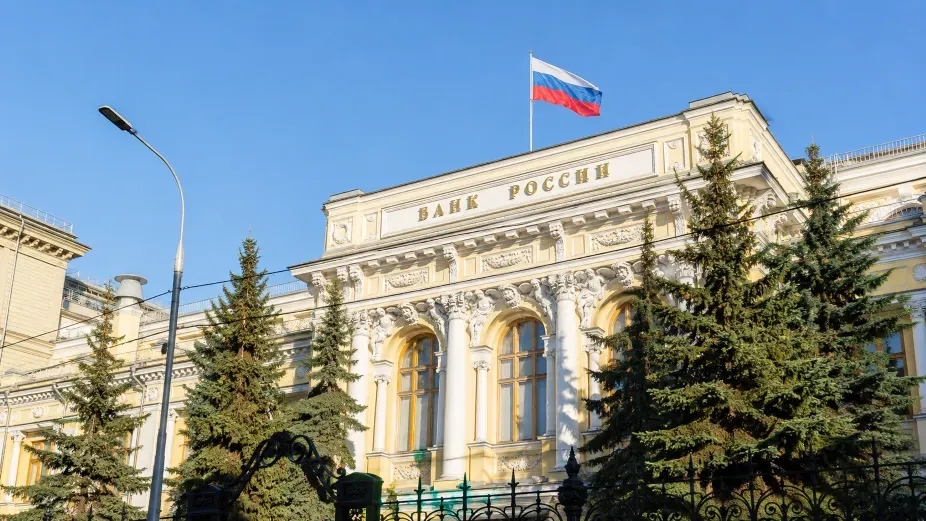
Moscow | EcoPulse24
Russia's central bank delivered a smaller-than-expected interest-rate cut on Friday, extending its easing cycle while signaling that inflation risks remain significant despite a recent slowdown in price pressures.
The Bank of Russia lowered its key interest rate by 25 basis points to 14.25%, surprising markets that had largely anticipated a reduction to 14.00%.
The decision marks another step in a monetary easing cycle that began a year ago, when borrowing costs stood at a record 21%, but also highlights policymakers' reluctance to declare victory over inflation.
Inflation Slows Sharply
Recent inflation indicators showed notable improvement.
Seasonally adjusted annualized price growth slowed to 2.1% during April and May, down from 8.7% in the first quarter of 2026.
Core inflation also moderated, averaging 4.2%, compared with 6.2% previously.
The central bank attributed much of the improvement to temporary factors, particularly the appreciation of the Russian ruble.
Strong Ruble Helps Ease Price Pressures
The ruble has emerged as one of the world's best-performing currencies against the US dollar this quarter.
Higher oil revenues and increased foreign-currency inflows following the outbreak of the Iran conflict strengthened the currency, reducing import costs and easing inflationary pressures.
However, policymakers cautioned that these factors may prove temporary.
Oil prices have retreated following the US-Iran agreement aimed at reopening the Strait of Hormuz, potentially reducing support for the ruble in the coming months.
Risks Remain Elevated
Despite the decline in inflation, the Bank of Russia warned that pro-inflationary risks continue to dominate the outlook.
Officials highlighted several concerns, including:
-
Wage growth continuing to outpace productivity;
-
Elevated inflation expectations;
-
Increased government spending;
-
Rising budget deficits;
-
Higher global logistics and import costs;
-
Domestic fuel shortages and rising gasoline prices.
The central bank also warned that fiscal policy over the coming years could prove more accommodative than previously expected, potentially requiring interest rates to remain higher for longer.
Economy Under Pressure
Russia's economy remains under strain.
The Economy Ministry recently cut its 2026 growth forecast to just 0.4% from 1.3%, while the economy contracted by 0.2% in the first quarter, marking its first decline in three years.
Although business activity has improved recently, much of the recovery has been concentrated in export-oriented industries benefiting from higher commodity prices and a stronger ruble.
Meanwhile, investment-related sectors and manufacturing industries not linked to government orders continue to show weak momentum.
EcoPulse24 Analysis
The Bank of Russia's decision sends a clear message: inflation may be cooling, but policymakers are not yet convinced that price stability has been restored.
The smaller-than-expected rate cut reflects the difficult balancing act facing Russia's central bank. On one hand, the economy is slowing and growth forecasts are deteriorating. On the other, inflation expectations remain elevated and fiscal spending continues to inject demand into the economy.
Perhaps the most important development is the role of the ruble. The recent disinflation has been aided significantly by currency strength driven by energy revenues rather than by a fundamental easing in domestic inflation dynamics.
That distinction matters.
If oil prices remain volatile or the ruble weakens, inflationary pressures could quickly re-emerge, limiting the central bank's ability to cut rates aggressively.
For now, Russia appears to be entering a period of cautious monetary easing - one in which lower inflation provides room for gradual rate cuts, but persistent structural risks prevent policymakers from fully pivoting toward growth support.
Sources & References
Editorial Note
Disclaimer
© 2025 EcoPulse24. All rights reserved.