Energy volatility reshapes outlook… Bank of Canada holds rates, signals flexibility
Bank of Canada holds rates at 2.25%, signals flexibility as energy volatility and inflation risks rise amid weak growth.

Ottawa | EcoPulse24
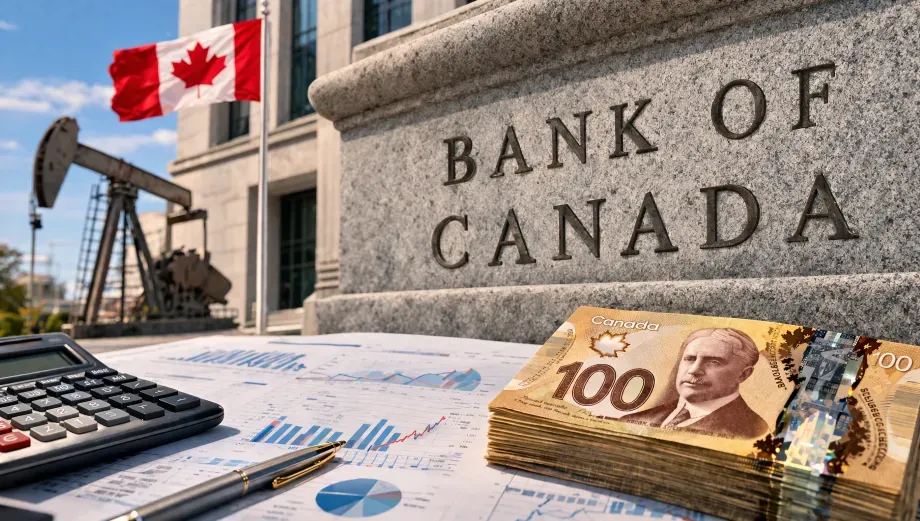
The Bank of Canada kept its overnight interest rate unchanged at 2.25% during its March 2026 meeting, in line with market expectations and prior guidance, as policymakers balanced slowing growth against renewed inflation risks driven by global energy markets.
The central bank indicated that the current policy stance remains appropriate under its baseline outlook, but warned that rising geopolitical tensions - particularly the war in the Middle East - have increased volatility in global energy prices and introduced new uncertainties to the economic trajectory.
This shift in external conditions has prompted the Governing Council to signal that monetary policy may need to adjust in either direction, depending on how inflation and growth evolve in the coming months.
Economic data highlighted a softer growth backdrop, with Canada’s GDP contracting by 0.6% in the fourth quarter of 2025, underscoring weakening momentum heading into 2026. The Bank also noted that near - term growth is expected to remain below earlier projections outlined in January.
On inflation, the central bank expects upward pressure in the coming months, driven by higher energy prices and trade - related cost increases, despite a relatively moderate inflation reading of 1.8% recorded in February. This dynamic places policymakers in a complex position, balancing inflation containment with economic support.
Markets have begun to reprice expectations accordingly, with growing bets that the Bank of Canada may shift toward tightening if energy - driven inflation proves persistent, even as broader economic conditions remain fragile.
The decision reflects a cautious but flexible policy approach, with the central bank maintaining optionality in response to evolving global and domestic risks.
EcoPulse24 Analysis:
The Bank of Canada is transitioning toward a conditional policy stance, where external shocks - particularly energy - driven inflation - are becoming as influential as domestic indicators. This signals a more dynamic rate path ahead, with policymakers prioritizing flexibility over commitment, as the balance between inflation risks and economic slowdown becomes increasingly delicate.
Explore Related Coverage
Sources & References
Editorial Note
Disclaimer
© 2025 EcoPulse24. All rights reserved.