Escalating US Tariffs and China Slowdown Widen Stock Selloff from Asia to Europe
Global stocks fell as US-EU trade tensions rose and China’s growth slowed, hitting tech and industrial shares; EU plans retaliatory tariffs.

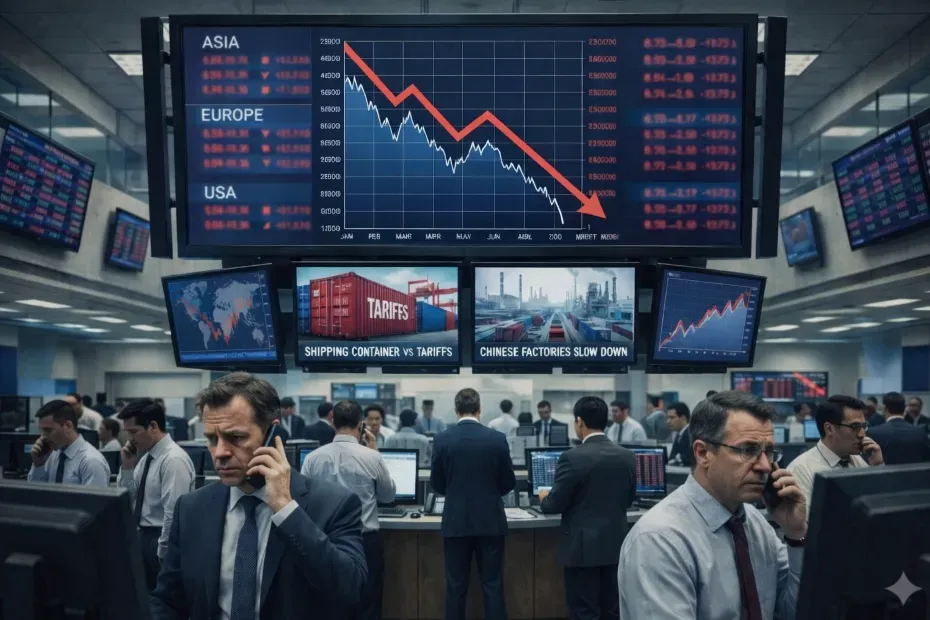
London | EcoPulse24
Global equity markets faced heavy selling amid escalating trade tensions between the United States and Europe and rising concerns about China’s economic momentum, prompting investors to reduce risk across multiple regions.
In Asia, the Hang Seng Index fell for a third consecutive session, dropping 281 points to 26,564, as sentiment deteriorated following declines in US futures triggered by tariff threats. Local pressures mounted after China’s Q4 GDP growth slowed to its lowest in three years due to weak domestic demand, despite hitting the annual target of 5%. Trade tensions and structural imbalances clouded the outlook, with technology and healthcare stocks leading losses, notably in semiconductors, digital platforms, and pharmaceuticals.
In Europe, markets took a hit after Washington announced a 10% tariff on exports from eight EU countries effective February 1, with a threat to raise them to 25% on June 1 if no agreement is reached regarding Greenland. The move drew widespread European condemnation and pushed the EU to consider retaliatory tariffs worth €93 billion on US goods. The Stoxx 50 dropped about 1.3% and the Stoxx 600 fell around 1.1%, with luxury, technology, and industrial stocks under notable pressure.
Germany’s DAX 40 slid by over 1%, falling below 25,000, as fears of a transatlantic trade war intensified. Reports that the EU might further restrict US companies’ access to the single market exacerbated concerns, deepening losses.
In the UK, the FTSE 100 proved relatively resilient, slipping just 0.2% thanks to its defensive profile. Gains in healthcare, consumer staples, precious metals mining, and defense stocks helped offset losses, though banks sensitive to economic and trade volatility remained under pressure.
Analysis
The situation reflects a simultaneous shift of trade policy risks from regional to global volatility drivers. The combination of rising US tariffs and slowing Chinese demand is pressuring cyclical sectors and widening the gap between defensive markets and those exposed to global trade. The near-term outlook depends on tariff negotiations and European responses, as well as upcoming signals from China’s monetary policymakers, which will determine whether risk aversion deepens or recedes.
Explore Related Coverage
Sources & References
Editorial Note
Disclaimer
© 2025 EcoPulse24. All rights reserved.