European Markets Slide as Energy Shock, Weak Euro and ECB Uncertainty Collide
European markets fell sharply as energy price surges, a weak euro, and ECB uncertainty fueled inflation fears and risk - off investor sentiment.

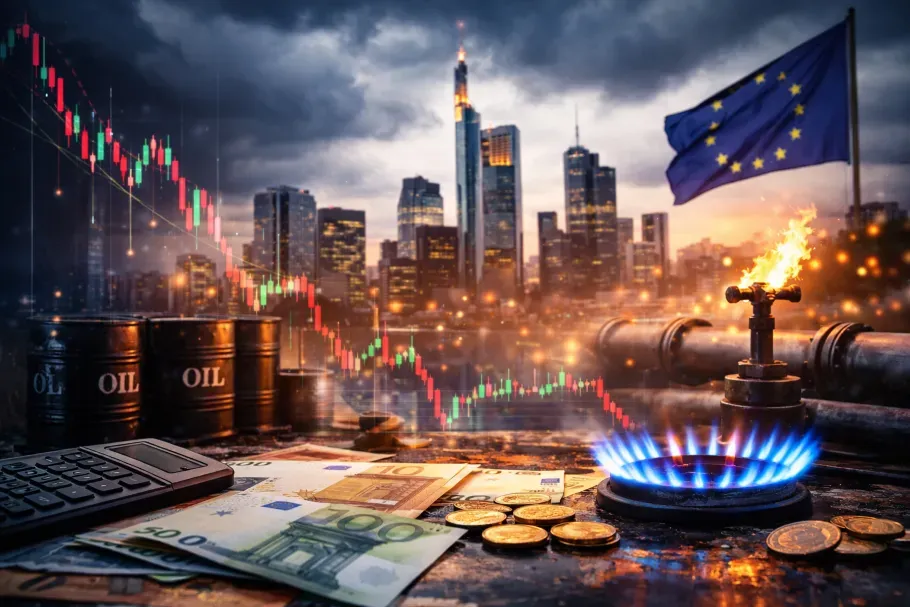
Frankfurt | EcoPulse24
European financial markets moved sharply lower on Thursday as a renewed surge in energy prices, a weakening euro, and mounting uncertainty ahead of key central bank decisions combined to pressure investor sentiment across the region.
The selloff reflects a broader shift in market dynamics, where geopolitical risk and energy - driven inflation are increasingly overriding traditional monetary policy expectations.
The STOXX 50 dropped around 1.8% to its lowest level since late November, while the broader STOXX 600 declined 1.6%, marking a three - month low. Germany’s DAX 40 also fell more than 1.5% to near 23,100 points, extending losses for a second consecutive session as investors reacted to escalating tensions in the Middle East targeting critical energy infrastructure.
The decline comes as oil prices surged again, with Brent crude trading above $110 per barrel following missile strikes on key facilities, including infrastructure linked to global gas supply chains. The attacks have intensified fears of prolonged disruptions across energy markets, particularly as the Strait of Hormuz - responsible for nearly 20% of global oil and LNG flows - remains effectively constrained.
European natural gas prices have also surged sharply, with benchmark TTF futures rising more than 20%, reflecting heightened supply risks ahead of the region’s critical storage cycle. The sharp move in gas prices is amplifying inflation concerns across the Eurozone, particularly for energy - intensive economies already facing fragile growth conditions.
Currency markets are signaling similar stress. The euro weakened toward $1.145, hovering near its lowest levels since mid - 2025, as investors shifted toward the US dollar amid rising geopolitical uncertainty and widening rate differentials. The stronger dollar, combined with higher energy costs, is increasing imported inflation risks for the Eurozone.
At the policy level, the European Central Bank is widely expected to hold interest rates steady in its upcoming decision, but market expectations have shifted toward a more hawkish outlook. Traders are increasingly pricing in the possibility of additional rate hikes later this year as inflation risks re - emerge, driven largely by energy prices.
Similarly, the Bank of England faces a comparable dilemma. While rates are expected to remain unchanged in the near term, markets are adjusting to a scenario where easing is delayed and tightening risks return if energy - driven inflation persists.
Markets in the United Kingdom reflected similar pressure, with the FTSE 100 extending losses as investors weighed rising energy costs against softening domestic economic data. Recent labor figures showed unemployment holding at 5.2% while wage growth slowed to multi - year lows, signaling weakening momentum in the UK economy. This combination of slowing labor conditions and rising inflation risks is complicating the Bank of England’s policy outlook, as policymakers balance fragile growth against persistent price pressures.
Sector performance across European equities highlights the shift in market positioning. Industrials, mining stocks, and financials led the declines, reflecting sensitivity to both global growth concerns and tightening financial conditions. Major companies including Siemens Energy, Infineon Technologies, and Deutsche Telekom recorded notable losses, while defensive sectors such as utilities and telecoms also came under pressure.
The current environment marks a clear transition in how markets interpret risk. Earlier optimism driven by expectations of rate cuts is now being replaced by a more cautious outlook shaped by energy shocks and geopolitical escalation.
EcoPulse24 Analysis:
European markets are entering a structurally different phase where energy and geopolitics are driving price action more than central bank guidance alone. The resurgence in oil and gas prices is reintroducing inflation risk at a time when growth remains fragile, forcing policymakers into a constrained position. The addition of softer UK labor data makes the picture more complex, not less, because it shows growth is already losing momentum before the full energy shock has passed through.
This dynamic is reshaping investor behavior, with capital rotating away from risk assets and toward safety and liquidity. The combination of a weaker euro, rising energy costs, and uncertain monetary policy suggests that volatility in European markets is likely to persist, with downside risks tied closely to developments in global energy supply and geopolitical stability.
Explore Related Coverage
Sources & References
Editorial Note
Disclaimer
© 2025 EcoPulse24. All rights reserved.