Sensex falls to 74,207 as Middle East oil shock and Fed policy stance trigger broad equity selloff in India
Sensex drops to 74,207 as Middle East oil shock and Fed's rate stance trigger broad selloff; all sectors decline, led by financials.

Mumbai | EcoPulse24
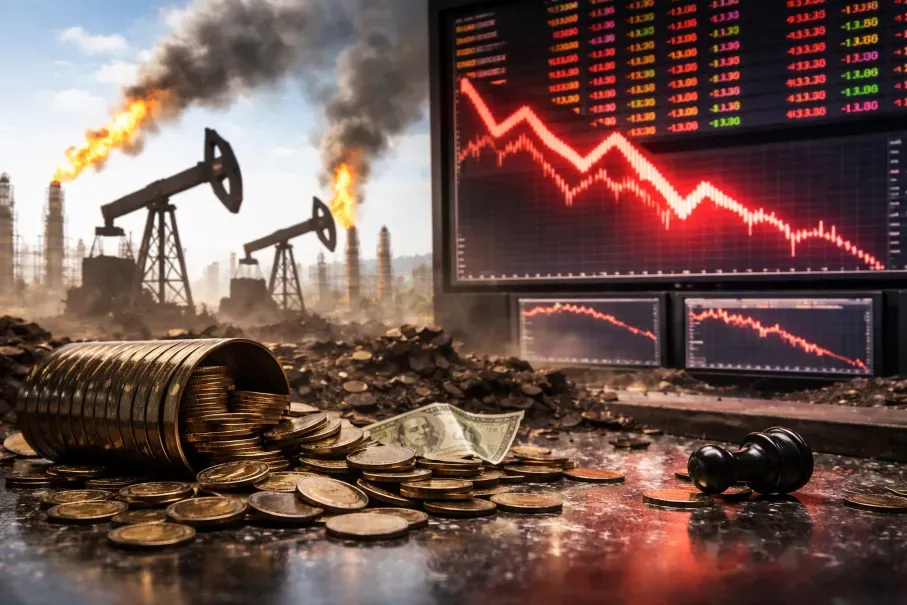
India’s BSE Sensex fell sharply to 74,207 on Thursday, marking its worst session since mid-2024, as escalating conflict in the Middle East pushed oil prices above $110 per barrel and triggered a broad risk-off move across equities.
Sensex oil shock selloff on Middle East escalation
The sharp decline was driven by a surge in global oil prices following intensified attacks on Gulf energy infrastructure, including strikes on Saudi refining assets and disruptions to LNG and oil facilities in Qatar and Kuwait. This escalation raised fears of a prolonged energy supply shock, directly impacting oil-importing economies like India.
Fed signals higher-for-longer rates and accelerates equity outflows
The US Federal Reserve kept interest rates unchanged at 3.75%, signaling that borrowing costs may remain elevated for an extended period. This reinforced global liquidity tightening expectations, prompting continued capital outflows from emerging market equities, including India.
Inflation risk rises in India as oil prices exceed $110
Higher crude prices increase India’s import bill and fuel inflationary pressures across transportation, manufacturing, and consumer goods. This dynamic weakens the macro outlook, as rising costs could compress corporate margins and reduce consumption demand in the coming quarters.
All sectors decline led by financials, banks, and cyclicals
The selloff was broad-based, with all major sectors closing in negative territory. Financials and banking stocks led losses, while autos, technology, and travel-related stocks also came under heavy pressure, reflecting sensitivity to both interest rates and fuel costs.
HDFC Bank drop adds idiosyncratic pressure to index performance
HDFC Bank shares fell more than 5% after the resignation of chairman Atanu Chakraborty over ethical concerns. The stock-specific decline added further downside pressure to the index, amplifying losses within the financial sector.
| Index | Close | Change | Context |
|---|---|---|---|
| BSE Sensex | 74,207 | -3.3% | Worst session since mid-2024 |
| Oil (Brent) | > $110 | Surge | Middle East supply shock |
| US Rates | 3.75% | Unchanged | Higher-for-longer signal |
EcoPulse24 Analysis
The Sensex decline reflects a shift from domestically driven equity momentum to externally driven risk repricing, where energy shocks and global monetary policy dominate market direction. India’s high dependence on oil imports increases its vulnerability to sustained crude price spikes, linking equity performance directly to the global energy cycle. The combination of rising inflation risk and tighter global liquidity conditions positions Indian equities within a broader emerging market adjustment phase tied to the evolving Energy Inflation Cycle.
Explore Related Coverage
Sources & References
Editorial Note
Disclaimer
© 2025 EcoPulse24. All rights reserved.