G42 launches AI-native “generative interface” as agentic web model challenges traditional websites and SEO systems
G42 launched an AI-driven generative interface, replacing static websites with adaptive, real-time content and challenging traditional SEO models.

Abu Dhabi | EcoPulse24
G42 unveils adaptive AI interface redefining digital presence
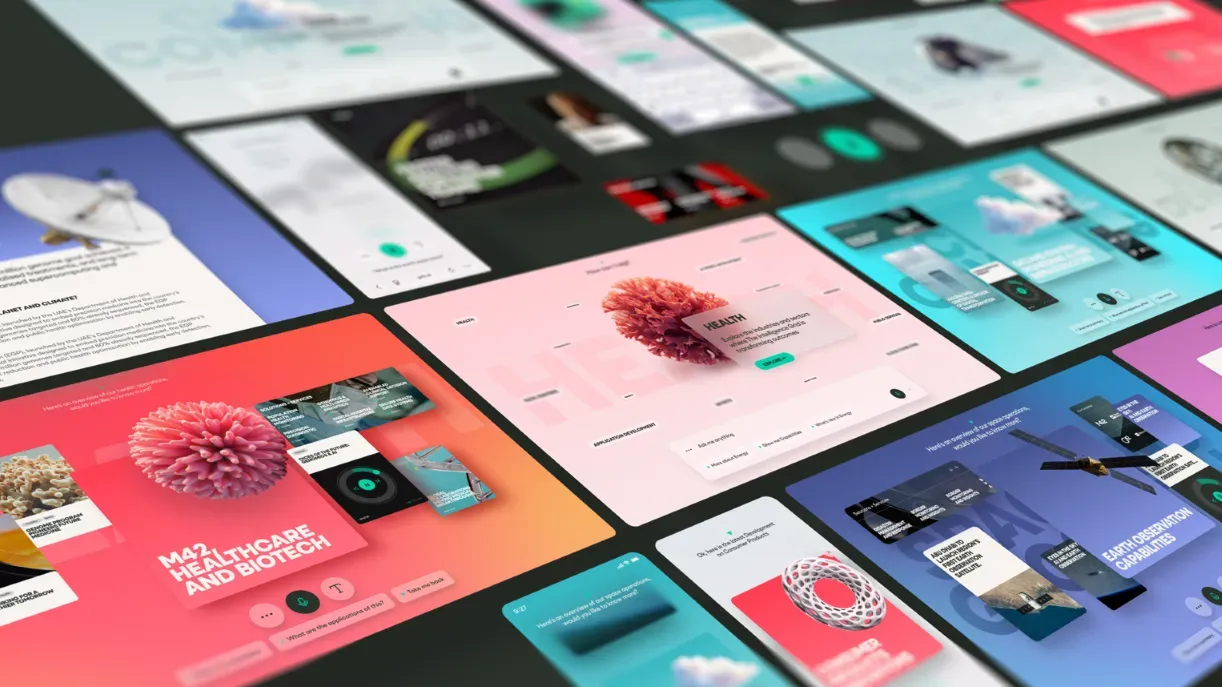
G42 has launched a new artificial intelligence-powered platform, alpha.G42.ai, introducing what it describes as a “generative interface” that replaces traditional static websites with dynamic, real-time adaptive systems, signaling a potential structural shift in how digital content is created, delivered, and consumed.
Developed in collaboration with R/GA, the platform functions as an AI-native interface where content is no longer pre-built and published, but instead generated instantly based on user intent. The system integrates large language models directly into the user experience, allowing visitors to interact through text or voice while receiving tailored outputs ranging from executive briefings to personalized content formats such as audio summaries.
This approach marks a departure from conventional web architecture, where content is manually created and organized within fixed page structures. Instead, the generative interface ingests raw data - such as documents, videos, and reports - and transforms it into a continuously evolving knowledge system capable of producing customized responses in real time.
The platform is positioned as a prototype for what industry participants are beginning to describe as the “agentic web,” where digital interfaces act as intelligent agents rather than passive information repositories. In this model, a company’s digital presence becomes an adaptive system that learns from interactions, refines its outputs, and scales content generation without traditional publishing constraints.
AI-driven interface model – structural shift
| Component | Traditional Web | Generative Interface Model |
|---|---|---|
| Content creation | Manual publishing | AI-generated in real time |
| User interaction | Static navigation | Conversational and adaptive |
| Content management | CMS-based | Knowledge ingestion model |
| Personalization | Limited | Dynamic per user intent |
| Output formats | Fixed pages | Multi-format (text, audio, etc.) |
The implications extend beyond user experience into the economics of digital content. By treating content as structured knowledge rather than static pages, the system expands the potential surface area for search visibility and machine-readable outputs, positioning it not only for human users but also for interaction with other AI agents.
This shift could have direct consequences for search engine optimization strategies, as traditional ranking models based on fixed pages may become less relevant in an environment where content is continuously generated and personalized. Instead, visibility may increasingly depend on how effectively systems structure and expose knowledge to both users and algorithms.
G42’s move also reflects a broader trend among technology firms to redefine digital interfaces as intelligent systems capable of autonomous content generation and decision support. The platform targets enterprise, government, and institutional users, aligning with growing demand for AI-driven knowledge platforms that can deliver context-aware insights at scale.
EcoPulse24 Analysis
The launch of a generative interface by G42 represents more than a product innovation - it signals a potential transition in the architecture of the internet itself. The shift from static websites to adaptive AI agents introduces a new paradigm where content is no longer a fixed asset but a dynamic output generated on demand.
At the core of this transformation is the decoupling of content from traditional publishing workflows. In the current web model, value is tied to the creation and optimization of individual pages. In the emerging agentic model, value shifts toward the underlying knowledge system and its ability to generate relevant outputs across contexts. This fundamentally alters how companies approach digital presence, branding, and user engagement.
From an SEO perspective, the implications are significant. Search engines have historically indexed static content, but generative systems blur the boundaries between content creation and retrieval. As AI interfaces become primary entry points, competition may shift from page rankings to knowledge authority and model visibility within AI ecosystems.
The model also introduces new competitive dynamics. Companies that control large, high-quality datasets and can structure them effectively for AI ingestion will gain a strategic advantage, as they can generate more accurate, relevant, and scalable outputs. This creates a convergence between data infrastructure, artificial intelligence, and digital marketing.
However, the transition is not without challenges. Issues around content verification, consistency, and control become more complex when outputs are generated dynamically. Additionally, regulatory and security considerations will play a larger role as AI systems take on more autonomous functions within digital environments.
At a macro level, the emergence of generative interfaces aligns with a broader shift toward AI-native systems across industries. Just as cloud computing redefined infrastructure, and mobile redefined access, the agentic web has the potential to redefine interaction itself.
If adopted at scale, this model could compress the traditional web stack - reducing reliance on static pages, content management systems, and even conventional search pathways - while elevating the importance of real-time intelligence and adaptive systems.
Ultimately, G42’s initiative positions it at the forefront of a structural transition, where the “front door” of the internet is no longer a webpage, but an intelligent agent.
Explore Related Coverage
Sources & References
Editorial Note
Disclaimer
© 2025 EcoPulse24. All rights reserved.