German Stocks Rebound and Bond Yields Fall Amid Improved Economic Activity and Ongoing Inflation Concerns
German stocks rebounded 1.7% on tech and industry gains; bond yields fell as inflation and Middle East tensions continue to weigh on markets.

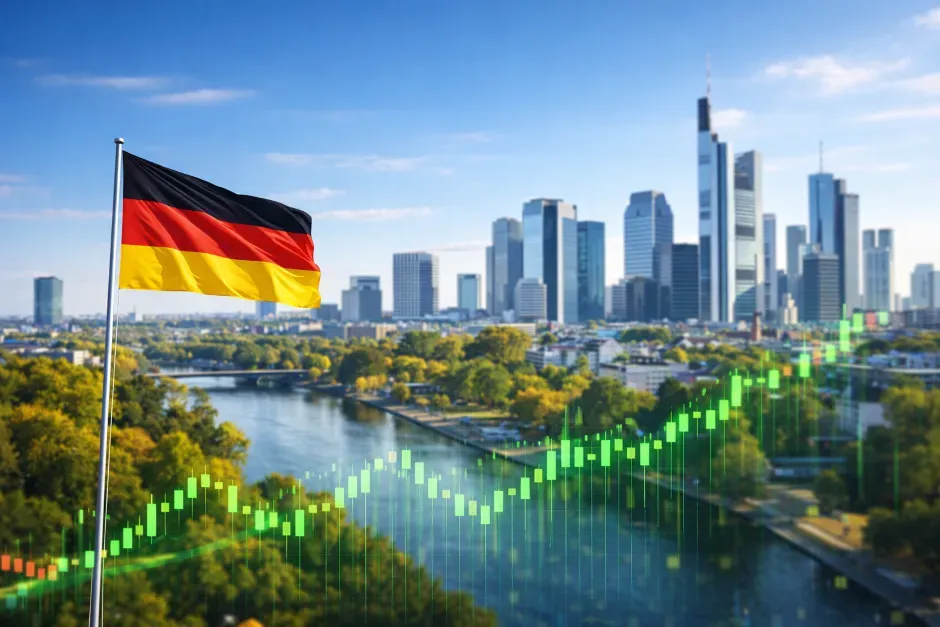
Frankfurt | EcoPulse24
Germany's financial markets ended Wednesday with a mixed performance. Equities posted strong gains after previous losses, while government bond yields fell as investors continued to evaluate the impact of Middle East conflict on inflation and eurozone monetary policy.
The DAX 40 index rose by about 1.7%, recovering sharply after two days of steep declines, supported by rebounds in technology and industrial shares.
The gains followed reports that Iranian officials showed willingness to discuss terms to end the conflict with the US after US-Israeli strikes, although doubts remain about a swift resolution.
Statements from former US President Donald Trump regarding the US Navy escorting oil tankers through the Strait of Hormuz also eased oil price pressures, supporting risk appetite in European markets.
Technology and Industry Lead the Rally
The technology sector led the German market's surge, with Infineon Technologies jumping 5.7%, Siemens up 3.1%, and SAP rising 1.3%.
Major industrial firms also saw notable gains: Daimler Truck advanced 5.5%, Siemens Energy climbed 4.8%, and Rheinmetall increased 3.7%.
The materials and financial services sectors also benefited, with BASF up 1.7% and Allianz gaining 1.1%.
Conversely, some stocks came under pressure: Adidas fell 3.6% after disappointing earnings, Symrise dropped 3.1% despite record profits, and Bayer slid 2.4% due to below-expected 2026 earnings guidance.
Bond Yields Decline
In fixed income, the German 10-year government bond yield fell to around 2.76% after earlier surges linked to inflation fears from the Middle East conflict.
Investors believe rising energy prices may keep inflation pressures elevated, supporting a more hawkish stance from the European Central Bank.
Eurozone inflation data for February showed annual inflation at 1.9% and core inflation at 2.4%, both above market expectations.
Current market pricing suggests a roughly 40% chance of an ECB rate hike before year-end, a shift from last week when rate cut probabilities were similar.
Economic Activity Improves
The German HCOB Composite PMI rose to 53.2 in February 2026 from 52.1 in January, its highest in four months, driven by growth in manufacturing and services, and simultaneous export growth for the first time since February 2022.
Despite this, employment continued to decline, albeit at a slower pace, and backlogs of work increased slightly for the first time in four months. Input costs accelerated while output price growth slowed but remained above historical averages.
EcoPulse24 Analysis
The rebound in German equities reflects a temporary improvement in investor sentiment amid easing energy prices and hopes of containing Middle East tensions. However, persistent inflationary pressures and the prospect of tighter ECB policy remain key factors shaping European markets in the period ahead.
Explore Related Coverage
Sources & References
Editorial Note
Disclaimer
© 2025 EcoPulse24. All rights reserved.