Global Food Prices Fall for Fifth Consecutive Month: Positive Outlook for Gulf Economies
Global food prices fell for a fifth month in Jan 2026, easing costs for Gulf nations reliant on imports, especially dairy, meat, and sugar.

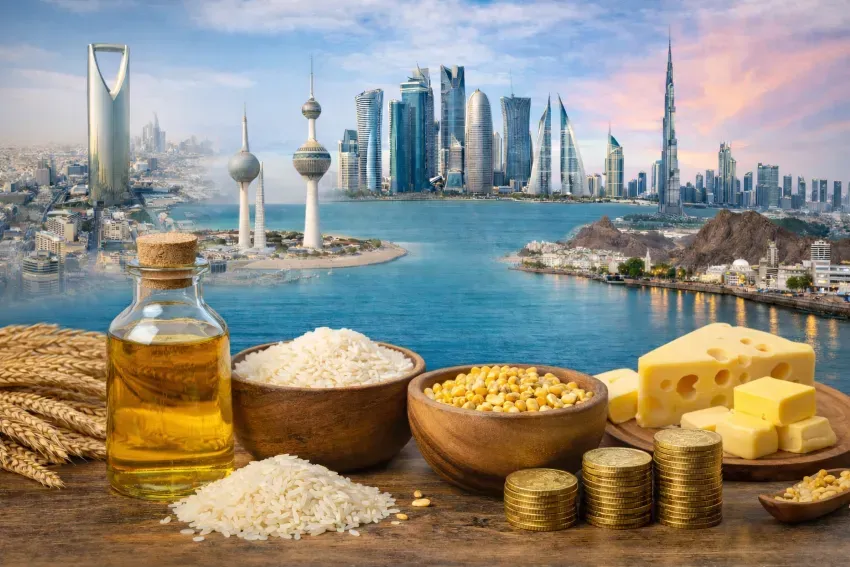
Dubai – EcoPulse24
The UN Food and Agriculture Organization (FAO) Food Price Index dropped for the fifth consecutive month in January 2026, reaching 123.9 points - the lowest since August 2024. This marks a positive development for Gulf countries, which are heavily reliant on food imports and have faced inflationary pressures in recent years.
Modest but Sustained Decline
The index decreased by 0.4% from 124.3 points in December 2025 to 123.9 in January 2026, mainly due to sharp falls in dairy, sugar, and meat prices, which outweighed slight increases in grains and vegetable oils. This five-month downward trend signals growing stability in global food markets after significant volatility in 2024 – 2025.
Detailed Sector Analysis
📉 Dairy: Sharp 5% Drop
Dairy prices saw the largest decline among all categories, falling 5% in January - continuing a seven-month downward streak. The main drivers were:
- Higher output in key exporting countries (New Zealand, EU, US)
- Weak demand from China, the world’s largest dairy importer
- Particularly steep drops in cheese and butter prices
- A strong US dollar making exports pricier for non-dollar buyers
Impact on the Gulf: A significant benefit for consumers, restaurants, and hotels in the region, given dairy’s central role in local diets.
📉 Sugar: Down 1%
Global sugar prices fell by 1%, driven by expectations of increased global supply, especially due to a strong production rebound in India (the world’s second-largest producer) and positive crop outlooks in Thailand. Lower oil prices also reduced demand for ethanol, a sugarcane byproduct.
📉 Meat: Slight 0.4% Drop
Meat prices hit their lowest level since May 2025, edging down 0.4%. The main factor was a notable drop in pork prices, while beef, sheep, and poultry prices remained relatively stable. For the Gulf, stable beef and sheep prices are particularly relevant.
📈 Grains: Slight 0.2% Increase
Grain prices inched up 0.2%, with mixed performance: rice rose 1.8% due to strong global demand, while wheat fell 0.4%. The uptick reflects weather concerns in key producing regions, geopolitical tensions affecting Black Sea exports, robust feed demand, and lower carryover stocks.
Impact on the Gulf: Wheat and rice are strategic imports, so these increases could affect import bills.
📈 Vegetable Oils: 2.1% Surge
Vegetable oils posted the largest price jump among all categories (+2.1%), led by palm, soybean, and sunflower oils due to supply concerns in Southeast Asia, weather disruptions, and rising biofuel demand. Canola oil slipped slightly but did not offset increases elsewhere.
Impact on the Gulf: Higher oil prices may affect the cost of processed foods, a major import segment.
Implications for Gulf Economies
✅ Positive Developments
- Lower import bills: Gulf countries import 80 – 90% of their food; falling dairy, meat, and sugar prices reduce overall costs and improve trade balances.
- Reduced inflationary pressure: Lower food prices help central banks manage monetary policy and may lessen the need for interest rate hikes.
- Improved purchasing power: Households, restaurants, and hotels benefit from lower input costs, boosting profit margins in hospitality.
- Reduced subsidy burden: Governments spend less on food subsidies, freeing up resources for other investments.
⚠️ Challenges
- Impact on agricultural investments: Lower prices may pressure returns on regional agricultural projects.
- Rising grain and oil prices: Increases in key staples require monitoring.
- Sign of weak global demand: Persistent declines may reflect a broader global economic slowdown, particularly in China.
Global Context & Key Drivers
- Slowing global demand: Economic slowdowns in China, Europe, and tight US monetary policy
- Improved supply: Better weather, recovery from previous supply shocks, and technological advances
- Strong US dollar: Makes dollar-priced commodities more expensive for non-dollar buyers, dampening demand
- Lower energy prices: Reduces production and transport costs, as well as fertilizer prices
Outlook: Will the Decline Continue?
- Continued global economic weakness
- Strong crop yields in 2026
- Further US dollar appreciation
- Technological improvements in agriculture
Risks: Weather events, geopolitical tensions, currency crises, disease outbreaks, energy price spikes, or policy changes could quickly reverse the trend.
Investment Impact
- Beneficiaries: Food retailers, restaurants, and processors see improved margins; consumer discretionary stocks may benefit as purchasing power rises.
- Pressured sectors: Agricultural commodity funds, farmland values, equipment makers, and fertilizer companies may face headwinds.
Conclusion
The fifth straight monthly drop in global food prices is a welcome development for Gulf economies and other food importers. Sharp declines in dairy (-5%), sugar (-1%), and meat (-0.4%) outweigh small increases in grains (+0.2%) and vegetable oils (+2.1%), yielding a net positive impact on import costs. Still, the modest rises in key staples warrant vigilance. Persistent declines may also reflect weak global demand, with broader economic implications. Policymakers and investors should closely monitor climate, geopolitical, and economic developments that could alter this trend.
Key Data
| Category | Change (%) | Trend | Gulf Impact |
|---|---|---|---|
| Overall Index | -0.4% | ↓ 5th month | Very positive |
| Dairy | -5.0% | ↓ 7th month | Very positive |
| Sugar | -1.0% | ↓ | Positive |
| Meat | -0.4% | ↓ | Positive |
| Grains | +0.2% | ↑ | Caution (strategic) |
| Vegetable oils | +2.1% | ↑ | Caution |
Last updated: 5 February 2026
Source: United Nations Food and Agriculture Organization (FAO)
Note: Data based on the FAO Food Price Index, which tracks monthly changes in international prices for a basket of key food commodities.
Explore Related Coverage
Sources & References
Editorial Note
Disclaimer
© 2025 EcoPulse24. All rights reserved.