Global Gold Rush Accelerates: Central Banks to Purchase 800 Tons by 2026
Central banks, led by China and Turkey, are set to buy 800 tons of gold by 2026, diversifying from the US dollar amid global uncertainty.

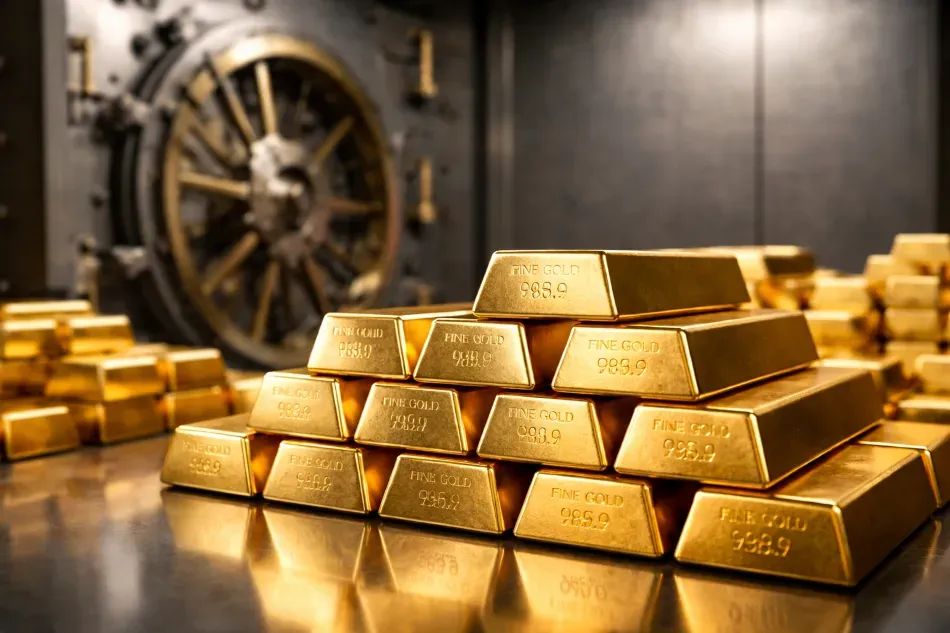
New York – EcoPulse24
Amid global economic volatility and rising geopolitical tensions, central banks around the world are ramping up gold purchases at an unprecedented rate. JP Morgan forecasts that acquisitions will reach 800 tons in 2026, reflecting a clear move to diversify reserves away from the US dollar. This represents a long-term strategic shift toward real assets as financial markets face unprecedented uncertainty.
Top Buyers: China and Turkey Lead
China tops the list, adding 27 tons of gold in 2025, marking 14 consecutive months of purchases. Its official reserves now stand at 2,306 tons, though analysts believe the actual figure may be higher. Turkey follows closely, also buying 27 tons as part of a gradual accumulation strategy to strengthen its financial stability. The Czech Republic stands out for its commitment, marking the 34th consecutive month of purchases and adding 20 tons, aiming for 100 tons by 2028.
(Table: Major Buyers and Reserve Levels)
Record-Breaking Figures and Strategic Motives
Global central bank gold purchases reached a net 863 tons in 2025, far above the historical average of 400 – 500 tons annually. Notably, 95% of central banks expect to increase their gold reserves in the next 12 months, according to the World Gold Council - the highest rate since the survey began in 2018. The main drivers include diversifying reserves to reduce dollar dependence, hedging against inflation, and protecting against currency devaluation amid geopolitical and economic uncertainties.
(Table: Key Metrics for 2025 – 2026)
Global Gold Reserve Map
The United States leads globally with 8,133 tons of gold (77.9% of total reserves), followed by Germany, Italy, and France. The most significant shift, however, is occurring in emerging markets: China has raised the share of gold in its reserves from 3.1% to 6.8%, while Russia’s share jumped from 21.7% to 37.1% since the onset of the Ukraine war. Western nations maintain large reserves, but emerging markets are rapidly increasing their gold holdings as a hedge against the dollar.
Price Outlook and Future Drivers
Major financial institutions expect gold prices to continue rising, fueled by central bank demand. JP Morgan projects gold to reach $6,300 per ounce by the end of 2026, while Deutsche Bank forecasts $6,000 if the dollar remains weak. Analysts note that central bank buying has become a structural, long-term driver, supporting gold prices above $4,000 as a solid floor, especially amid persistent geopolitical tensions and expectations of lower US interest rates.
Special Analysis | EcoPulse24: An Irreversible Strategic Shift
Data shows that 2025 marks the 15th consecutive year of central bank gold accumulation, reflecting a gradual loss of confidence in fiat currencies and US dollar dominance. With annual purchases expected to remain at 755 – 800 tons in the coming years, gold is evolving from a traditional reserve asset into a geopolitical tool in the contest for global economic influence. This wave of buying marks a historic turning point in reshaping the international financial system.
Last updated: February 8, 2026
Explore Related Coverage
Sources & References
Editorial Note
Disclaimer
© 2025 EcoPulse24. All rights reserved.