Historic Cold Wave Pushes US Natural Gas Prices to Highest Level Since 2022
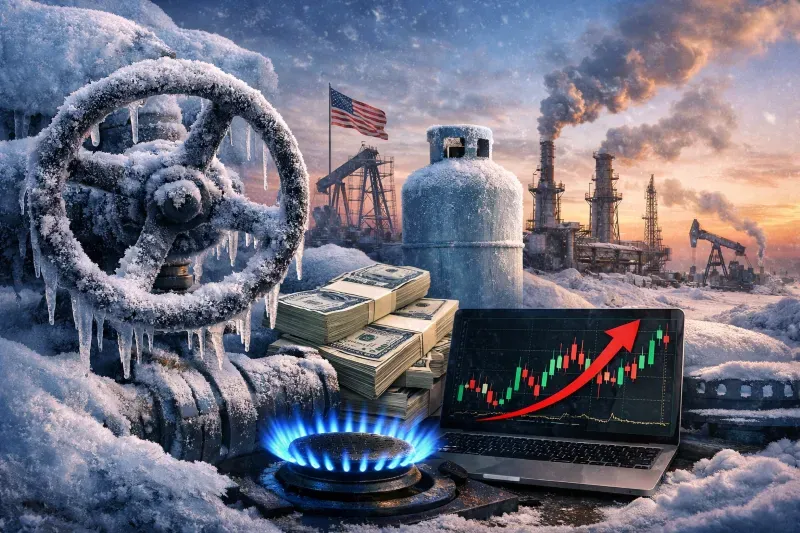
US natural gas prices hit highest since 2022 after a cold wave disrupts supply, spiking demand and prompting record electricity use.

Washington | EcoPulse24
US natural gas prices surged sharply at the start of the week, reflecting a sudden disruption in supply-demand balance due to exceptional weather conditions. Futures rose more than 17% in a single session, exceeding $6 per million British thermal units - the highest level since December 2022.
This strong rally followed a historic winter storm that swept across large parts of the US, causing nearly 10% of natural gas production to be disrupted just as demand for heating and power generation spiked. Data indicates electricity consumption is likely to hit record winter highs, prompting US grid operators to urge power companies to secure adequate gas supplies in the coming days.
At the same time, gas flows to US LNG export facilities dropped to a one-year low as domestic demand was prioritized, adding further pressure to spot and near-term markets.
In related energy markets, heating oil prices climbed over 3%, while gasoline prices saw a slight decline, highlighting the uneven impact of the severe weather across energy products.
This sharp increase comes after an extraordinary week in which US gas prices jumped nearly 70% - the largest weekly gain in over three decades - underscoring the market’s sensitivity to sudden production shocks during peak winter.
EcoPulse24 Analysis
This dramatic movement in natural gas prices highlights the fragility of the US energy market balance during extreme weather, especially as reliance on gas for both electricity and heating grows. It also underscores the increasing trade-off between meeting domestic demand and sustaining LNG export momentum, a factor that may reshape market priorities for the remainder of the winter. More broadly, these developments fuel ongoing debates about supply security and the operational resilience of energy networks in the face of more extreme weather events.
Explore Related Coverage
Sources & References
Editorial Note
Disclaimer
© 2025 EcoPulse24. All rights reserved.