IEA: Global Coal Demand Peaks and is Set to Gradually Decline
IEA reports global coal demand peaks, set to decline post-2026, driven by renewables; China's role crucial amid economic pressures.

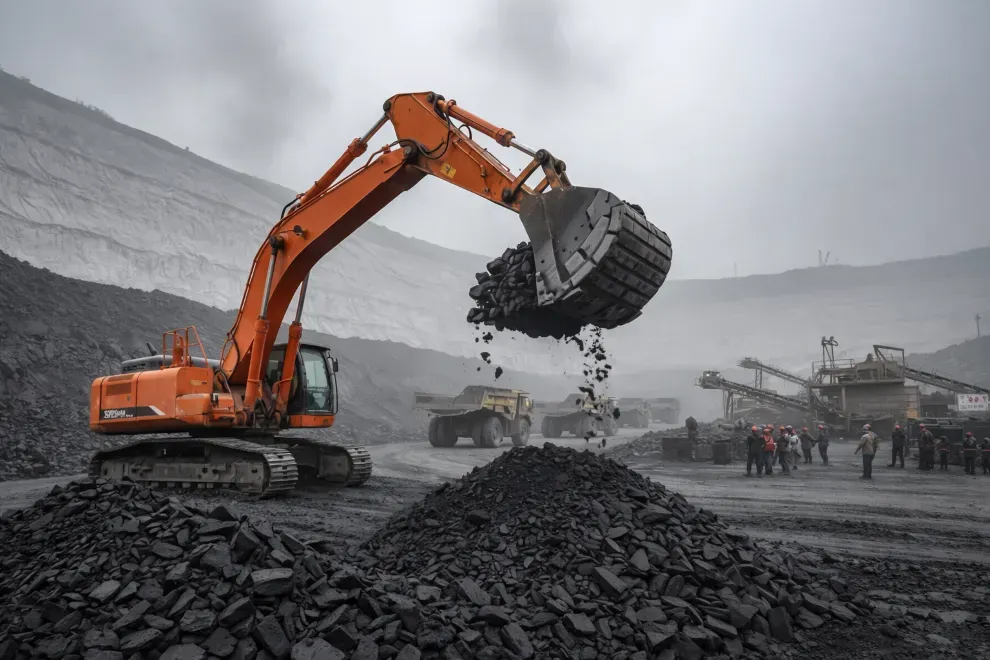
Global Energy – Coal – Energy Transition
The International Energy Agency (IEA) has stated that global coal demand has reached a stabilization point and is expected to begin a gradual downward trajectory starting in 2026, as reliance on renewable energy and liquefied natural gas expands, despite coal remaining a major electricity source in some large economies.
According to the agency’s annual coal report, global coal demand is expected to see a slight increase of 0.5% this year, reaching a record level of 8.85 billion tons, before declining by approximately 3% by 2030.
China… The Key Factor
The agency noted that determining whether the world has actually reached "peak coal" largely depends on China, which consumes over half of global production. It is expected that Chinese demand will see a slight decline over the next five years; however, this trend could reverse if the deployment of renewable energy slows or if coal-to-gas conversion projects accelerate.
Renewables Surpass for the First Time
In a notable development, recent data shows that renewable energy – including solar, wind, and hydro – surpassed coal in global electricity generation in 2025 for the first time, as rapid expansion in clean energy capacity meets the entire increase in electricity demand.
Regional Demand Variations
- European Union: Demand for coal continues to decline but at a slower pace this year, around 2%, compared to sharp declines in 2023 and 2024 due to weak wind and hydropower output.
- India: A strong monsoon season has reduced electricity demand, leading to a decrease in coal-based power production compared to last year.
- United States: Contrary to the global trend, the agency expects coal consumption to rise by about 8% in 2025, driven by high natural gas prices and a slowdown in coal plant closures, even though natural gas has become the largest source of electricity generation in the country.
Economic Pressures on Coal
Despite government support in some countries, the agency warned that falling global coal prices are pressuring the profitability of mining companies, as prices approach production costs, alongside rising carbon emission costs, reducing coal's competitiveness compared to gas and clean energy until the end of the decade.
Analytical Insights
The report indicates that the world is entering a phase of "stability before decline" in coal consumption, where:
- Expansion of renewable energy limits any sustainable growth in demand.
- China and India remain key uncertainty factors.
- The coal industry faces long-term economic and structural pressures.
Sources & References
Editorial Note
Disclaimer
Please review the Terms & Conditions.
© 2025 EcoPulse24. All rights reserved.