Iranian Escalation Shifts Wall Street Toward 'Safe Haven First' Strategies Amid Oil Shock Fears and Monetary Policy Volatility
Middle East tensions drive investors to safe havens as oil shock, inflation, and policy risks rise; equities drop, gold and Treasuries gain.

New York | EcoPulse24
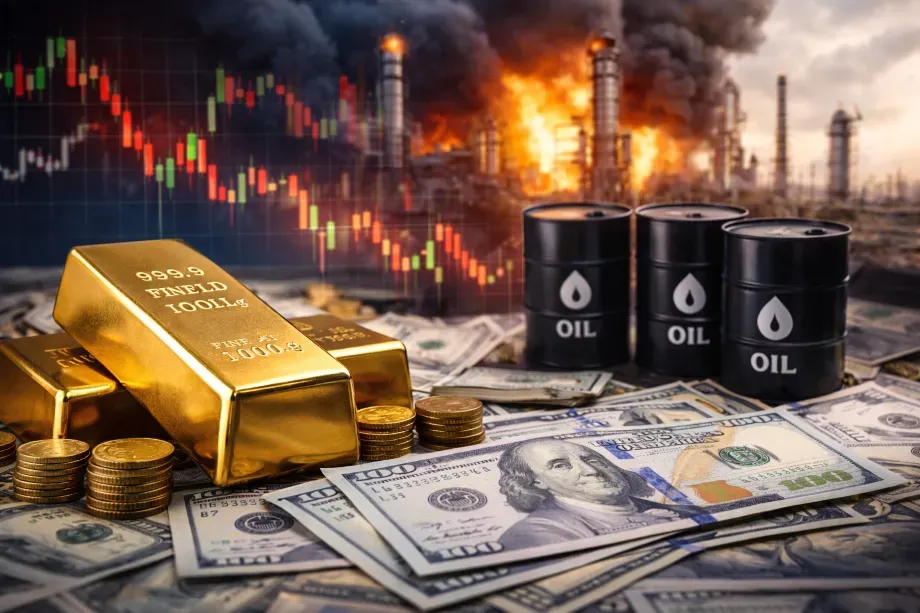
Global investors are reorganizing their portfolios with a 'safe haven first, ask questions later' approach following escalating military tensions in the Middle East. This shift is driven by fears of energy market disruption and renewed inflation risks. Demand for U.S. Treasuries, gold, and the Swiss franc has risen, while global equities face selling pressure amid higher geopolitical risk premiums.
Short-term bond yields have dropped to levels last seen in 2022, signaling defensive cash flows toward fixed-income instruments. Meanwhile, equity indices have lost significant momentum as concern grows over the conflict's expansion, and oil prices have surged on fears of disruptions in the Strait of Hormuz, a key route for about a quarter of global seaborne oil trade.
Oil is now a key risk variable. Uninterrupted shipping through the Strait may ease volatility, but any supply disruption could drive prices higher, adding inflationary pressure on major economies. This creates a complex market paradox: safe-haven flows push yields down, while inflation fears prompt a repricing of monetary policy expectations.
High equity valuations and the sensitivity of growth sectors to rising yields or renewed inflation make it relatively easy for asset managers to reduce risk exposure. Sectors like aviation, travel, and discretionary consumer goods are most vulnerable if oil prices continue rising, while energy, metals, defense, and utilities may benefit due to their defensive nature.
Gold has strengthened its role as a systemic hedge amid growing geopolitical risks, whereas Bitcoin has shown notable volatility, with concentrated downside protection contracts reflecting sustained demand for hedging against declines. This divergence highlights investor differentiation between traditional safe havens and high-volatility assets, even when the latter are marketed as alternative hedges.
Emerging economies that import oil could be the first affected if the crisis evolves into a prolonged energy shock. Rising import bills and widening current account deficits may pressure local currencies and complicate central bank decisions between supporting growth and containing inflation. Oil-exporting countries may benefit from higher revenues, though global market volatility still impacts capital flows.
A sustained oil shock could present the Federal Reserve with a more complex equation, especially if inflation remains above target. Rising energy prices may boost inflation expectations, limiting the scope for monetary easing even amid potential growth slowdowns. This tension between recession and inflation risks recalls the feared 'mild stagflation' scenario.
EcoPulse24 Analysis:
Markets are reacting not only to the military event itself but to the possibility of an extended energy shock reshaping inflation and monetary policy trajectories. 'Safe haven first' strategies reflect a preference for capital preservation over return, but the medium-term market direction hinges on whether the escalation remains contained or evolves into a broader crisis that reprices risk across all asset classes.
Explore Related Coverage
Sources & References
Editorial Note
Disclaimer
© 2025 EcoPulse24. All rights reserved.