Iraq Boosts Energy Investments to Achieve Self-Sufficiency and Shift Toward Exporting Refined Oil Products
Iraq boosts oil and gas investments to achieve self-sufficiency, increase refining, and shift to exporting higher-value refined products.

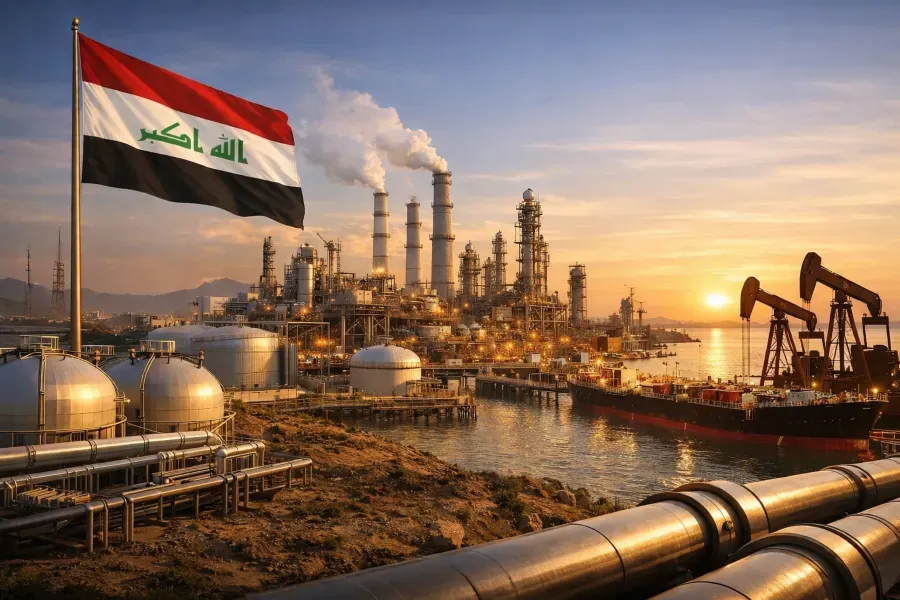
Baghdad | EcoPulse24
The Iraqi government is ramping up efforts to attract new investments in the oil and gas sectors as part of a strategy to achieve full self-sufficiency in petroleum derivatives and gradually transition from crude exports to exporting higher-value refined products. This approach aims to increase public revenues and support economic stability.
At a recent meeting with senior officials from the Ministry of Oil, Prime Minister Mohammed Shia’ Al-Sudani emphasized building on achievements in gas development projects and completing implementation requirements, considering them a cornerstone for structural transformation in Iraq’s energy sector. The meeting focused on accelerating work in major gas fields - including Artawi, Akkaz, Mansuriya, Naft Khana, Al-Khashm Al-Ahmar, Kamr, and Kalabat - and monitoring the establishment of a fixed platform for liquefied gas.
Discussions also addressed the awarding process for the fifth licensing round of eastern fields, infrastructure projects such as the offshore pipeline, full management of Bin Omar and Sindbad fields, completion of the Faw project, the Tuba – Faw pipeline, and development of the integrated Qayara field.
On refining, the government reviewed the status of petroleum derivative reserves, plans to increase refinery capacity, and programs to produce gasoline and meet domestic market needs by 2026, as well as other derivatives.
Government plans target crude oil production capacity of about 6 million barrels per day by 2028, alongside raising refining capacity to 1.25 million barrels per day. The strategy also aims to convert around 40% of crude oil production into export-oriented refined products, reflecting an official move to boost revenue and reduce reliance on crude exports alone.
EcoPulse24 Analysis:
This direction reflects a strategic shift in Iraq’s energy sector management - from a model reliant on crude exports to a more integrated one focusing on refining, gas, and value-added chains. Successful implementation will give Iraq greater flexibility amid global market fluctuations, reduce foreign currency outflows from fuel imports, and enhance its competitive position as an exporter of refined petroleum products regionally and internationally.
Explore Related Coverage
Sources & References
Editorial Note
Disclaimer
© 2025 EcoPulse24. All rights reserved.