Supply Disruptions in Hormuz and Iraq’s Output Cut Push Oil Prices to Highest Levels in Months Despite Rising US Inventories
Oil prices hit multi-month highs as Gulf tensions disrupt supply, Iraq cuts output, and Hormuz shipping halts, despite rising US inventories.

New York | EcoPulse24
Global oil prices experienced a significant surge during Wednesday’s trading as geopolitical tensions in the Middle East intensified, leading to partial supply disruptions in one of the world’s most critical energy hubs. Ongoing military confrontations linked to the Iran crisis have prompted markets to reassess the risks to global oil supply.
In energy markets, West Texas Intermediate (WTI) crude futures approached $77 per barrel, marking a fourth consecutive session of gains. This climb comes amid continued turmoil in the Gulf, a key oil production and export region.
Benchmark Brent crude rose to trade near $84 per barrel, reaching its highest level since July 2024 and extending gains for a fifth straight session. The price increase reflects rising market anxiety about potential supply interruptions should regional military tensions escalate.
The regional crisis entered its fifth day following a series of US and Israeli airstrikes on targets inside Iran, which triggered Iranian retaliatory actions, including attacks on energy facilities and maritime infrastructure. These developments have raised widespread concerns over the safety of oil and gas flows through the Gulf.
A key factor supporting price gains was Iraq’s announcement - one of the world’s top oil producers - that it would cut output by about 1.5 million barrels per day due to full storage facilities and disrupted export routes. This reduction equals roughly half of Iraq’s current production and adds further pressure to global oil supply.
Estimates indicate that Iraqi production could face a halt of up to 3 million barrels per day if exports do not resume soon, adding further uncertainty to the global oil market.
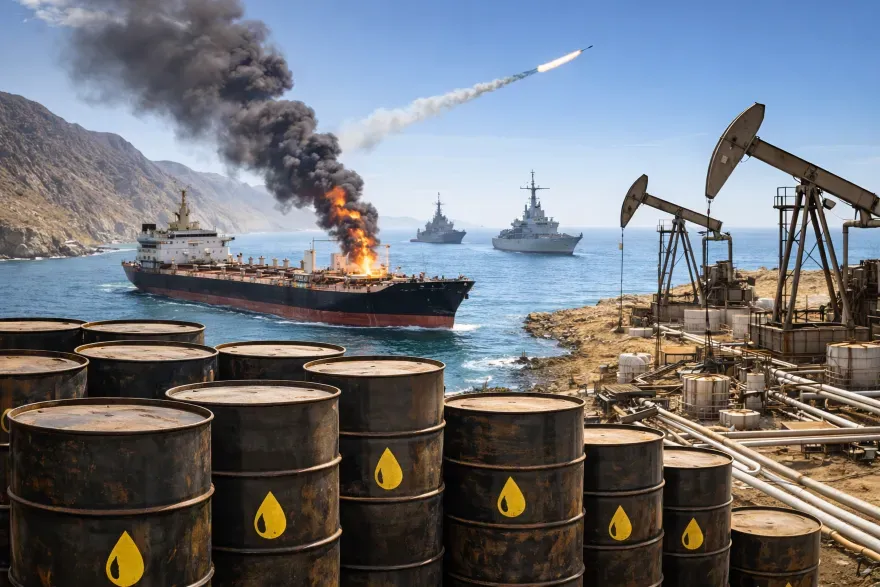
Meanwhile, Iran targeted several oil tankers in the Strait of Hormuz, a vital maritime corridor through which around 20% of the world’s oil and liquefied natural gas trade passes. The escalation has halted shipping in the strait for a fourth consecutive day, raising fears of broad disruptions in global energy supply chains.
Despite these supportive factors, oil’s rally faced some limitations after US President Donald Trump stated that the United States would provide security for commercial vessels to ensure the continued flow of energy and global trade. He also mentioned the possibility of naval escorts for ships if necessary, in an effort to reassure markets and mitigate shipping risks in the region.
On the US data front, figures from the American Petroleum Institute showed crude oil inventories rose by 5.6 million barrels last week, well above market expectations of a 2.19 million barrel increase.
This rise in US inventories signals increased domestic supply in the short term, partially offsetting upward pressure on global prices, despite ongoing geopolitical tensions that continue to shape international supply outlooks.
Markets are closely monitoring developments in the Gulf, particularly risks to shipping in the Strait of Hormuz and their potential impact on global energy flows, as the region remains a key center for oil and gas production.
EcoPulse24 Analysis:
Current oil price movements underscore the sensitivity of the global energy market to disruptions in the Gulf, given the world economy’s reliance on oil flows through the Strait of Hormuz. The simultaneous price rise and increase in US inventories highlight that geopolitical factors have overtaken traditional supply-demand fundamentals as the main market driver, with markets now recalibrating supply risks more than focusing on basic market balances.
Explore Related Coverage
Sources & References
Editorial Note
Disclaimer
© 2025 EcoPulse24. All rights reserved.