Iraqi Government Buildings Transition to Solar Power in Major Energy Shift Covering 18,000 Facilities
Iraq is shifting over 18,000 government buildings to solar power, aiming to ease grid strain and boost renewable energy adoption.

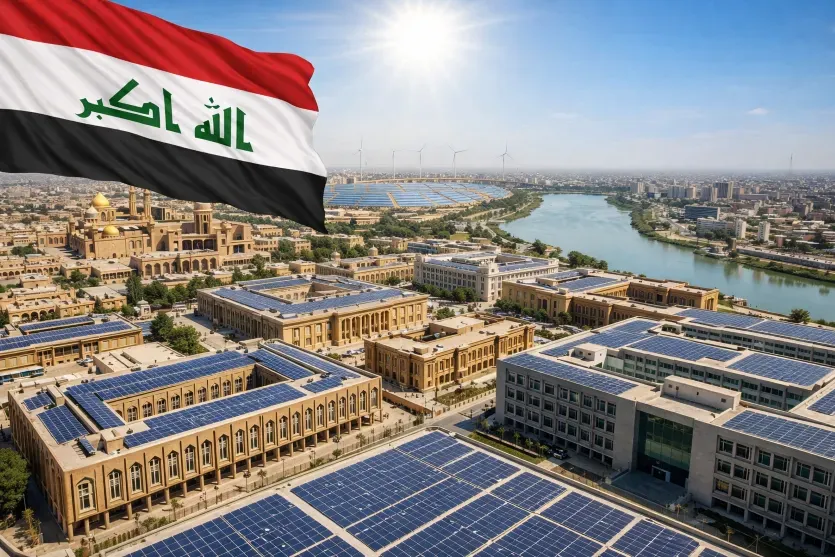
Baghdad | EcoPulse24
The National Renewable Energy Projects Team in Iraq has begun implementing a sweeping plan to transition more than 18,000 government buildings to solar power, marking one of the country’s largest public sector energy transformation programs. According to team leader Nasir Karim Qasim, all government buildings across Iraq - including schools, health centers, hospitals, police stations, and civil defense offices - have been catalogued for inclusion in the national renewable energy project, as reported by the Iraqi News Agency (INA).
Solar energy projects in districts and towns will be subject to a collection system, with government subsidies covering up to 90% of costs for the residential sector to encourage broader adoption of clean energy and reduce pressure on the traditional power grid. Qasim noted that the government has stressed the need to complete part of these projects before the upcoming summer, given the recurring challenges faced by the electricity system during peak demand.
Currently, 107 schools are already operational on solar energy, and work is underway at approximately 400 additional government sites. Local companies are acquiring the technical expertise necessary to implement these projects in line with Iraq’s climate and environmental conditions.
EcoPulse24 Analysis:
The rollout of solar power across government buildings represents a strategic shift in Iraq’s energy management, particularly given the country’s historic dependence on fossil fuels and seasonal grid strain. The government’s move underscores a growing recognition that renewable energy is not just an environmental option but an economic and security necessity, especially amid fluctuating fuel supplies and rising operational costs. Involving local firms helps localize technical know-how and build a domestic solar sector for future expansion.
EcoPulse24 Conclusion:
If the plan is executed within the announced timelines, Iraq could take a major practical step toward alleviating its chronic electricity crisis and establishing a sustainable foundation for a more stable and efficient energy mix.
Explore Related Coverage
Sources & References
Editorial Note
Disclaimer
© 2025 EcoPulse24. All rights reserved.