Masdar Reaches Financial Close on World's Largest 24/7 Renewable Energy Project Worth AED 22.4 Billion
Masdar secures AED 22.4B for world's largest 24/7 solar and battery project in Abu Dhabi, set for 2027, boosting UAE's clean energy goals.

Abu Dhabi | EcoPulse24
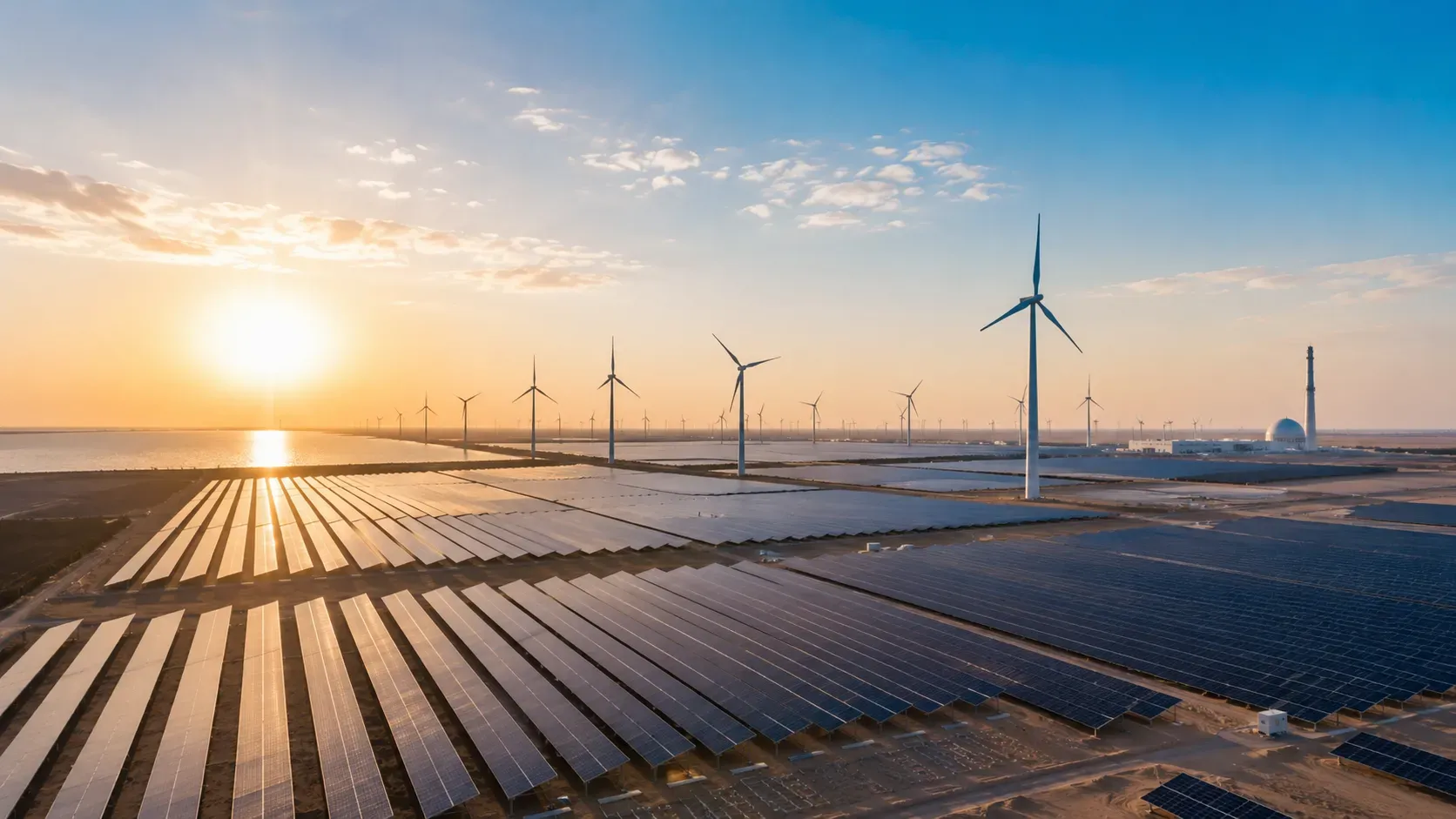
Abu Dhabi Future Energy Company (Masdar) has reached the financial close of what it describes as the world's first and largest renewable energy project capable of delivering clean electricity around the clock, securing total investment of AED 22.4 billion ($6.1 billion). The milestone marks a significant step in the commercial deployment of utility-scale renewable energy projects supported by battery storage.
The transaction includes a project financing package worth AED 18.73 billion ($5.1 billion) arranged through a consortium of 13 leading regional and international banks, while Masdar will contribute AED 3.67 billion ($1 billion) in equity. The financing underscores growing confidence among global financial institutions in the commercial viability of large-scale renewable energy infrastructure and advanced energy storage technologies.
Developed in Abu Dhabi in partnership with the Emirates Water and Electricity Company (EWEC), the project combines a 5.2-gigawatt solar photovoltaic plant with a 19-gigawatt-hour battery energy storage system, making it the largest integrated renewable energy and battery storage project of its kind worldwide. The facility is designed to deliver reliable renewable electricity 24 hours a day, addressing one of the industry's longstanding challenges of intermittent renewable generation.
The project comes as global electricity demand accelerates, driven by the rapid expansion of artificial intelligence, hyperscale data centers and advanced manufacturing industries. By integrating large-scale battery storage with solar generation, the development establishes a commercially scalable model for providing continuous clean energy while supporting grid reliability.
Mazen Khan, Chief Financial Officer of Masdar, said the successful financial close reflects the confidence of leading international lenders in both the project and Masdar's financial strength. He added that the financing reinforces the company's long-term growth strategy and its ability to mobilize global capital for innovative renewable energy infrastructure.
Construction began after Masdar broke ground on the project in October 2025, with commercial operations expected to commence in 2027. The development forms a key component of the UAE's clean energy strategy by strengthening energy security and supporting the country's transition toward a lower-carbon electricity system.
Masdar currently manages a global renewable energy portfolio exceeding 65 gigawatts and aims to expand installed capacity to 100 gigawatts by 2030, supported by continued investments in solar, onshore and offshore wind, battery energy storage and hybrid renewable energy solutions across international markets.
Project Snapshot
The following summarizes the key details of the project.
| Metric | Value |
|---|---|
| Total Investment | AED 22.4 billion ($6.1 billion) |
| Project Financing | AED 18.73 billion ($5.1 billion) |
| Masdar Equity Contribution | AED 3.67 billion ($1 billion) |
| Solar Capacity | 5.2 GW |
| Battery Storage Capacity | 19 GWh |
| Participating Banks | 13 |
| Project Location | Abu Dhabi |
| Development Partner | Emirates Water and Electricity Company (EWEC) |
| Construction Started | October 2025 |
| Commercial Operation | Expected in 2027 |
EcoPulse24 Analysis
The financial close represents far more than the completion of a major financing transaction. It signals that 24/7 renewable energy supported by utility-scale battery storage is becoming commercially financeable at unprecedented scale, marking an important evolution in the global energy transition.
Historically, one of the biggest constraints facing renewable energy has been intermittency. While solar and wind generation costs have fallen sharply, their dependence on weather conditions has limited their ability to provide continuous baseload electricity. Integrating a 19 GWh battery storage system with one of the world's largest solar facilities demonstrates that renewable generation and long-duration storage can now be developed as a single commercial infrastructure asset.
The scale of financing is equally significant. The participation of 13 regional and international banks indicates that financial institutions increasingly view large-scale energy storage as bankable infrastructure rather than an emerging technology. This shift broadens financing options for future renewable projects and lowers barriers to investment in next-generation clean energy systems.
The project also reflects changing patterns in global electricity demand. Rapid expansion in artificial intelligence, cloud computing, hyperscale data centers and advanced industrial manufacturing is creating demand for reliable, uninterrupted electricity around the clock. Projects capable of supplying renewable power continuously are therefore becoming strategically important for supporting future digital economies.
From a broader market perspective, the development reinforces the UAE's ambition to position itself as a global leader in clean energy innovation, not only through renewable generation capacity but also through pioneering new financing models and integrated energy infrastructure. It demonstrates how sovereign-backed developers are helping establish commercial benchmarks that could influence renewable energy investment worldwide.
Ultimately, the project's significance extends beyond its record-breaking size. It provides evidence that renewable energy backed by large-scale storage is moving from demonstration projects to mainstream infrastructure, reshaping how investors, utilities and governments approach the next generation of low-carbon power systems.
Explore Related Coverage
Sources & References
Editorial Note
Disclaimer
© 2025 EcoPulse24. All rights reserved.