AI Drives Transformation in US Utilities and Clean Energy as Investors Anticipate Major Deals
AI-driven power demand boosts US utilities and clean energy stocks, attracting investors and M&A, with sector growth outpacing the market.

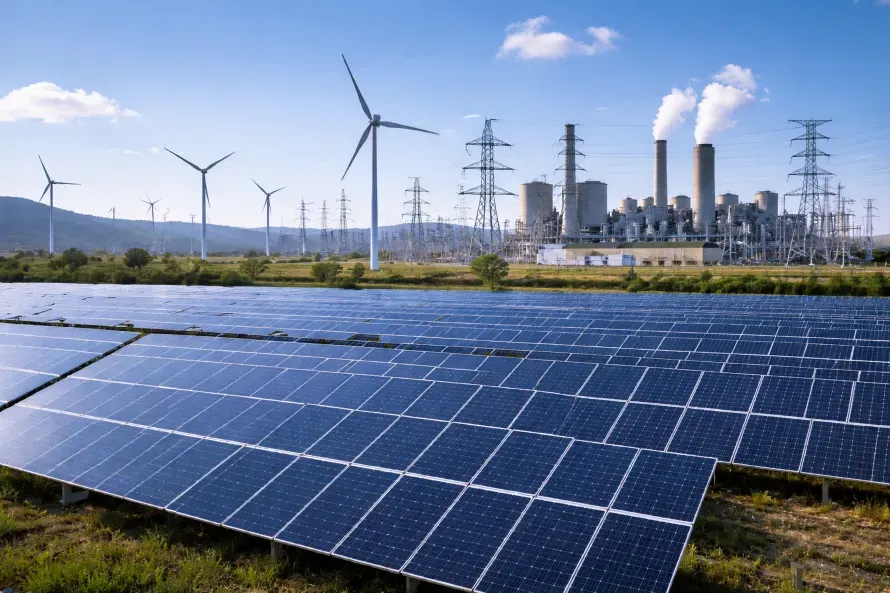
New York | EcoPulse24
US utilities and clean energy companies have become a hub for investment, driven by surging electricity demand linked to the expansion of AI data centers. This trend has led sector-focused ETFs to outperform the broader market since the beginning of the year, as investors rotate away from highly valued tech stocks toward utilities and clean energy.
The trend is reflected in the performance of the largest utilities ETF, which gained 6.8% year-to-date, outperforming general market indices and nearly reaching $46.50 before a slight two-day pullback. Major utility firms like NextEra Energy, Duke Energy, and Constellation Energy have reached record highs in the past year, supported by electricity supply contracts with leading tech companies.
The sector’s profile has shifted from its traditional defensive nature to a new narrative: utilities now offer a lower-volatility avenue to benefit from the AI boom, compared to direct bets on chipmakers or consumer tech. This repositioning has transformed utilities from stable dividend plays into growth wagers, tied to increasing capital expenditure on generation and grid infrastructure.
Investment activity mirrors this shift. One options trader closed a position on a utilities ETF with nearly $400,000 in profits after betting it would reach $47 – $52 by mid-June. In M&A, notable moves include a consortium comprising BlackRock’s Global Infrastructure Partners and EQT pursuing an acquisition of AES Corp, a major renewable energy supplier to tech firms.
Clean energy deal values slumped last year, with only about 12 GW of solar, wind, and storage assets changing hands - a drop of over 50% from the previous year and the lowest since 2013. However, outlooks for 2026 point to a rebound, driven by forecasts that data center electricity consumption may triple by 2035 versus 2024.
Regulatory and political changes played a dual role. The reduction of some federal renewable incentives last year pressured developer valuations, widening the gap between buyer and seller expectations before prices began to adjust downward, creating a more realistic deal environment. The wind sector faces ongoing regulatory pressures, while solar-plus-storage projects are more attractive due to faster deployment compared to gas or nuclear plants.
Falling long-term US Treasury yields in recent weeks have provided additional support to utilities, which rely heavily on debt markets for infrastructure investment, easing borrowing conditions and capital costs.
Still, analysts caution that the current buying wave may be reaching crowded levels, with valuations potentially diverging from fundamentals. Others argue that structural electricity demand from AI gives the sector a durable growth base beyond cyclical swings.
EcoPulse24 Analysis:
The sector stands at the intersection of two narratives: the traditional defensive appeal amid falling yields and a growth story driven by AI-related energy needs. This convergence has created exceptional momentum and sensitive valuations. The return of clean energy deals signals a capital repositioning toward assets capable of meeting fast-growing tech demand, placing utilities and solar-plus-storage at the forefront of structural investment themes, while regulatory and supply chain risks remain critical.
Explore Related Coverage
Sources & References
Editorial Note
Disclaimer
© 2025 EcoPulse24. All rights reserved.