Microsoft Unveils Faster AI-Powered Surface PCs with Major Graphics Upgrades
Microsoft unveiled new Surface Pro and Surface Laptop devices featuring Qualcomm's X2 AI chips, faster graphics, and enhanced on-device AI

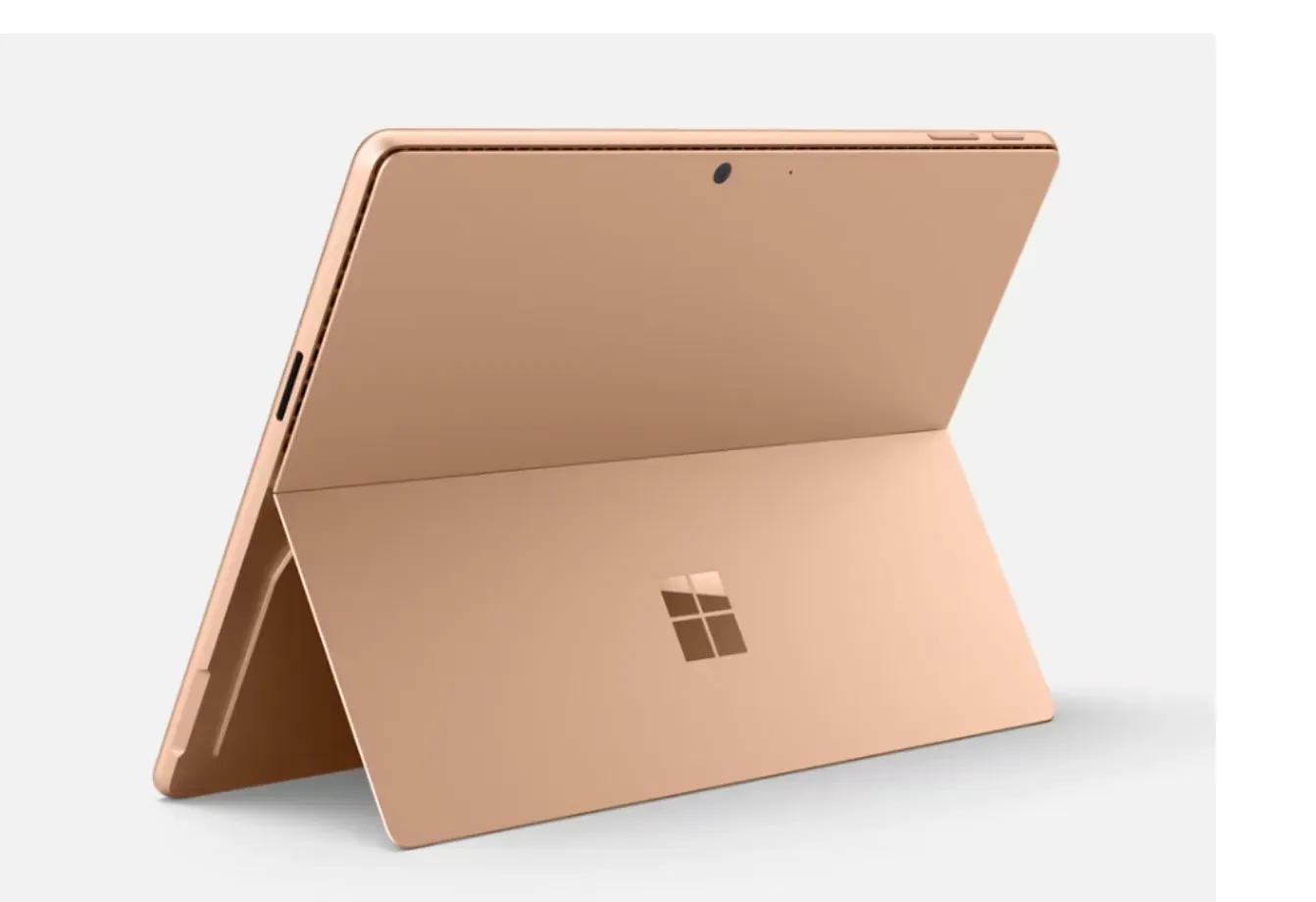
Redmond | EcoPulse24
Microsoft has introduced refreshed versions of its Surface Pro and Surface Laptop, equipping both devices with Qualcomm's latest AI-focused processors and significantly faster graphics performance as the company intensifies its push into the emerging era of AI-powered personal computing.
The new devices, announced on Tuesday, retain the same external design as their predecessors but introduce substantial performance improvements aimed at creative professionals, developers, and heavy artificial intelligence users.
The Surface Pro starts at $1,499, while the Surface Laptop begins at $1,599.
Qualcomm's AI Chips Move to Center Stage
At the heart of both devices is Qualcomm's new X2 processor, which features a dedicated neural processing unit (NPU) capable of delivering up to 80 trillion operations per second (TOPS).
The increased AI computing capacity is designed to accelerate on-device artificial intelligence workloads, including:
-
Real-time live captioning
-
AI-assisted video call enhancements
-
Image and media processing
-
Generative AI workflows
-
Local AI applications that do not require cloud processing
The announcement further highlights the growing industry shift toward AI PCs, where advanced AI capabilities are increasingly executed directly on the device rather than solely in data centers.
Surface Pro Receives Major Graphics Boost
According to Microsoft, the new Surface Pro delivers up to a 53% improvement in graphics performance compared with the previous generation.
Battery life has also improved, with the device capable of running for up to 15.5 hours, up from approximately 14 hours previously.
The hybrid tablet-laptop device can be configured with an upgraded OLED display, featuring deeper blacks, higher contrast, and improved color accuracy.
Microsoft said it has made design refinements to address customer complaints regarding graininess and visible display artifacts in the previous generation.
The device supports up to:
-
64GB of memory
-
1TB of storage
Surface Laptop Gets Even Bigger Graphics Gains
The new Surface Laptop receives an even larger graphics upgrade, with Microsoft claiming performance improvements of up to 58%.
The 15-inch model also features a sharper display with pixel density increasing from 201 pixels per inch to 262 pixels per inch.
Battery life remains competitive:
-
Up to 20 hours on the 13.8-inch model
-
Up to 19 hours on the 15-inch version
Storage capacity has been expanded to as much as 2TB, while the trackpad now incorporates subtle haptic feedback designed to improve the user experience.
Surface Ecosystem Expands Beyond Hardware
Microsoft also announced a new Surface Repair Tool application that enables users to perform diagnostics and guides them through home repairs of various components, including batteries, displays, and cameras.
The company additionally confirmed that its upcoming Surface Laptop Ultra will be powered by Nvidia's RTX Spark chip, signaling Microsoft's intention to move further into the premium AI computing segment.
EcoPulse24 Analysis
Microsoft's latest Surface devices are not merely incremental hardware upgrades.
They represent another step in the industry's transition toward AI-native personal computing.
For decades, PC performance was primarily defined by CPU speed, memory, and graphics capabilities.
Today, another metric is rapidly becoming just as important:
AI processing power.
The ability to perform 80 trillion AI operations per second directly on a device illustrates how artificial intelligence is becoming embedded into everyday computing rather than remaining exclusively dependent on cloud infrastructure.
The announcement also reinforces a broader industry realignment.
Microsoft, Qualcomm, Nvidia, and Intel are increasingly competing to define the next generation of personal computing, where laptops and tablets function not merely as productivity devices but as local AI platforms capable of running sophisticated models and intelligent agents directly on users' machines.
This transition could fundamentally reshape the PC market.
As AI workloads become a core feature of consumer and enterprise devices, traditional hardware specifications may gradually become secondary to a new competitive benchmark:
How effectively a device can execute artificial intelligence tasks locally, efficiently, and securely.
Sources & References
Editorial Note
Disclaimer
© 2025 EcoPulse24. All rights reserved.