Nvidia Beats Expectations as AI Revenue Surge Continues Despite Rising Competition
The company posted fiscal first-quarter earnings per share of $1.87 on revenue of $81.62 billion, surpassing Wall Street expectations of $1.77 EPS

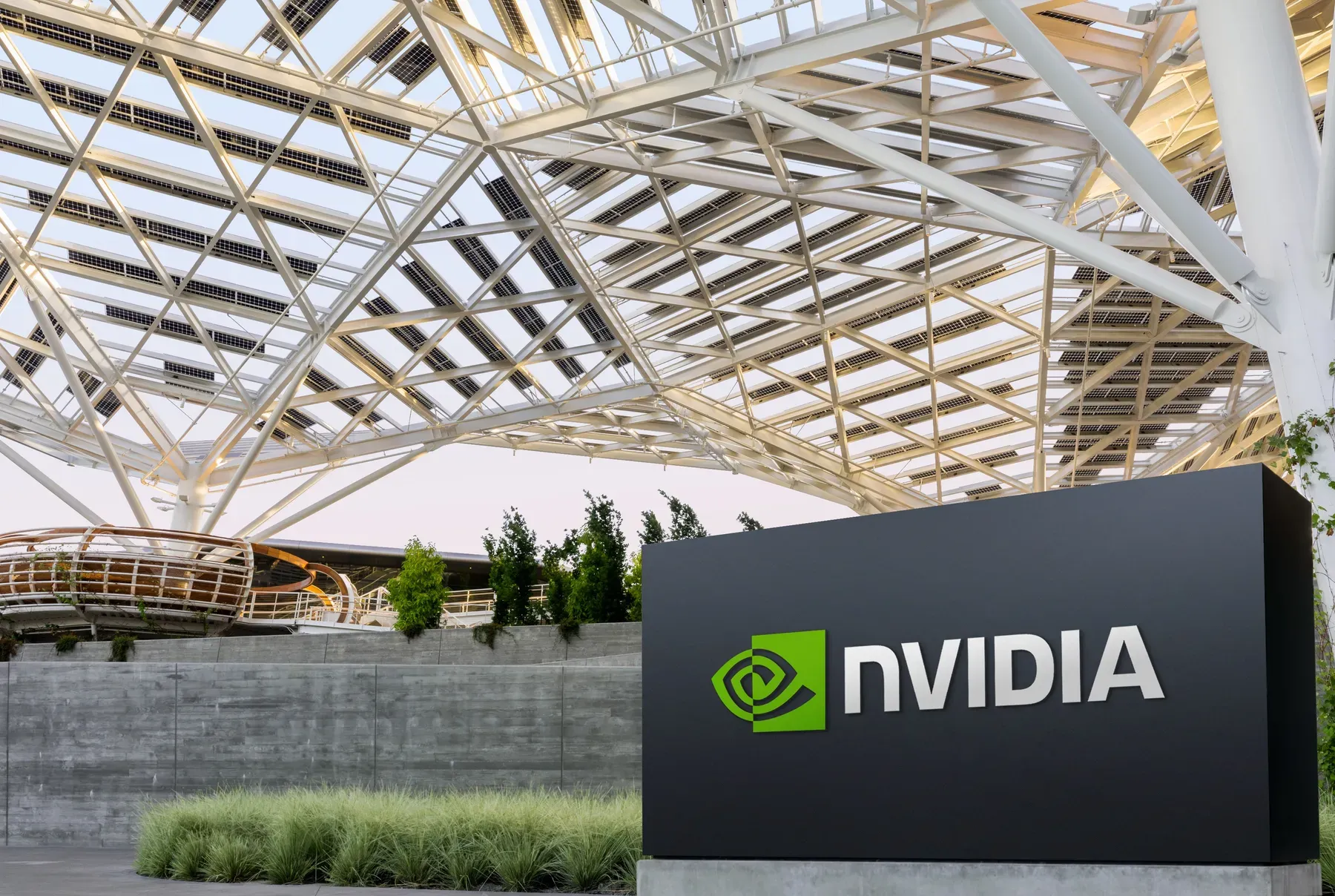
Santa Clara | EcoPulse24
Nvidia reported stronger-than-expected quarterly results after the US market close on Wednesday, reinforcing the company’s dominant position in the global artificial intelligence infrastructure boom despite intensifying competition from Amazon, Google and emerging AI chipmakers.
The company posted fiscal first-quarter earnings per share of $1.87 on revenue of $81.62 billion, surpassing Wall Street expectations of $1.77 EPS and $79.18 billion in revenue.
Nvidia also issued a stronger-than-expected outlook for the current quarter, forecasting revenue between $89.1 billion and $92.8 billion, above analyst estimates of roughly $87.3 billion.
Despite the earnings beat, Nvidia shares initially fell more than 2% in after-hours trading as investors evaluated growth expectations and mounting competition in the AI semiconductor sector.
Data Center Revenue Dominates
Nvidia’s data center business remained the primary growth engine, generating $75.2 billion in quarterly revenue compared with analyst expectations of $73.47 billion.
The figure nearly doubled from the $39.11 billion reported during the same quarter last year, highlighting the extraordinary scale of global AI infrastructure spending currently underway.
According to CFO Colette Kress:
-
hyperscalers accounted for roughly 50% of data-center revenue,
-
while the remaining share came from AI cloud providers, industrial clients, enterprise customers and sovereign AI projects.
The company also confirmed that it generated no revenue from Hopper AI chips in China during the quarter, underscoring the ongoing impact of US export restrictions on advanced semiconductor sales to China.
Nvidia Restructures Reporting Around AI Infrastructure
Nvidia additionally announced changes to how it reports financial results, reflecting the growing expansion of AI infrastructure markets.
The company will now divide operations into:
-
Data Center
-
and Edge Computing.
The new Edge Computing segment will include:
-
AI PCs
-
robotics
-
automotive AI
-
AI-powered telecom infrastructure
-
gaming systems
-
and physical AI applications.
The move signals Nvidia’s growing push beyond centralized cloud AI systems toward broader “agentic” and real-world AI deployment.
Competition Intensifies Across AI Chips
The earnings report comes as competition in AI semiconductors accelerates rapidly.
Cerebras recently launched its IPO while promoting alternative AI chip architectures designed to outperform traditional GPU systems in certain workloads.
At the same time:
-
Amazon is expanding deployment of its Trainium AI chips,
-
Google unveiled new TPU 8i and TPU 8t processors this week,
-
and Anthropic signed multigeneration AI chip agreements with both Amazon and Google.
Amazon also disclosed that its AI chip division now operates at an annualized revenue run rate exceeding $20 billion with triple-digit yearly growth.
Meanwhile, Google continues positioning its TPU infrastructure as a direct challenger to Nvidia in large-scale AI model training and inference.
EcoPulse24 Analysis
Nvidia’s results confirm that the global AI infrastructure cycle remains in an aggressive expansion phase despite concerns about overheating valuations and rising competition.
The scale of Nvidia’s data-center revenue illustrates how AI has evolved from a software trend into a full industrial-capital expenditure cycle involving:
-
semiconductors
-
energy
-
cloud infrastructure
-
data centers
-
telecom networks
-
and sovereign computing systems.
The growing involvement of sovereign customers is also increasingly important.
Governments and state-backed entities are now entering the AI infrastructure race directly, viewing compute capacity as a strategic national asset similar to energy, telecommunications or industrial infrastructure.
At the same time, Nvidia’s dominance is now triggering a broader competitive response across the technology sector.
Amazon, Google, OpenAI partners and startup challengers are all attempting to reduce dependence on Nvidia’s GPUs by building alternative AI hardware ecosystems.
The next phase of the AI race may therefore depend less on who has the best chatbot and more on who controls:
-
compute capacity
-
electricity access
-
semiconductor supply chains
-
and AI infrastructure at scale.
Sources & References
Editorial Note
Disclaimer
© 2025 EcoPulse24. All rights reserved.