206,000 barrels per day, OPEC+ Signals Output Increase as Supply Shock Deepens Amid Hormuz Disruption
OPEC+ plans a symbolic output hike amid Hormuz disruption, but real supply remains constrained, driving oil prices near $120 per barrel.

Riyadh | EcoPulse24
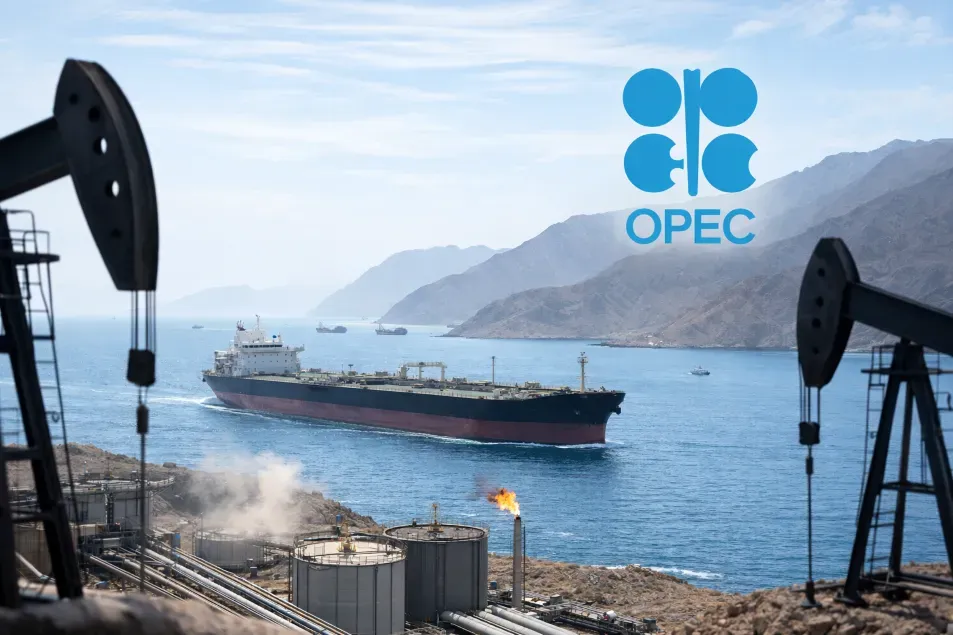
OPEC+ has agreed in principle to increase oil production by around 206,000 barrels per day in May, according to Reuters, in a move that appears largely symbolic as global supply disruptions intensify due to the ongoing conflict involving Iran.
The proposed increase matches the adjustment implemented in April and comes as one of the world’s most critical energy chokepoints, the Strait of Hormuz, remains effectively shut since late February. The waterway typically accounts for roughly 20% of global oil flows, making its disruption a central driver of current market instability.
Sources within OPEC+ indicated that the planned output increase is unlikely to have an immediate impact on supply conditions, but instead reflects readiness to scale production once maritime flows through Hormuz resume.
Energy consultancy Energy Aspects described the move as “theoretical” under current conditions, highlighting the disconnect between nominal production targets and actual deliverable supply amid logistical and geopolitical constraints.
The conflict has already forced several key producers within the alliance - including Saudi Arabia, the UAE, Kuwait, and Iraq - to reduce output, despite being among the few members with meaningful spare capacity prior to the crisis.
In contrast, other major producers such as Russia face structural limitations due to sanctions and infrastructure damage linked to the Ukraine war, constraining their ability to respond to supply shortfalls.
The scale of disruption is significant. Estimates indicate a loss of between 12 and 15 million barrels per day, equivalent to roughly 15% of global supply, placing the market under one of the largest supply shocks in modern history.
Oil prices have responded sharply, with Brent approaching $120 per barrel and market projections warning of a potential move toward $150 if disruptions persist and Hormuz remains constrained.
While isolated tanker movements have been observed, including a shipment transiting Hormuz under a special exemption, sources caution that this does not indicate a normalization of flows, with risks across the corridor still elevated.
OPEC+ comprises 22 member states, though production decisions in recent cycles have been led by a core group of eight countries that have been gradually unwinding prior output cuts since 2025 in an effort to regain market share.
EcoPulse24 Analysis
The key signal from OPEC+ is not the volume of the increase, but the acknowledgment of a structural supply gap that cannot be quickly filled. A 206,000 bpd adjustment is marginal when set against a disruption measured in millions of barrels per day, reinforcing that the market is operating under constrained physical conditions rather than policy-driven supply control.
The effective closure of Hormuz has transformed the oil market from a pricing system into a logistics-driven system, where the availability of transport routes matters as much as production capacity. Even if OPEC+ raises output, the inability to move barrels efficiently limits real supply.
This dynamic explains why prices are responding not to production announcements, but to geopolitical risk and transport constraints. The divergence between “announced supply” and “deliverable supply” is now the dominant theme in oil markets.
The situation also highlights a fragmentation within OPEC+. While Gulf producers retain spare capacity, their ability to deploy it is tied to regional stability and shipping routes. Meanwhile, producers like Russia are constrained structurally, reducing the group’s overall flexibility.
At a broader level, the current shock is redefining how energy security is priced. The market is no longer focused solely on how much oil can be produced, but on how much can actually reach global markets. This shift elevates chokepoints like Hormuz from tactical risks to systemic variables in global pricing.
Ultimately, the modest increase proposed by OPEC+ underscores a larger reality: the oil market is facing a supply shock that cannot be resolved through incremental production adjustments alone, leaving prices highly sensitive to any further escalation or prolonged disruption in global energy flows.
Sources & References
Editorial Note
Disclaimer
© 2025 EcoPulse24. All rights reserved.