Global supply shock from Middle East war cuts oil and LNG flows, reshapes inflation, growth, and policy outlook
IMF warns Middle East war cuts oil/LNG flows, raises energy prices, boosts inflation, slows growth, and strains global policy responses.

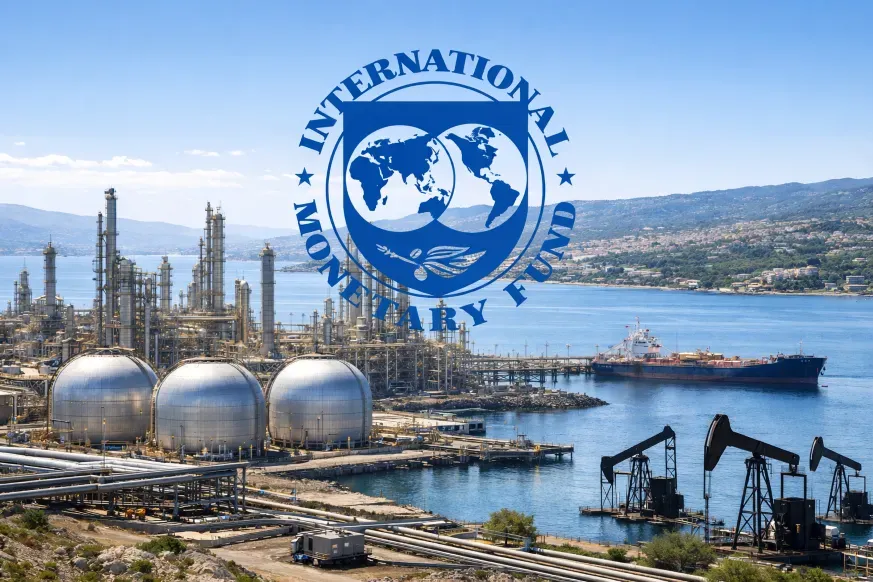
Washington | EcoPulse24
IMF warns of global energy shock disrupting supply chains and slowing growth
The International Monetary Fund warned that the global economy is facing a major supply shock triggered by the Middle East war, cutting global oil flows by around 13% and LNG flows by approximately 20%, pushing energy prices higher and disrupting supply chains across regions.
The IMF characterized the shock as large, global, and asymmetric, with its impact varying depending on countries’ exposure to the conflict, reliance on energy imports, and available policy space. Higher energy costs are now feeding through the global economy, increasing inflation while simultaneously weakening demand.
Energy markets have already reflected the scale of the disruption, with oil prices previously surging sharply from pre-conflict levels before partially stabilizing at elevated levels. Despite some easing, prices remain structurally higher, with many economies paying premiums to secure access to constrained supplies.
The shock is transmitting through three primary channels, starting with prices and shortages. Rising energy costs are feeding into transportation, manufacturing, and consumer goods, while physical shortages of refined fuels such as diesel and jet fuel are disrupting trade, logistics, and tourism in an interconnected global system.
The second channel is inflation expectations. The IMF highlighted that short-term inflation expectations have shifted higher in major economies, increasing uncertainty around price stability. While long-term expectations remain relatively anchored, any sustained energy shock risks triggering second-round inflation dynamics.
The third channel is financial conditions. Global markets have already begun adjusting, with tighter liquidity reflected in rising bond yields, wider emerging market spreads, and equity repricing, alongside a stronger US dollar. These developments indicate that financial systems are absorbing the shock even before its full economic effects materialize.
Supply disruption extends beyond energy into food, industry, and global logistics
The IMF warned that the disruption is cascading beyond energy markets into broader economic systems. Supply chain interruptions are affecting oil refining operations and limiting the availability of key fuels, while rising transport costs are worsening global food insecurity, with tens of millions of additional people at risk.
Industrial production is also being affected through shortages of critical inputs such as sulfur, helium, and petrochemical feedstocks, which are essential for sectors ranging from fertilizers and plastics to semiconductor manufacturing and medical technologies. These dependencies amplify the impact of the shock across multiple layers of the global economy.
Major infrastructure disruptions further highlight the structural nature of the shock. Qatar’s Ras Laffan complex, one of the world’s most important LNG export facilities, has been largely offline following direct damage, with full recovery potentially taking several years. This extends the duration of supply constraints beyond the immediate conflict timeline.
Shipping disruptions are also a key factor. Global transit routes have not fully recovered from earlier shocks, such as those in the Red Sea, and uncertainty remains over future flows through critical chokepoints like the Strait of Hormuz. This reinforces the fragility of global trade infrastructure under geopolitical stress.
Global impact varies sharply between exporters, importers, and vulnerable economies
The IMF emphasized that the impact of the shock is highly uneven. More than 80% of countries are net oil importers, making them particularly vulnerable to rising energy costs and deteriorating trade balances. At the same time, some energy exporters benefit from higher prices, although those directly affected by the conflict or supply disruptions face significant losses.
The most vulnerable economies are those with limited fiscal space and high dependence on energy imports, particularly in regions such as Sub-Saharan Africa and small island nations. These countries face compounded risks from higher energy prices, weaker currencies, and rising debt burdens.
At the global level, even countries benefiting from improved terms of trade are not insulated from broader cost pressures, as energy remains a globally priced commodity that feeds into inflation and financial conditions worldwide.
Energy shock transmission across the global economy
The following snapshot summarizes the scale and channels of the current disruption:
| Shock Element | Estimated Impact | Economic Effect |
|---|---|---|
| Oil supply disruption | ~13% decline | Higher energy prices |
| LNG supply disruption | ~20% decline | Fuel shortages, supply constraints |
| Refined fuel shortages | Ongoing | Trade and transport disruption |
| Food insecurity impact | +45 million | Rising global hunger |
| Financial conditions | Tightening | Higher borrowing costs |
Policy response constrained by inflation risk and limited fiscal space
The IMF stressed that policy responses must balance inflation control with economic stability. Central banks are advised to remain cautious, maintaining a strong commitment to price stability while monitoring inflation expectations closely. If expectations become unanchored, more aggressive tightening may be required despite its negative impact on growth.
Fiscal policy should focus on targeted and temporary support for vulnerable populations, avoiding broad subsidies or price controls that distort markets and amplify global imbalances. The IMF warned against unilateral policy actions such as export restrictions, which could worsen supply disruptions.
At the same time, global fiscal space is already constrained, with public debt levels significantly higher than in previous decades. Rising interest costs further limit governments’ ability to respond, increasing the importance of disciplined and coordinated policy actions.
The IMF also expects increased demand for financial support, estimating that balance-of-payments financing needs could rise by $20 billion to $50 billion in the near term, depending on how the situation evolves.
EcoPulse24 Analysis
This IMF assessment confirms that the global economy has entered a classic negative supply shock environment, where reduced energy availability drives higher prices while simultaneously weakening growth. The scale of disruption - cutting a meaningful share of global oil and LNG flows - places the current situation within the framework of systemic energy shocks rather than temporary geopolitical volatility.
The most critical shift lies in the redefinition of energy security. Oil and gas flows are no longer assumed to be stable inputs but conditional variables subject to geopolitical dynamics. This introduces a persistent risk premium into energy pricing, which then propagates across inflation, trade balances, and financial markets.
The multi-layered transmission described by the IMF highlights how deeply energy is embedded in the global economy. From fertilizers and food systems to semiconductors and medical supply chains, disruptions in energy flows cascade into sectors that extend far beyond traditional energy markets. This amplifies both the breadth and duration of the shock.
The divergence between countries is equally important. Energy exporters with stable production capacity may experience short-term gains, but the broader system remains under stress. Meanwhile, import-dependent economies face immediate inflationary pressure and reduced policy flexibility, increasing the risk of financial instability.
Policy constraints add another layer of complexity. Central banks are caught between maintaining credibility on inflation and avoiding excessive tightening that could deepen the slowdown. Fiscal authorities, constrained by high debt levels, have limited room to cushion the shock without undermining long-term stability.
Ultimately, the global economy is transitioning into a supply-constrained regime where growth, inflation, and financial stability are increasingly shaped by energy flows and geopolitical risk. This marks a structural shift toward an Energy Crisis environment, where the reliability of supply chains and transit routes becomes a defining factor in economic performance and policy decisions.
Explore Related Coverage
Sources & References
Editorial Note
Disclaimer
© 2025 EcoPulse24. All rights reserved.