Saudi Aramco Profit Jumps 26% as Oil Surge and Red Sea Exports Offset Hormuz Disruptions
Saudi Aramco Q1 profit rose 26% to $33.6B as oil prices surged and Red Sea exports offset Hormuz disruptions amid regional conflict.

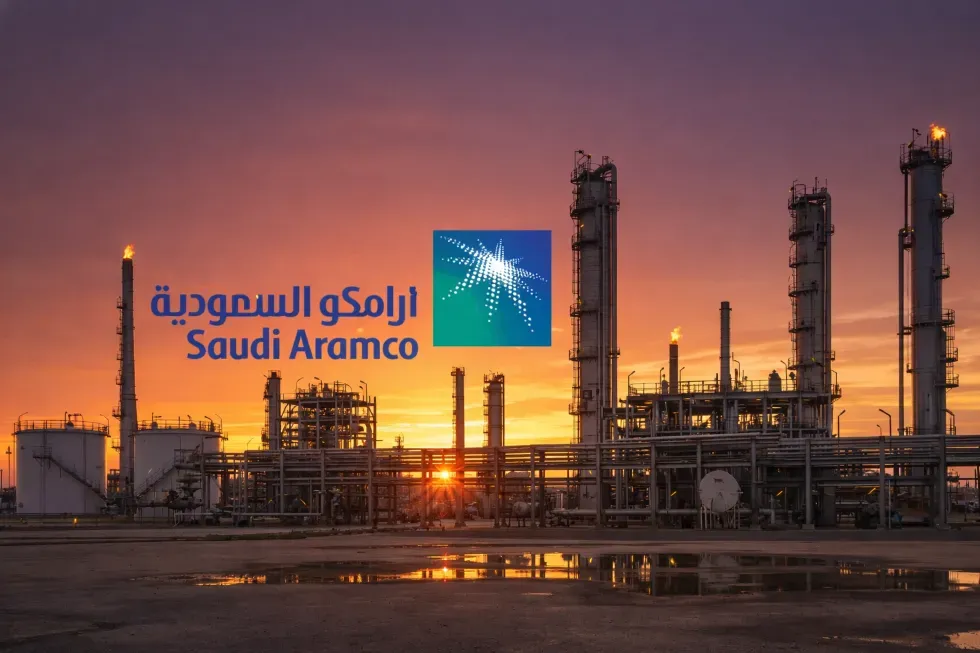
Riyadh | EcoPulse24
Saudi Aramco, oil prices, Strait of Hormuz, Saudi exports
Saudi Aramco posted a sharp rise in first-quarter profit after the war-driven surge in oil and fuel prices boosted revenue, while the kingdom accelerated crude exports through its Red Sea pipeline network to reduce reliance on the Strait of Hormuz.
The state oil giant reported adjusted net income of nearly 126 billion riyals ($33.6 billion) for the first quarter of 2026, up 26% from 97.5 billion riyals a year earlier and well above analyst expectations of 109 billion riyals.
The earnings increase came as Brent crude prices climbed more than 43% during March following the escalation of conflict involving Iran and the effective closure of the Strait of Hormuz after US and Israeli strikes.
Aramco said higher prices for crude oil, refined fuels and chemical products supported quarterly earnings, while Saudi Arabia moved quickly to reroute part of its exports through the East-West pipeline linking eastern oil fields to the Red Sea port of Yanbu.
Chief Executive Officer Amin Nasser said the pipeline reached a capacity of 7 million barrels per day during the quarter, describing the system as a “critical supply artery” that helped reduce the impact of the global energy shock and maintain supply flows to customers affected by shipping constraints in the Gulf.
The increase in Red Sea shipments became one of the most closely watched developments in global energy markets during the conflict, as traders and refiners assessed whether Gulf producers could maintain exports despite disruptions near Hormuz.
Vessel-tracking data showed Saudi crude exports from Yanbu rose sharply after the war began, allowing the kingdom to restore roughly 60% of its pre-war export capacity.
Aramco also reported that the average realized crude oil price reached $76.90 per barrel during the quarter, compared with $64.10 in the previous quarter and $76.30 a year earlier.
Despite the strong profit growth, free cash flow came in at $18.6 billion, below the company’s quarterly dividend payout of $21.9 billion, which Aramco maintained after increasing distributions by 3.5% late last year.
The company’s gearing ratio, a measure of indebtedness, rose to 4.8% from 3.8% at the end of 2025.
Key Aramco Q1 2026 Results
| Indicator | Reading |
|---|---|
| Adjusted net income | 126 billion riyals |
| Annual profit growth | 26% |
| Analyst expectations | 109 billion riyals |
| Average realized oil price | $76.90 per barrel |
| Quarterly dividend | $21.9 billion |
| Free cash flow | $18.6 billion |
| East-West pipeline capacity | 7 million bpd |
| Gearing ratio | 4.8% |
EcoPulse24 Analysis
Aramco’s earnings underline how rapidly geopolitical conflict can reshape the structure of global energy markets, particularly when strategic chokepoints such as the Strait of Hormuz come under pressure.
The company’s strong quarterly performance was not driven solely by higher crude prices. It also reflected Saudi Arabia’s ability to preserve export continuity during one of the most severe disruptions to global oil logistics in decades.
That operational flexibility has become increasingly important for energy markets. Investors and oil consumers are no longer focused only on production capacity, but on the ability to move barrels safely and reliably during periods of military escalation and shipping disruption.
The East-West pipeline effectively emerged as one of the most strategically important energy assets in the region during the crisis. By redirecting exports toward the Red Sea, Saudi Arabia reduced dependence on Hormuz at a time when insurers, tanker operators and commodity traders were reassessing risks across Gulf shipping routes.
The crisis also highlighted how refined fuels and downstream products are becoming a larger contributor to profitability for integrated energy companies. Surging diesel and jet fuel prices amplified earnings even as parts of the regional production system faced operational strain.
At the same time, Aramco’s results exposed the financial balancing act facing major oil producers. While elevated oil prices continue supporting profits and government revenues, free cash flow trailing dividend commitments suggests sustained shareholder payouts could become more challenging if crude prices retreat or geopolitical conditions stabilize.
For global markets, Aramco’s earnings serve as more than a corporate result. They provide a real-time measure of the resilience of Gulf energy infrastructure and the extent to which the region can continue stabilizing global supply during prolonged geopolitical shocks.
If tensions around Hormuz persist into the second half of 2026, oil markets may remain structurally tight, keeping upward pressure on fuel costs, shipping rates and global inflation expectations.
Explore Related Coverage
Sources & References
Editorial Note
Disclaimer
© 2025 EcoPulse24. All rights reserved.