Oil Prices Pressure Chinese Markets as Inflation Rises
Rising oil prices and inflation hit Chinese markets, causing stock drops, yuan weakness, and sector losses amid Middle East tensions.

Beijing | EcoPulse24
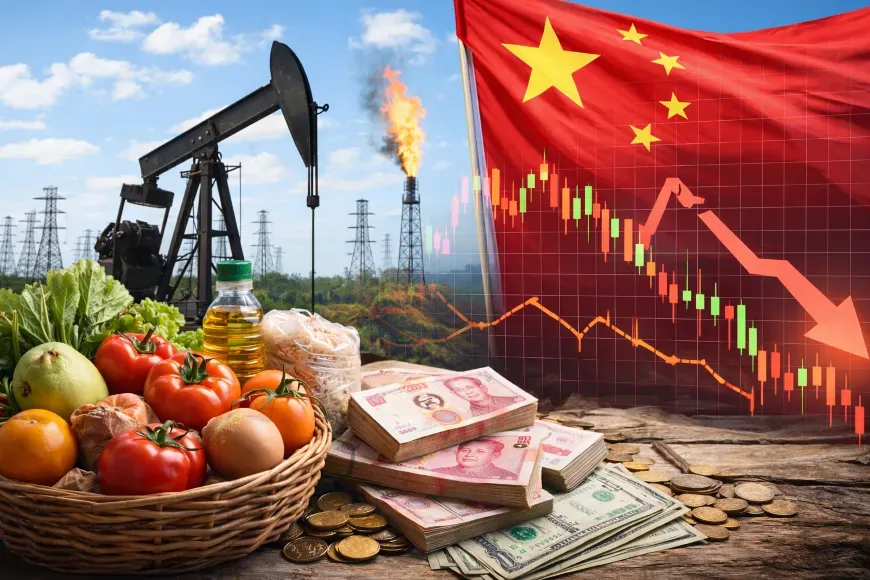
Chinese financial markets experienced significant volatility at the start of the week, driven by rising global oil prices and escalating geopolitical tensions in the Middle East. These factors have increased inflationary pressures and led to declines in regional stock and currency markets.
The Shanghai Composite Index fell by 0.67% to close at 4,097 points, while the Shenzhen Index dropped 0.74% to 14,068 points, continuing last week’s losses as investor risk appetite waned.
Chinese equities saw particular pressure in the technology and mining sectors. Zhongji Innolight shares fell by 3.6%, Eoptolink Technology declined by 4.5%, and Suzhou TFC dropped by 4.9%. Zijin Mining lost 1.9% and Victory Giant fell 3%.
In Hong Kong, the Hang Seng Index declined by 1.4% to 25,408 points amid broad sector losses, especially in real estate and financial services, both down 2.4%. Major companies such as Cathay Pacific, Techtronic Industries, and Sands China also posted notable losses.
Market movements coincided with oil prices rising above $100 per barrel, attributed to ongoing Middle East conflict and shipping disruptions through the Strait of Hormuz, fueling concerns over global inflation and economic growth.
In the bond market, yields on China’s 10-year government bonds rose to around 1.81% after hitting a seven-month low last week, buoyed by stronger-than-expected inflation data.
Economic data showed Chinese inflation accelerating, with the Consumer Price Index rising 1.3% year-on-year in February - the highest in over three years, exceeding expectations of a 0.8% increase.
Price increases were mainly driven by higher spending during the Lunar New Year holiday and a 1.7% jump in food prices - the largest rise in 16 months. Fresh vegetable prices climbed 10.9%, fresh fruit prices rose 5.9%, while pork prices declined at a slower pace, indicating relative improvement in domestic demand.
Producer price data indicated ongoing deflationary pressures in manufacturing, with producer prices down 0.9% year-on-year - the smallest decrease since mid-2024 - suggesting gradual improvement in industrial pricing.
In currency markets, the offshore Chinese yuan weakened to around 6.92 per dollar, its lowest in about a month, amid a strengthening US dollar and growing global market uncertainty.
Despite these pressures, China’s large crude oil reserves provide some protection from global energy shocks, even as it remains the world’s largest energy importer.
EcoPulse24 Analysis:
Recent developments in the Chinese economy reflect a delicate balance between improving domestic demand and a return of inflationary pressures, against persistent external challenges. Higher oil prices due to geopolitical tensions may raise energy costs and weigh on global economic growth, impacting China’s trade-dependent economy. Nevertheless, improved domestic consumption and easing deflationary pressures among producers could give Beijing policymakers more room to support economic stability in the coming months.
Explore Related Coverage
Sources & References
Editorial Note
Disclaimer
© 2025 EcoPulse24. All rights reserved.