Sterling Drops to $1.33 and UK Bond Yields Surge Amid Hormuz Shock and Political Uncertainty
Pound drops to $1.33, UK bond yields surge as Hormuz closure, energy shock, and political uncertainty fuel inflation fears and market volatility.

London | EcoPulse24
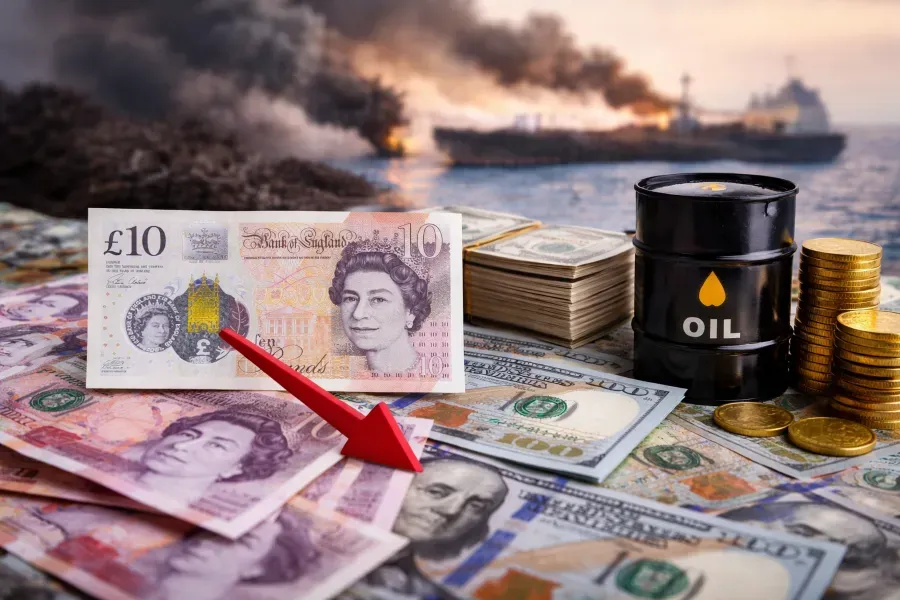
The British pound retreated to approximately $1.33 against the dollar, marking its lowest point since early December 2025. The move came amid a stronger dollar, bolstered by safe-haven demand following escalating tensions in the Middle East and the closure of the Strait of Hormuz. These currency market shifts coincided with a sharp rise in UK government bond yields and a decline in equities, although softer store price inflation data provided some relief.
Sterling faced pressure as liquidity flowed into the dollar, especially after US statements signaled a long-term commitment to ongoing military operations. The official closure of the Strait of Hormuz and continued suspension of Qatari LNG exports fueled fears of a new inflation wave in the UK, potentially prompting the Bank of England to adopt a more hawkish monetary stance.
Bond markets reflected these concerns, with the 10-year UK gilt yield jumping to 4.4%, its highest since February 13, as traders scaled back bets on imminent rate cuts. Rising oil and gas prices reshaped inflation expectations, increasing the sensitivity of yields to further geopolitical developments.
On the stock market, the FTSE 100 fell 1.8% after a 1.2% drop in the previous session, led by losses in the financial sector. HSBC shares dropped 3.5%, Barclays 4%, NatWest about 1.5%, Lloyds 3.1%, and Standard Chartered 3.5%. Fresnillo shares fell 3% despite strong annual profit growth, while BP gained 1% on higher oil prices.
Politically, uncertainty deepened after the Labour Party lost a previously held seat in the 2024 election, sparking speculation about the future of economic leadership and the potential for increased fiscal spending, which could add pressure to public finances.
Conversely, store price inflation data showed some moderation: the index rose 1.1% year-on-year in February versus 1.5% in January. Non-food prices dropped 0.1% year-on-year, while food inflation eased to 3.5% from 3.9%, helped by lower global commodity costs. Despite this improvement, pressures persist as energy prices remain elevated.
EcoPulse24 Analysis:
The UK landscape reflects a three-dimensional interplay between the energy shock, repricing of rate expectations, and political uncertainty. Sterling weakness and rising yields suggest markets are pricing in higher inflation and a more assertive monetary response. Meanwhile, slower store price inflation gives the Bank of England limited room, but sustained oil and gas price increases could quickly restore inflationary pressures. The near-term outlook hinges on global energy developments and the ability of monetary and fiscal policy to manage volatility without harming growth.
Explore Related Coverage
Sources & References
Editorial Note
Disclaimer
© 2025 EcoPulse24. All rights reserved.