Swiss Franc Holds Historic Highs at 0.797 per Dollar Driven by Safe-Haven Demand
Swiss franc holds near 0.797/USD, its highest since 2011, on safe-haven demand amid global tensions and US monetary policy concerns.

Bern | EcoPulse24
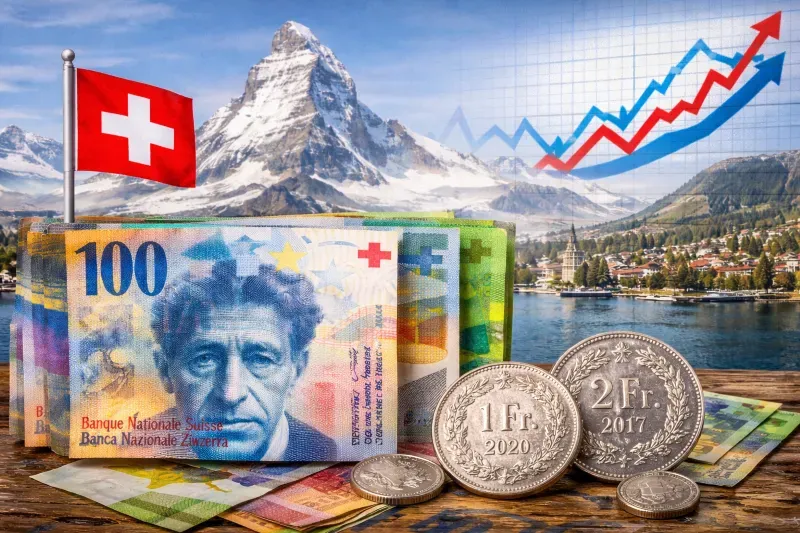
The Swiss franc has maintained its upward momentum against the US dollar, stabilizing near 0.797 francs per dollar, marking one of its highest levels since 2011. This strength is fueled by heightened demand for safe-haven currencies amid growing geopolitical tensions and increasing concerns over the independence of US monetary policy.
The primary support for the Swiss currency stems from a mix of external factors, most notably US warnings to Iran over domestic protests, countered by Iranian threats against any US or Israeli intervention. Additionally, reports indicate Germany and the United Kingdom are strengthening their military presence in Greenland, with Germany proposing a joint NATO mission. These developments have raised global political risk premiums, boosting demand for the franc.
Meanwhile, tensions have risen between the US administration and the Federal Reserve after official threats to pursue Fed Chair Jerome Powell over his congressional remarks regarding central bank building costs. Powell described these actions as a political pretext to pressure monetary policy, a precedent that has heightened institutional concerns among investors and weakened the dollar.
Domestically, recent Swiss inflation data has reinforced expectations that the Swiss National Bank will keep interest rates at 0% in upcoming meetings, with a gradual inflationary trend accompanying an economic recovery, but no signals of imminent monetary tightening.
Analysis
The franc's resilience at high levels reflects its renewed role as a global safe haven during periods of institutional and political uncertainty. Ongoing pressure on the dollar provides additional support for the Swiss currency, even in the absence of local monetary tightening. However, maintaining rates at zero may restrain the franc's advance in the medium term, making its future trajectory more dependent on US policy developments than on Swiss domestic factors.
✔️ Approved for publication
Explore Related Coverage
Sources & References
Editorial Note
Disclaimer
© 2025 EcoPulse24. All rights reserved.