The New York Times Sues AI Startup Perplexity AI
The New York Times sues Perplexity AI for copyright infringement, seeking damages and injunctive relief over unauthorized use of its content.

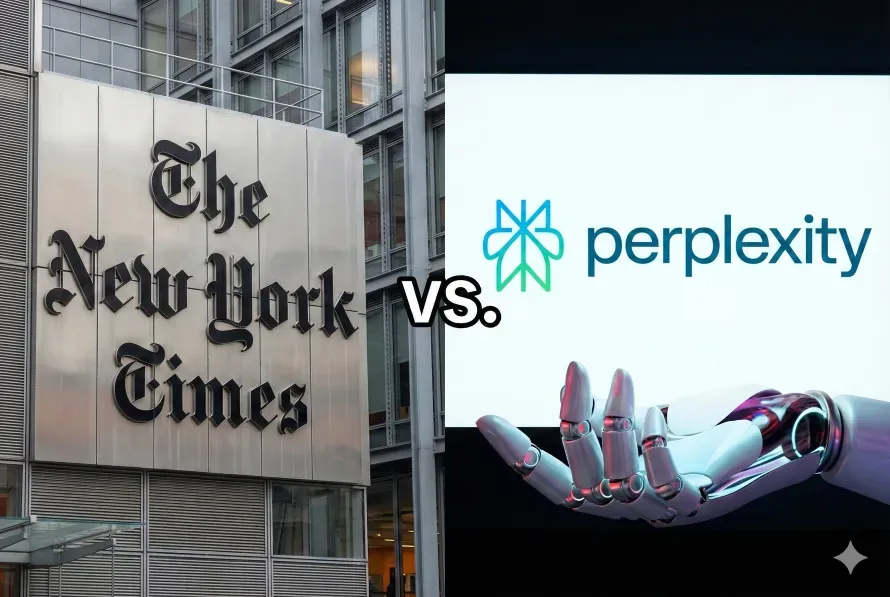
The New York Times has filed a lawsuit against the AI startup Perplexity AI on Friday, December 5, 2025, accusing it of copyright infringement by copying, distributing, and displaying millions of its articles without permission to operate its generative AI products.
The lawsuit, filed in the Southern District of New York federal court, seeks financial compensation, injunctive relief to stop unauthorized use, and other equitable remedies. The allegations include:
Illegal copying: Perplexity AI "scrapes" New York Times articles, videos, podcasts, and other content to generate user responses, often using "verbatim or near-verbatim" text or brief summaries.
Commercial replacement: Perplexity AI offers its products (such as a smart search engine, chat, and Comet assistant) as commercial alternatives to visiting the New York Times website or purchasing its newspaper, depriving the Times of subscription, advertising, licensing, and partnership revenues.
Other violations: Producing fabricated content (hallucinations) and incorrectly attributing it to the New York Times alongside its trademarks, violating trademark law.
Graham James, a spokesperson for the New York Times, stated: "We believe in the ethical and responsible use of AI, but we strongly oppose Perplexity AI’s unauthorized use of our content to develop and promote its products." This lawsuit is the second by the New York Times against AI companies, following its lawsuit against OpenAI and Microsoft in December 2023.
Perplexity AI also faces lawsuits from Reddit (October 2025), Chicago Tribune (December 5, 2025), and Dow Jones (owner of The Wall Street Journal, 2024).
Timeline background: The New York Times sent a cease and desist notice to Perplexity AI in October 2024 (over a year ago), followed by additional notices in July 2025, but the company continued its usage. This makes the lawsuit a "escalation" after failed negotiations for a licensing agreement.
Wider context: This is part of over 40 U.S. lawsuits against AI companies, most of which have emerged since 2023, amid a market growth reaching $40 billion in 2025.
Why? The main reasons are that the lawsuit is not just a legal dispute but part of a broader battle between publishers and tech companies over how to compensate for content in the AI era. The New York Times sees Perplexity AI (which raised $250 million in funding and is valued at $540 million) as building its business model on "stealing" content without payment, threatening the sustainability of journalism.
Here are the main reasons, supported by the allegations and context:
Direct copyright infringement is the primary legal cause: Perplexity AI uses "crawling" technology to collect millions of articles from the New York Times (including content protected behind a paywall), then feeds it into its AI models to generate responses. These responses are often "verbatim or near-verbatim," which is considered unauthorized copying violating U.S. law (Copyright Act).
Why now? The company ignored previous notices and continued commercial use, making the lawsuit necessary to seek a preventative judicial ruling.
Economic and commercial harm (financial reason): Perplexity AI turns New York Times content into a "free" alternative, reducing site visits (which reached 100 million monthly users in 2025) and depriving the Times of subscription revenues (which account for 60% of its revenue, around $1.1 billion annually). It also steals advertising and licensing opportunities.
Why now? With Perplexity AI's growth (10 million monthly users), the damage has become "tangible," especially following successful licensing deals with Amazon and Anthropic (which paid $1.5 billion to other authors).
Protecting creativity and journalism (ethical and strategic reason): The lawsuit protects the journalistic "heritage" of the New York Times (which has won 130 Pulitzer Prizes) and prevents "hallucinations" – fabricated information incorrectly attributed to the newspaper, harming the reputation of reliable journalism.
Why now? The New York Times uses lawsuits as a "lever" to negotiate licensing agreements (like its deal with Amazon in 2025), amid a wave of similar lawsuits (such as Reddit and Chicago Tribune against Perplexity AI). This aims to establish a legal precedent that protects publishers from "mass theft" in the AI era.
In summary: This lawsuit reflects a larger struggle between human creativity and AI, as the New York Times seeks fair compensation (potentially hundreds of millions) and to prevent commercial "replacement." Perplexity AI denied the allegations, stating that it "does not copy" but "summarizes," but the case could last for years.
Sources & References
Editorial Note
Disclaimer
Please review the Terms & Conditions.
© 2025 EcoPulse24. All rights reserved.