Trump Calls for 10% Cap on Credit Card Interest Rates: Could This Signal the End of Credit Cards?
Trump urges a 10% cap on credit card interest rates, pressuring banks; experts warn it could cut credit access for millions.

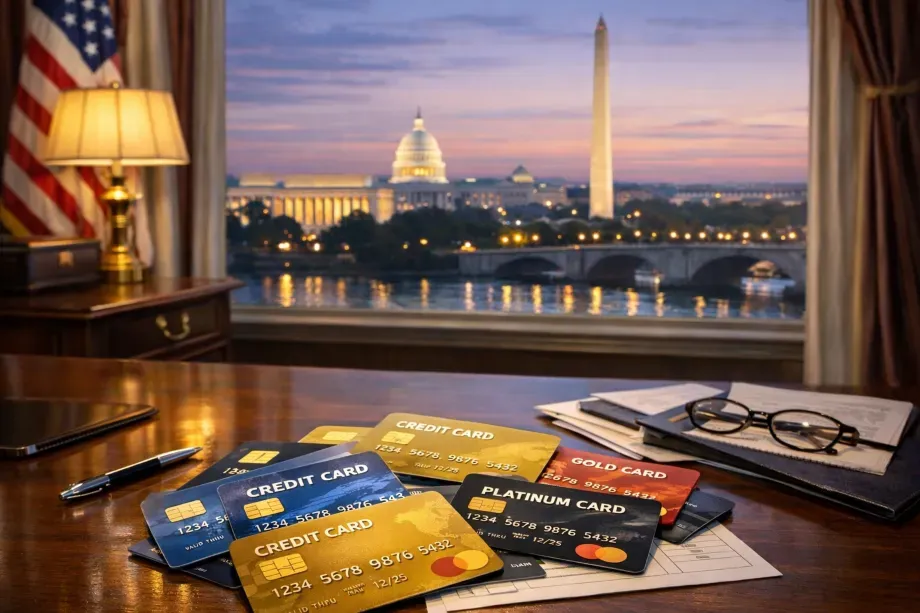
Washington – EcoPulse24
Former U.S. President Donald Trump has urged banks to set a 10% cap on credit card interest rates for one year, a move targeting one of the most profitable banking sectors. According to Bloomberg, Trump made this call via social media, requesting banks to lower rates by January 20, 2026.
Current Interest Rates Exceed 21%
Federal Reserve data shows that the average credit card interest rate reached around 21% at the end of 2024. For example, repaying a $10,000 debt over three years would generate over $3,500 in interest.
Trump's demand comes as high credit card interest rates attract bipartisan attention in Congress, with several bills proposed to cap rates, though they face strong opposition from banking lobbyists.
Major Banks Under Pressure
Trump's statement has put pressure on leading U.S. credit card issuers like JPMorgan Chase, Capital One Financial, and Citigroup. In 2024, JPMorgan reported a net yield of 9.73% on its $200 billion credit card loan portfolio, accounting for the majority of its $25.5 billion in card and auto services revenue, despite $7 billion in charge-offs on bad card debt.
Banking Industry Warns of Credit Loss
Banking lobby groups, including the Bank Policy Institute and the Consumer Bankers Association, responded cautiously, stating: "While we share the goal of making credit more affordable, evidence shows that a 10% rate cap would reduce credit availability and be devastating for millions of American families and small business owners who rely on their credit cards."
Expected Impact on Borrowers and Banks
If a 10% rate cap is implemented, impacts would vary:
Higher-Risk Borrowers:
- Banks may terminate or restructure credit lines
- Increase minimum monthly payments
- Impose additional fees
- Raise annual fees
A Bank Policy Institute analysis using 2019 Fed data suggests a 10% cap would have cut credit lines for about 14.3 million people and families.
Specialized Banks:
Banks most affected include:
- Capital One: Known for mass mail card offers
- Synchrony Financial: Specializes in store-branded cards
- Bread Financial: Serves lower-income customers
Bank Options If Cap Is Enforced
- Reduce rewards programs and points
- End promotional zero or low interest periods
- Raise annual fees
- Reduce waivers for late fees
- Increase costs for balance transfers or cash advances
Matthew Goldman of Totavi, a fintech consultancy, commented: "Banks might cut rates by a few percentage points, but a 10% cap would wipe out their profit margins. Such a cap would end credit cards for most consumers except those with excellent credit."
Banks’ Justification for High Rates
Banks argue that high rates are needed for unsecured debt, as there is no collateral to recover if borrowers default. After the 2008 financial crisis, credit card charge-off rates exceeded 10%, while mortgage charge-offs stayed below 3%.
Bank Stocks Under Pressure
For bank shareholders, Trump’s surprise call could be a shock. Bank stocks have risen sharply, driven by deregulation efforts under Trump appointees. The KBW Bank Index, tracking 24 major lenders, rose about 40% since Trump’s November 2024 election win, twice the pace of broader U.S. market indices.
Previous Legislative Attempts
- In 2019, Senator Bernie Sanders and Rep. Alexandria Ocasio-Cortez proposed a 15% rate cap
- In 2024, Sanders and Republican Senator Josh Hawley proposed a 10% cap
- Senators tried to attach a rate cap to the so-called GeniUS Act on stablecoins, signed into law by Trump in July 2025, but it was not included in the final bill
The Power of Banking Lobbyists
Banks wield significant lobbying power in Congress. In February, after Sanders and Hawley proposed their bill, banking associations warned that Americans would lose access to credit cards, pointing to Missouri’s high payday loan rates as an alternative.
The Big Question: How Would Trump Enforce This?
After failed legislative efforts last year, it remains unclear how Trump could compel lenders to lower rates within days, other than using the presidential platform to pressure the banking sector.
Explore Related Coverage
Sources & References
Editorial Note
Disclaimer
© 2025 EcoPulse24. All rights reserved.