Trump Left Beijing With a Boeing Order-China Left With Everything Else
The most consequential diplomatic meeting of 2026 is over. U.S. President Donald Trump wrapped up a two-day state visit with Chinese President Xi

Dubai | EcoPulse24
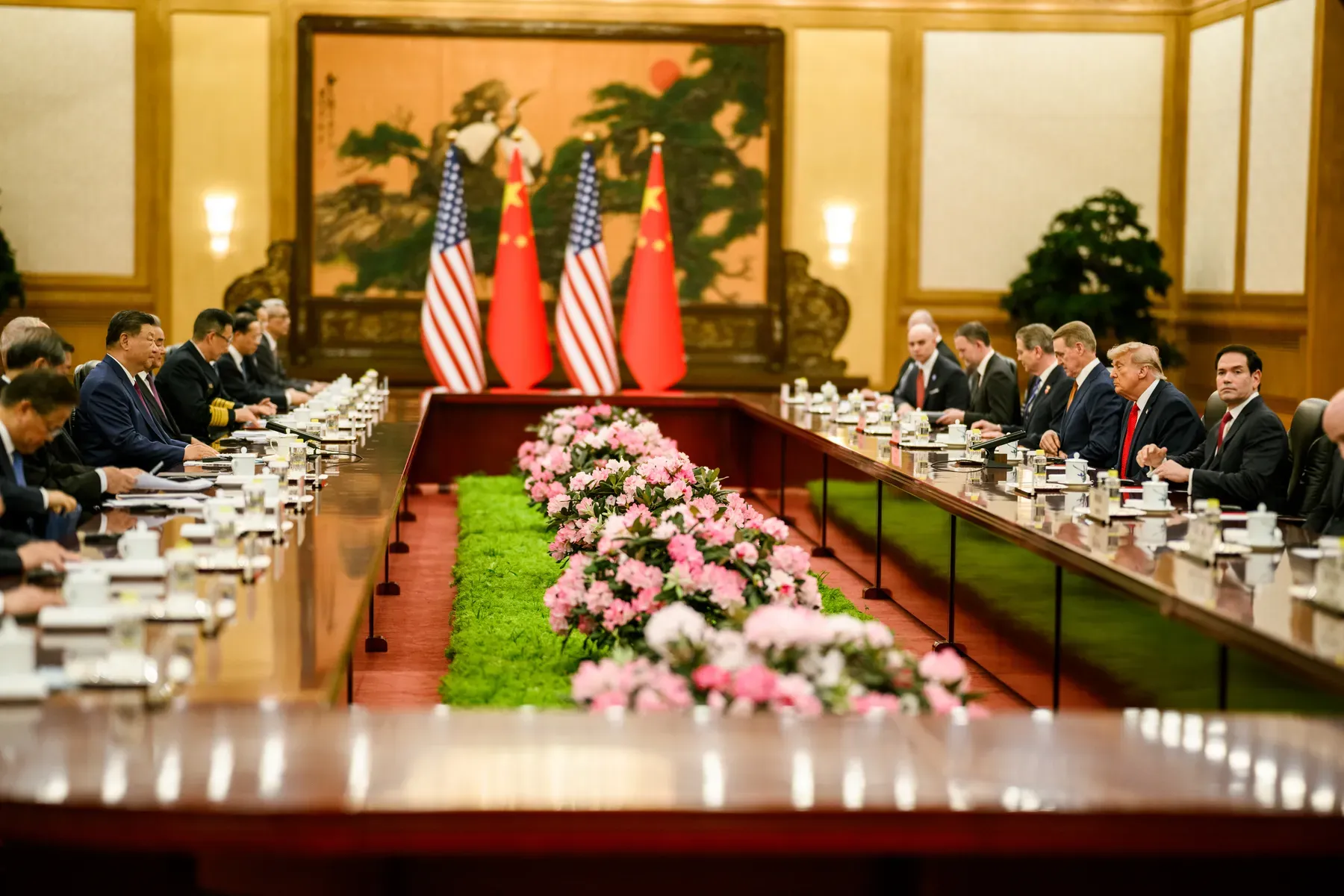
The most consequential diplomatic meeting of 2026 is over. U.S. President Donald Trump wrapped up a two-day state visit with Chinese President Xi Jinping in Beijing on Friday - the first visit by a U.S. president to China in nearly a decade. Both leaders called it "historical." Markets called it underwhelming. The truth sits firmly between the two.
Here is a complete, sourced account of what was agreed, what was left unresolved, and what Trump himself said about it in his interview with Fox News anchor Bret Baier - recorded in Beijing before he departed.
WHAT THEY AGREED ON
Boeing: 200 Aircraft
The clearest deliverable from the summit: China agreed to purchase 200 Boeing jets. Trump announced it, Boeing confirmed it. GE Aerospace CEO Larry Culp and Boeing CEO Kelly Ortberg both traveled with Trump to Beijing and met Chinese state officials directly. Reports indicate China may ultimately purchase as many as 500 737 MAX jets as part of the broader framework.
Agricultural Trade: Concrete Commitments
Both governments made specific agricultural commitments. China agreed to actively address U.S. concerns on import licenses for its beef plants and on poultry imports from certain U.S. states. The United States in turn committed to resolving Beijing's concerns over the automatic FDA detention of Chinese dairy and aquatic products, the export of Chinese potted plants to the U.S. market, and the formal designation of Shandong province as a Highly Pathogenic Avian Influenza-free zone.
Mutual Tariff Cuts on Selected Goods
China's Ministry of Commerce confirmed both sides will mutually reduce levies on certain products to expand bilateral trade. U.S. Trade Representative Jamieson Greer said the two sides discussed creating a "Board of Trade" covering tariff reductions on at least $30 billion in non-critical goods. Treasury Secretary Scott Bessent offered fireworks as an example - the kind of low-end consumer goods that, in his words, "are going to keep coming from China no matter what."
Trade and Investment Councils
Both sides agreed to establish formal bilateral boards covering trade and investment as permanent institutional channels for ongoing economic dialogue - a structural outcome that outlasts the summit itself.
Fentanyl: A Pledge Without Mechanisms
The White House readout confirmed both leaders pledged to work toward ending the flow of fentanyl precursors from China into the United States. No enforcement mechanisms or timelines were specified in the public announcements.
Xi to Visit Washington in September
At the state dinner in Beijing, Trump formally invited Xi Jinping to visit the White House on September 24. China's foreign ministry confirmed the visit. Xi has not been to the White House since a state visit hosted by President Obama in September 2015.
"Constructive Strategic Stability" Framework
Xi announced a vision for building a "constructive China-U.S. relationship of strategic stability" anchored to the next three years and beyond. Analysts at the Council on Foreign Relations described this as Beijing seeking to lock in the current détente on terms favorable to itself and extend it past the present moment.
WHAT THEY DID NOT AGREE ON
Tariffs - The Core Issue - Never Discussed
Trump's own words on Air Force One defined the summit's limits: "We didn't discuss tariffs." Markets reacted immediately. According to CNN, Dow futures fell more than 300 points, S&P 500 futures dropped 1%, and Nasdaq futures slid 1.4%. Soybean futures also sold off sharply after the U.S. spoke of a vague Chinese commitment to buy from American farmers - a promise, traders noted, that has been made before without full follow-through. Bloomberg Economics warned that reimposing previous reciprocal tariff rates could raise China's tariff burden by a further 10%, likely triggering retaliation.
The Strait of Hormuz: Words, Not Commitments
The White House readout stated both sides agreed the Strait of Hormuz must remain open to ensure global energy flows, and that Xi expressed interest in purchasing more U.S. oil. However, no binding Chinese commitment was made to pressure Iran or guarantee Strait stability. Brent crude oil futures rose 3% above $108 a barrel as Trump departed Beijing - the market's own verdict on what was not resolved.
Taiwan: A Warning, Not a Deal
This was the sharpest moment of the summit - and Trump's Bret Baier interview made it sharper still. Xi warned directly that mishandling Taiwan could put "the entire relationship in great jeopardy" and lead to "clashes and even conflicts." When Baier asked Trump point-blank: "Should the people of Taiwan feel more or less secure after your meetings with President Xi?" - Trump answered with one word: "Neutral."
He added: "Nothing's changed. I will say this: I'm not looking to have somebody go independent. And, you know, we're supposed to travel 9,500 miles to fight a war. I'm not looking for that. I want them to cool down. I want China to cool down."
On the pending $14 billion arms sale to Taiwan, Trump told Baier: "I may do it. I may not do it. It is a very good negotiating chip for us, frankly." Notably, the American readout of the summit did not mention Taiwan once. China's readout placed it at the center.
AI Chips and Nvidia: No Breakthrough
Nvidia CEO Jensen Huang joined the U.S. delegation at the last minute, raising expectations of a semiconductor agreement. None materialized. Trump confirmed on Air Force One that chips did come up - and that Xi responded by saying China intends to manufacture its own. No agreement on chip exports or export control frameworks was announced.
Rare Earths: The Leverage Gap Remains
No agreement was reached on China's dominant position in rare earth minerals and magnet supply chains - the strategic leverage Beijing used effectively to force Washington's retreat from peak tariff levels in 2025. The asymmetry remains fully intact.
Iran: Aligned Rhetoric, Unclear Actions
Both sides agreed Iran must not obtain nuclear weapons. The White House confirmed both leaders discussed the Iran conflict and the importance of keeping Hormuz open. However, CFR analysts assessed - and this is analyst opinion, not confirmed fact - that China's public language on Iran has been useful but deliberately vague, with no implementation commitments attached. Trump told Baier that energy price increases tied to the Iran war represent "short-term pain" that will ultimately resolve itself.
ANALYSIS: WHAT THE SUMMIT ACTUALLY PRODUCED
No breakthrough. No rupture. What Beijing produced was managed stabilization - and on closer examination, a stabilization that favors China more than Washington.
On trade, the Boeing order is real and economically meaningful, but the fundamental tariff structure was not touched. The Board of Trade framework and mutual levy reductions on non-critical goods are process commitments, not resolved outcomes. The hard negotiation on tariffs has been deliberately deferred.
On Taiwan, Trump's "neutral" answer to Baier - and his open ambiguity on the arms sale - represented the most significant shift in public U.S. posture toward the island in years. Whether that is strategic ambiguity or genuine softening, the signal Beijing received was favorable to its position.
On energy and Hormuz, the market verdict was clear: Brent above $108 reflects that traders saw no credible resolution to the supply risk from the ongoing Iran conflict.
On technology, the rare earth leverage gap and the chip export deadlock both remain unresolved - the two structural issues that will define which side has the stronger hand in every future negotiation.
The diplomatic calendar ahead tells the real story: Trump and Xi are scheduled to meet again in September in Washington, in November in Shenzhen, and in December at the G20 Summit in Miami. That timeline aligns precisely with the expiration of the October 2025 South Korea trade truce. The conversations that Beijing successfully avoided in Beijing will not be avoidable then.
Stabilization was delivered. The reckoning is deferred - not cancelled.
Explore Related Coverage
Sources & References
Editorial Note
Disclaimer
© 2025 EcoPulse24. All rights reserved.