Trump’s Tariff Threats on South Korea Spark Buying Wave in Kospi After Early Losses
Kospi rebounded 2% after Trump tariff threats, as investors see them as negotiation tactics, not policy; autos most at risk, chips less so.

Seoul | EcoPulse24
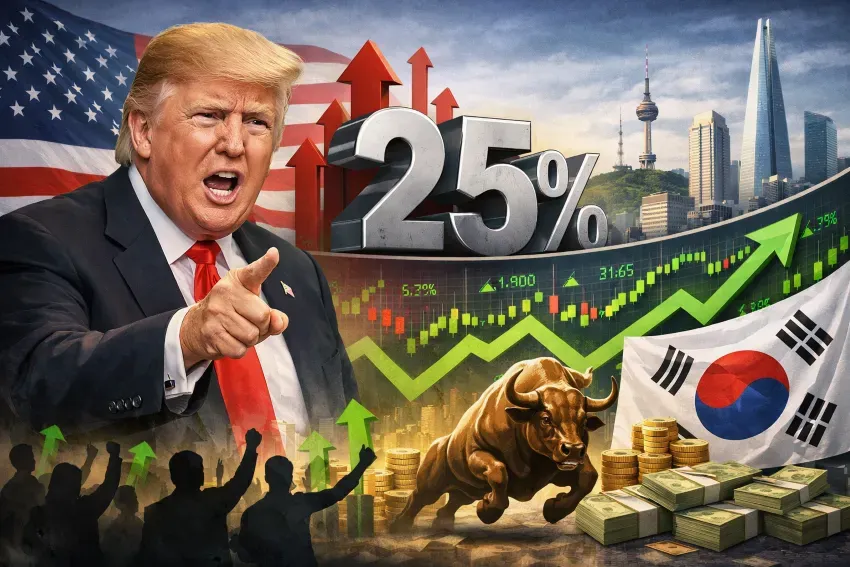
South Korean stocks reversed early losses and surged strongly despite fresh tariff threats from U.S. President Donald Trump, signaling that investors now interpret “tariff talk” more as a negotiation tactic than a final trade policy direction.
During today’s session, the Kospi Index climbed nearly 2% after initially falling 1.2%. Blue-chip stocks, including Samsung Electronics and Hyundai Motor, recovered losses, while the Korean won pared back an early drop of around 0.7%. Bond futures also saw slight improvement.
What Did Trump Say?
According to reports, Trump posted on social media his intent to raise U.S. tariffs on South Korean imports to 25% from 15%, citing Seoul’s failure to “ratify” a bilateral trade agreement. The higher tariffs would target cars, lumber, pharmaceuticals, and other “reciprocal tariffs.”
Why Are Investors Buying the Dip?
The market appears to be anchored on three main points:
-
Lower Sensitivity to Tariff Headlines
Investors are increasingly betting that such threats will end in milder settlements, referencing past instances where Washington backed down from escalation in other trade disputes. -
Strong Domestic Momentum
Korean equities have outperformed this year, with Kospi up nearly 20% YTD versus the S&P 500’s 1.5% gain, driven by the global AI boom and domestic reforms aimed at improving governance and capital efficiency. -
Semiconductors Still Central
While non-chip sectors (especially autos and consumer goods) are more exposed to tariff risk, semiconductors remain largely exempt from “reciprocal” tariffs. However, there are warnings that high tariffs may hit Korean and Taiwanese chipmakers if U.S. domestic production targets are not met.
Potential Sector Impacts
-
Automobiles: Most sensitive both technically and sentimentally, as tariffs directly target this sector. Higher costs in the U.S. market could squeeze margins or prompt export strategy shifts.
-
Pharmaceuticals and Lumber: Directly affected if supply chains are targeted, though the impact depends on each sector’s U.S. exposure.
-
Semiconductors: Less affected by current rhetoric, but still vulnerable if “local production” tariffs are implemented.
EcoPulse24 Analysis
The swift rebound from losses shows Korean markets are pricing tariff threats as negotiation accelerators rather than final decisions, given both sides’ interest in minimizing Asian supply chain disruption. The real risks lie in implementation details: the scope of goods, application methods, and timing. In the short term, expect limited corrections in tariff-sensitive stocks (autos/pharma), while chips and AI-related shares remain supported - unless threats escalate into long-term policy.
✔️ Ready for publication
Explore Related Coverage
Sources & References
Editorial Note
Disclaimer
© 2025 EcoPulse24. All rights reserved.